








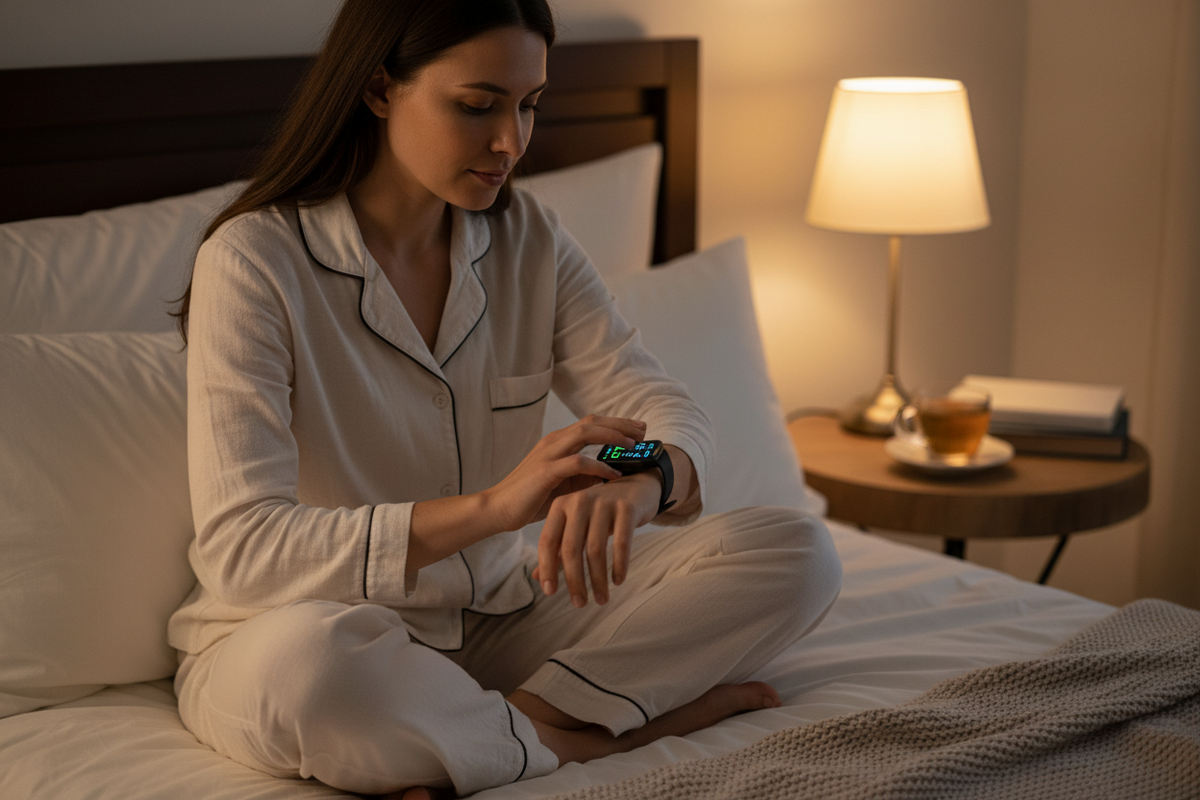
You glance at your watch. SpO₂: 92%. Heart rhythm: possible AFib. Suddenly you're on WebMD at midnight, convinced something is very wrong.
Take a breath. Your watch isn't a doctor — it's a sensor with a personality. Here's how to read it without spiraling.
The Rule That Changes Everything
One reading means nothing. A trend means something.
Your body fluctuates all day. Heart rate spikes when you stand up. SpO₂ dips when your hand is cold. HRV drops after a bad night. A single weird number is just noise.
But if the same signal shows up day after day? That's a pattern worth asking about.
Relax If…
-
SpO₂ dips to 92–94% briefly — especially with cold hands, poor watch fit, or during sleep. It's usually a sensor issue, not a lung issue.
-
You get a one‑off "possible AFib" alert — especially while moving. Motion confuses the algorithm constantly.
-
Your HRV is low for a day — bad sleep, stress, or a glass of wine will do it.
-
Your heart rate spikes during a workout — that's the whole point.
-
Your temperature is slightly up one night — warm room, heavy blanket, late meal.
Single blips are not emergencies.
Pay Attention If…
-
SpO₂ stays below 90% across multiple nights, at rest.
-
You get repeated AFib alerts — not once, but several times over days or weeks.
-
Your resting heart rate climbs steadily for no clear reason.
-
Your HRV drops for a week straight while you feel exhausted.
-
Your skin temperature stays elevated alongside feeling unwell.
These aren't diagnoses. They're reasons to book an appointment — and to bring your watch data with you.
The Golden Rule
Feel fine + one odd reading = relax.
Feel off + a persistent pattern = get it checked.
Never let a normal reading talk you out of seeing a doctor. And never let a single alert send you into a spiral.
The Bottom Line
Your wearable is a smoke detector, not a firefighter. It can tell you something might be up — but it can't tell you what it is, how serious it is, or what to do about it.
Use it to notice. Use a doctor to decide.
Now put the phone down and go to sleep. 😴


Jätä kommentti
Tämä sivu on suojattu hCaptcha-tunnistuksella, ja hCaptchan tietosuojakäytäntöjä ja käyttöehtoja sovelletaan.