







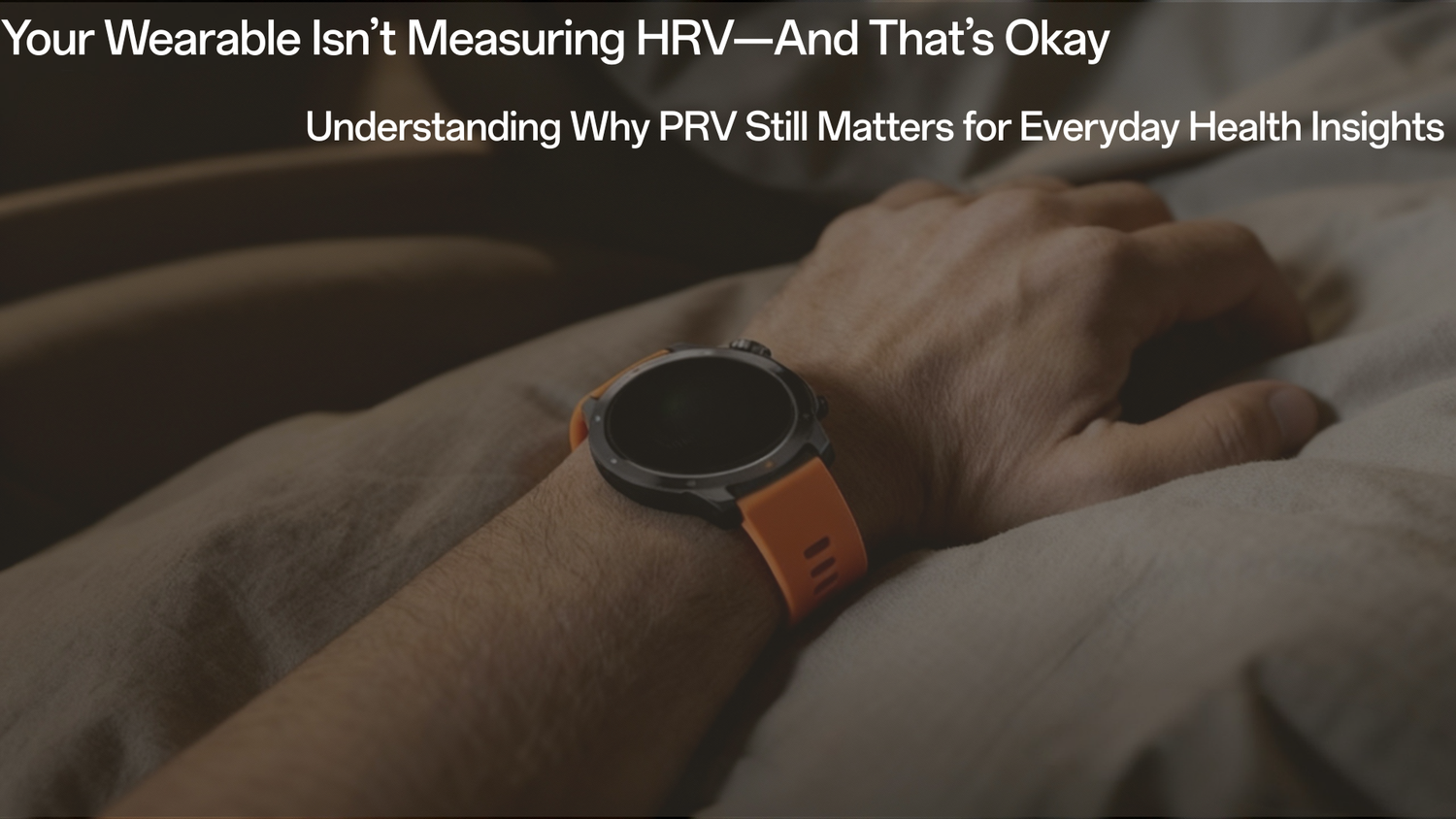
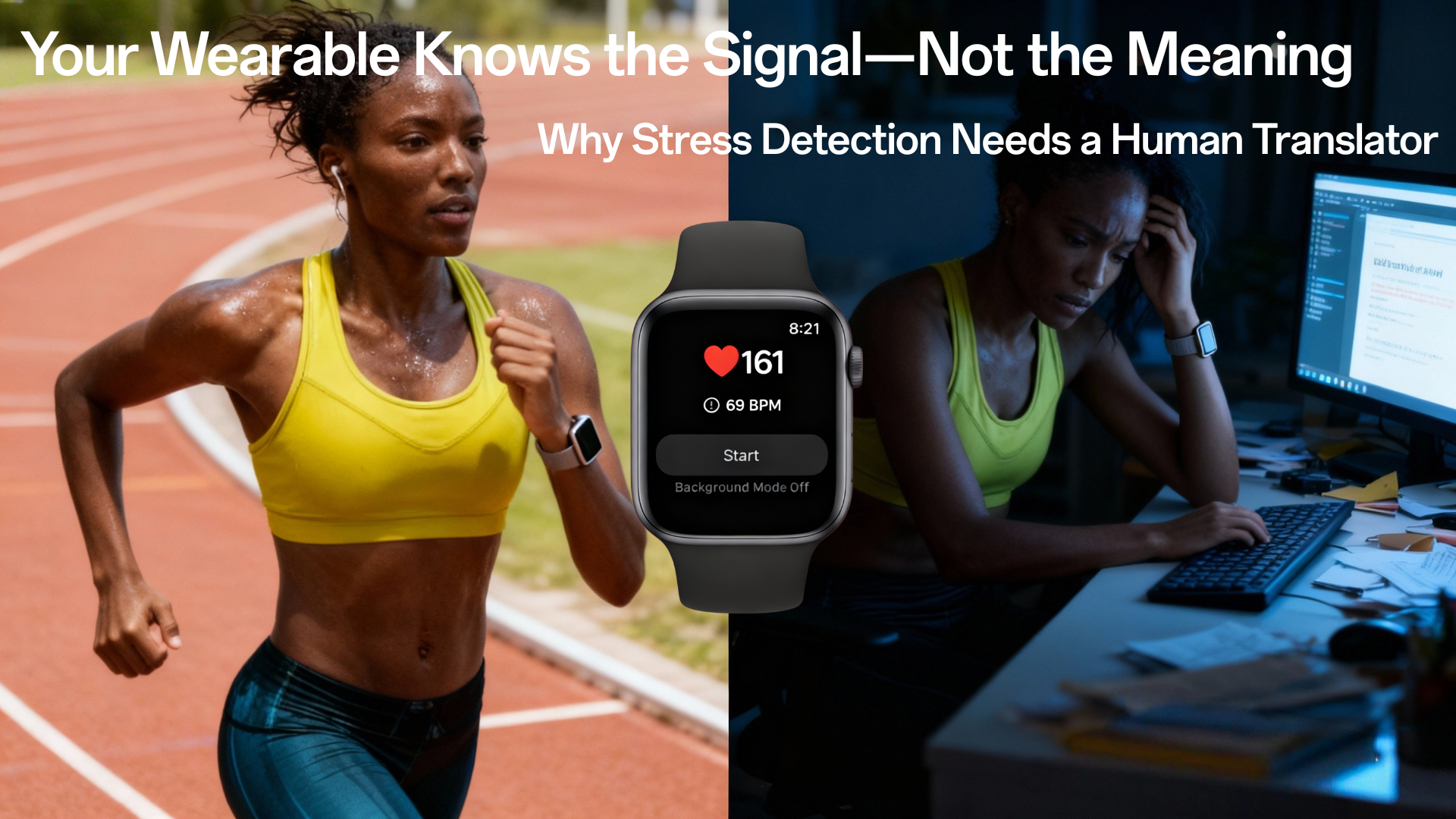
Nous vivons à l'ère de l'auto-quantification constante. Nos appareils – portés aux poignets, aux doigts et sur la poitrine – promettent un accès en temps réel à nos états physiologiques les plus profonds, reflétant tout, de l'état de récupération aux niveaux de stress chronique. Au cœur de cette promesse se trouve la variabilité de la fréquence cardiaque (VFC), le biomarqueur de référence utilisé pour évaluer l'équilibre subtil et crucial du système nerveux autonome (SNA).
Plus nous effectuons de suivi, plus il devient facile de confondre ce qui est mesurable avec ce qui est significatif. La plupart des objets connectés grand public utilisent des capteurs optiques (photopléthysmographie, ou PPG) pour calculer une mesure apparentée appelée variabilité de la fréquence cardiaque (VFC) . Cette distinction constitue la limite essentielle qu'il nous faut clarifier. Comprendre que la VFC et la VFC réelle ne sont pas interchangeables ne signifie pas déclarer les données des objets connectés inutiles ; il s'agit d'établir un contexte réaliste pour leur utilisation, en veillant à tirer parti de leur accessibilité sans tomber dans l'illusion d'une infaillibilité clinique.
I. La frontière invisible : la limite physiologique entre la PRV et la HRV
Pour interpréter correctement les données issues des dispositifs portables, il est essentiel de comprendre la différence scientifique fondamentale entre les signaux mesurés. Cette limite, définie par la physiologie, impose une contrainte stricte à la précision de la VPP.
Le conflit des signaux : électricité contre fluide
L'électrocardiographie (ECG) est la méthode de référence pour l'évaluation scientifique et clinique de la variabilité de la fréquence cardiaque. Elle utilise des électrodes ou des sangles pectorales pour enregistrer l' activité électrique directe du cœur (l'intervalle RR). Ce signal électrique, instantané et précis, offre une vision directe de la régulation autonome.
La technologie PPG, en revanche, est une technique optique qui mesure les variations dynamiques du volume sanguin — la dynamique des fluides — dans la microvascularisation sous-cutanée. Cette dépendance au système vasculaire périphérique implique que le flux de données résultant, le PRV, est, par nature, éloigné de l'activité électrique réelle du cœur .
Le filtre vasculaire : perte de granularité
La structure physique du système vasculaire artériel agit comme un filtre passe-bas sur l'onde de pouls lors de sa propagation jusqu'au poignet ou au doigt. Cet effet de filtrage atténue les fluctuations infimes et à haute fréquence du volume sanguin, pourtant essentielles à une analyse précise de la variabilité de la fréquence cardiaque (VFC). Cette perte de précision explique pourquoi la VFC peine à saisir les nuances subtiles du système nerveux autonome.
- Sous-estimation systémique : des études rigoureuses comparant les mesures battement par battement sur des populations cliniques vastes et diversifiées confirment que le PRV sous- estime systématiquement et significativement toutes les mesures clés de la VFC dans le domaine temporel, y compris le rMSSD, le SDNN et le pNN50, par rapport à l’ECG.
- Indicateur de substitution non valide : L’estimation de la VFC par la PRV étant faible et non uniforme , il est impossible d’appliquer un simple facteur de correction pour l’aligner sur l’ECG clinique. La PRV est donc scientifiquement définie comme un indicateur de substitution non valide de la VFC, notamment lorsqu’une grande précision ou un diagnostic clinique est requis.
Cette limite souligne que dans le domaine de la santé — où la marge d'erreur acceptable est faible —, le fait de se fier uniquement à la PRV pour évaluer la gravité d'une affection chronique, telle qu'un événement cardiovasculaire, pourrait avoir un impact critique sur la capacité d'un clinicien à évaluer et à traiter la progression de la maladie.
II. Redéfinir la valeur : la PRV comme fenêtre utile sur les rythmes corporels
Rejeter la PRV sous prétexte qu'elle n'est pas la VFC serait comme rejeter une boussole parce qu'elle n'est pas un GPS. Toutes deux ont leur utilité : l'une pour la précision, l'autre pour l'orientation. Cependant, ignorer complètement la PRV serait passer à côté de l'essentiel. Son intérêt ne réside pas dans la reproduction de la VFC clinique, mais dans l'élargissement de l'accès à un suivi physiologique pertinent et personnalisé.
1. Suivi fiable dans des contextes de faible mobilité
L’utilité du PRV dépend du contexte, excellant précisément lorsque les effets perturbateurs du mouvement sont minimisés, le transformant en une évaluation fiable de la durée de vie .
- Précision nocturne : Pendant le sommeil, lorsque le corps est immobile, les dispositifs PPG de haute qualité (comme les bagues portées au doigt) présentent une précision exceptionnelle pour la mesure de la fréquence cardiaque au repos (FCR) et de la variabilité de la fréquence cardiaque ( VFC ) (CCC jusqu’à 0,99 ; MAPE aussi faible que 5,96 %), comparable à celle de l’ECG, considéré comme la référence. Ceci justifie leur utilisation pour l’évaluation de la santé et du rétablissement à long terme.
- Fiabilité statique : Même les appareils placés sur le haut du bras (position proximale), comme le Polar Verity Sense, présentent une excellente précision (MAPE de 1,35 %) lors de diverses activités, ce qui en fait une alternative fiable aux ceintures pectorales ECG lorsque les mouvements sont limités ou contrôlés. Les mesures de la VFC (RMSSD et SDNN) présentent également une fiabilité bonne à excellente avec l’ECG lorsque les participants sont mesurés en position couchée sur le dos .
2. Le pouvoir unique des tendances longitudinales continues
La véritable force des dispositifs portables réside dans leur capacité à surveiller en continu les indicateurs de santé – une prouesse logistique impossible à réaliser en laboratoire. Ce flux continu de données recueillies en temps réel nous permet d'identifier des tendances à long terme et des signes avant-coureurs qu'une simple consultation en clinique ne pourrait pas détecter.
- Prédiction supérieure du risque métabolique : les mesures de fréquence cardiaque issues de dispositifs portables (basées sur la photopléthysmographie) peuvent être des indicateurs plus sensibles du risque de maladies chroniques que la fréquence cardiaque de repos mesurée en clinique. Chez les hommes, la surveillance continue de la fréquence cardiaque minimale pendant le sommeil était significativement associée à un risque quatre fois plus élevé de syndrome pré-métabolique ou de syndrome métabolique, démontrant ainsi une meilleure adéquation du modèle que la fréquence cardiaque de repos mesurée en clinique.
- Cartographie quotidienne du stress et de la récupération : La possibilité de suivre des indicateurs comme la VFC minute par minute permet aux chercheurs d’étudier les liens entre les facteurs psychologiques (tels que l’anxiété ou la qualité du sommeil) et les indicateurs physiologiques de stress en situation réelle . Ce travail fondamental soutient le développement d’algorithmes d’apprentissage automatique sophistiqués, capables de surveiller le stress en temps réel et de guider des interventions adaptatives ciblées .
Mais rejeter la VRP sous prétexte qu'elle n'est pas la VRC serait comme rejeter une boussole parce qu'elle n'est pas un GPS. Toutes deux ont leur utilité : l'une pour la précision, l'autre pour l'orientation. Sa valeur réside dans l'accès qu'elle élargit.
III. Constat de la réalité et perspectives d'avenir : clarifier les limites
Bien que la PRV soit utile pour suivre les tendances, il est essentiel, pour la prochaine vague d'innovations dans le domaine des objets connectés, de reconnaître sa sensibilité aux variables du monde réel.
1. Le défi du mouvement et de la démographie
Dans les environnements non statiques, les limitations du PPG refont surface, affectant gravement la précision :
- Le « falaise dynamique » : la précision diminue systématiquement lors des phases transitoires (variations rapides du rythme cardiaque, comme au début d’un sprint ou lors d’un mouvement brusque) en raison de l’exacerbation des erreurs de mesure causées par les artefacts de mouvement. Les appareils portés au poignet (comme le WHOOP 4.0 et la Withings Scanwatch) ont présenté des performances particulièrement médiocres lors des transitions impliquant le début d’un mouvement ou des variations rapides du rythme cardiaque.
- Inégalités démographiques : La précision des capteurs PPG à LED vertes, couramment utilisés dans les objets connectés, peut être compromise chez les personnes à la peau plus foncée en raison d’une absorption accrue de la lumière par la mélanine. De plus, des facteurs comme l’épaisseur accrue de la peau associée à un IMC plus élevé peuvent nuire à la fidélité du signal.
Ces problèmes soulignent que, pour obtenir des données fiables, les utilisateurs doivent respecter des protocoles de mesure standardisés, en utilisant les données d'accélérométrie (communes à la plupart des objets connectés) pour filtrer les périodes contaminées par des mouvements importants.
2. Évolution du secteur : de la boîte noire à l’intégration de l’ECG
Les défis posés par la PRV ont forcé l'industrie à évoluer, entraînant des améliorations dans la robustesse des algorithmes et la technologie des capteurs.
- Optimisation des algorithmes : les chercheurs préconisent l’utilisation de fenêtres de moyennage plus larges (par exemple, 60 secondes) afin d’atténuer les erreurs dues à la variabilité rapide du signal pendant le mouvement. Les fabricants perfectionnent en permanence leurs algorithmes propriétaires pour filtrer le bruit et traiter les données complexes.
- Le besoin de transparence : Un obstacle majeur à l'optimisation de l'utilité demeure le manque de transparence concernant les algorithmes propriétaires — la manière dont les signaux sont acquis, filtrés et pondérés — ce qui complique la validation et empêche la comparaison directe des résultats entre différents appareils commerciaux.
- L'avenir réside dans l'ECG : pour une surveillance de haute précision et de qualité clinique, la solution ne réside pas dans le perfectionnement de la VPP, mais dans l'intégration d' une technologie ECG précise à des dispositifs portables non invasifs. Les vêtements intelligents et les appareils de bras perfectionnés qui enregistrent un ECG à une dérivation présentent déjà une excellente concordance avec les moniteurs Holter utilisés en milieu hospitalier, ce qui laisse entrevoir la possibilité d'atteindre une précision clinique dans un environnement confortable et ambulatoire.
Conclusion
Le dispositif portable de surveillance de la fréquence cardiaque (PRV) est un outil puissant et continu qui permet une évaluation permanente de la santé personnelle et le suivi des tendances à long terme, notamment pour des indicateurs essentiels comme la fréquence cardiaque minimale et la récupération du sommeil. Son accessibilité révolutionne notre compréhension du stress et de la forme physique en dehors du cadre clinique.
Cependant, la frontière scientifique demeure claire : la PRV ne doit pas être confondue avec la précision clinique requise pour la VFC dérivée de l’ECG. Les utilisateurs doivent être guidés pour interpréter la PRV comme une mesure de tendance et d’équilibre global du système nerveux autonome, et faire preuve de prudence lors de son application à un diagnostic aigu ou à l’interprétation de la spécificité battement par battement. La poursuite des recherches sur la validation et le développement de dispositifs ECG portables transparents et de haute fidélité sont des étapes essentielles pour combler cet écart.
Pour les concepteurs et les utilisateurs d'objets connectés, comprendre cette limite est essentiel pour garantir que la technologie serve la santé et non l'illusion de la précision.


Laisser un commentaire
Ce site est protégé par hCaptcha, et la Politique de confidentialité et les Conditions de service de hCaptcha s’appliquent.