

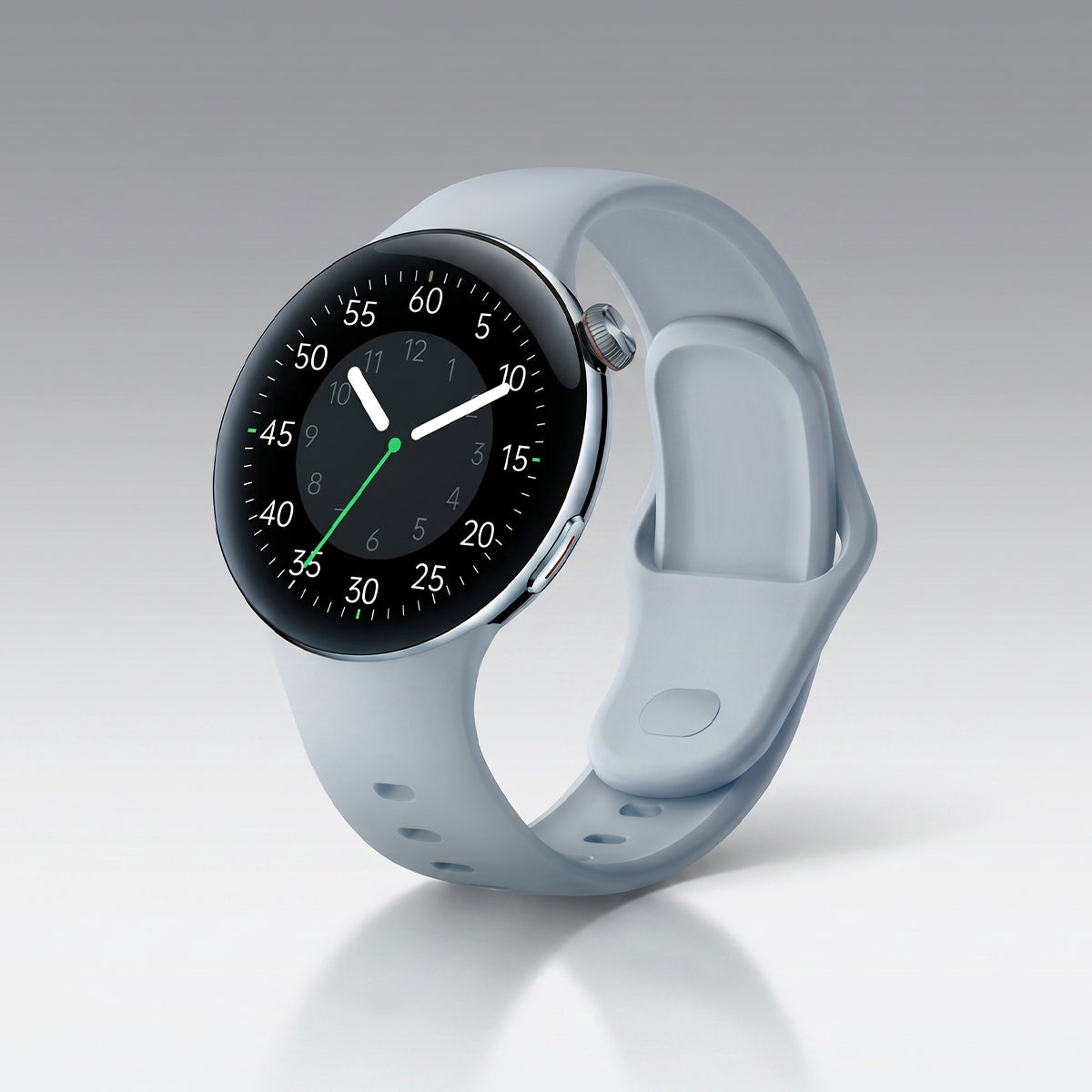









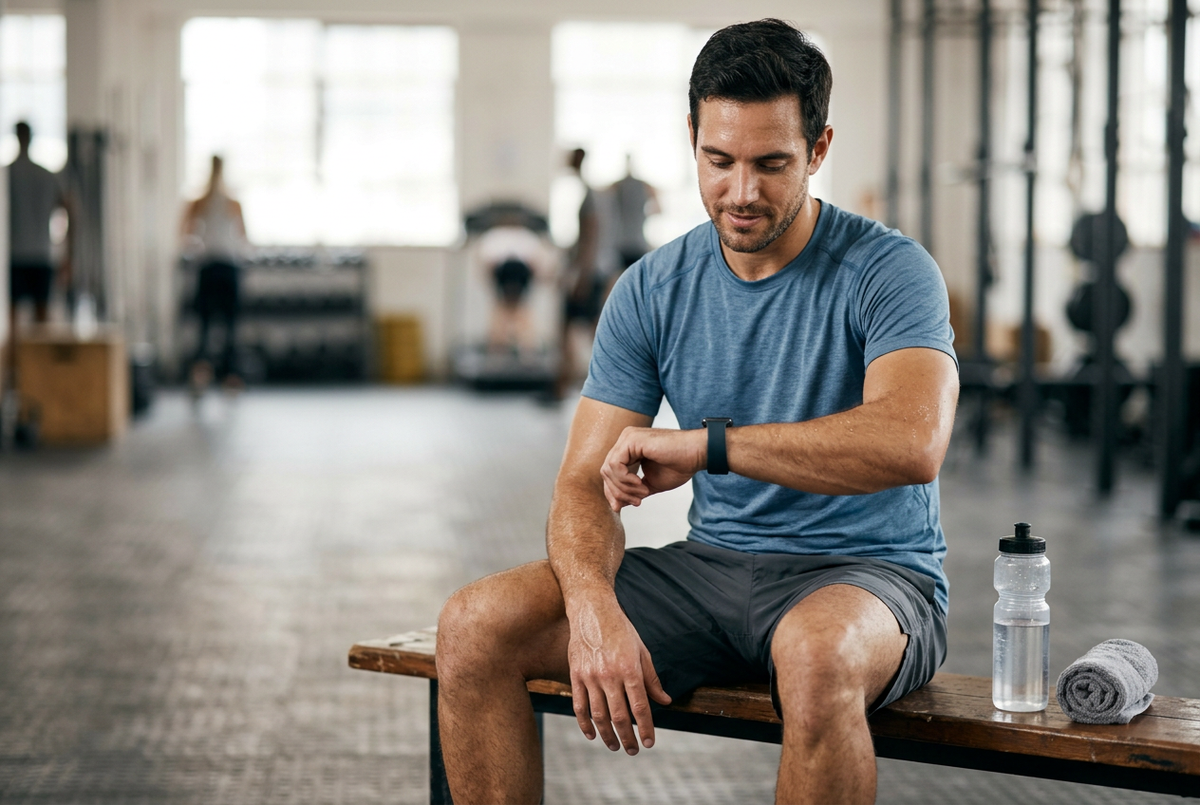
Short answer: Your watch doesn't measure sleep directly. It measures movement and heart rate, then uses an algorithm to guess which sleep stage you're probably in. It's surprisingly good at telling asleep from awake — but it's essentially guessing when it comes to deep sleep versus REM. Here's what's actually happening on your wrist overnight.
The Two Signals Your Watch Uses
Forget brainwaves. Your watch has no EEG, no eye sensors, no muscle monitors. It works with two indirect signals:
1. Movement (accelerometer)
When you stop moving, your watch assumes you're probably asleep. It also tracks respiration-induced micro-movements — the tiny shifts your body makes as you breathe — to distinguish sleep from quiet wakefulness.
2. Heart rate (PPG)
Your heart rate drops in deep sleep and becomes irregular during REM. Heart rate variability (HRV) follows the same pattern: deep sleep = lower heart rate, higher HRV; REM = higher heart rate, lower HRV.
That's it. Motion plus pulse. Everything else is inference.
How the Algorithm Decides: Awake, Light, Deep, REM
Every 30 seconds or so, your watch takes a snapshot of those signals and feeds them into a model trained on people who slept in labs with real EEG.
The learned patterns look roughly like this:
-
Low heart rate + high HRV + still body → deep sleep
-
Irregular heart rate + irregular breathing + still body → REM
-
Moderate heart rate + some movement → light sleep
-
High heart rate + lots of movement → awake
Then it stitches those snapshots into the blocky chart you see in the morning.
The problem: quiet wakefulness looks a lot like light sleep. If you're lying still watching a movie, your watch may log it as sleep.
Why Sleep Staging Is the Hardest Part
A sleep lab uses polysomnography (PSG) — EEG electrodes on your scalp measuring brain activity directly. That's the only way to truly know what stage your brain is in.
Your watch has none of that. It's working with signals that are correlated with brain activity but not equivalent to it.
That gap shows up in the data.
The Research: Consumer Devices vs. Clinical PSG
A 2026 study compared Apple Watch, Fitbit, and Polar against home polysomnography. The findings were consistent with earlier research:
-
Apple Watch underestimated light sleep by ~74 minutes and overestimated REM by ~30 minutes
-
Fitbit overestimated light sleep by ~58 minutes
A 2025 validation of six wrist-worn devices found all of them detected >90% of sleep epochs — meaning they're good at knowing you were asleep — but their specificity for wake was low (29–52%) and stage agreement was only fair to moderate (Cohen's κ 0.21–0.53).
Another review summed it up cleanly: >90% accuracy for sleep–wake detection, but only 50–86% sensitivity for specific stages — and stage estimates can be biased.
Translation: your watch knows that you slept. It's much shakier on how you slept.
What Your Watch Does Well (and Where It Falls Short)
Trust it for:
-
Total sleep time — usually within 20–30 minutes
-
Sleep vs. awake — fairly reliable
-
Weekly trends — "my sleep duration has been dropping" is a real signal
-
Spotting disruptions — frequent wake-ups, restless nights
Don't trust it for:
-
Exact stage minutes — deep sleep and REM numbers are estimates
-
One single night — a bad score might just be a noisy sensor
-
Diagnosing sleep problems — it's not a medical device
A "poor" score can also reflect physiology, not just sleep. Higher overnight heart rate and lower HRV — from alcohol, stress, or illness — can drag down your score even if you slept fine.
The Bottom Line
Your watch isn't reading your dreams. It's reading your stillness and your pulse, then guessing what your brain is up to. It's clever, it's useful, and it's an estimate, not a lab report.
Use it for trends, not verdicts. A single night means nothing. Two weeks of declining deep sleep means something. And if your watch keeps flagging rough nights — or the data is making you anxious — the problem might be the sensor, not your sleep.


Laisser un commentaire
Ce site est protégé par hCaptcha, et la Politique de confidentialité et les Conditions de service de hCaptcha s’appliquent.