

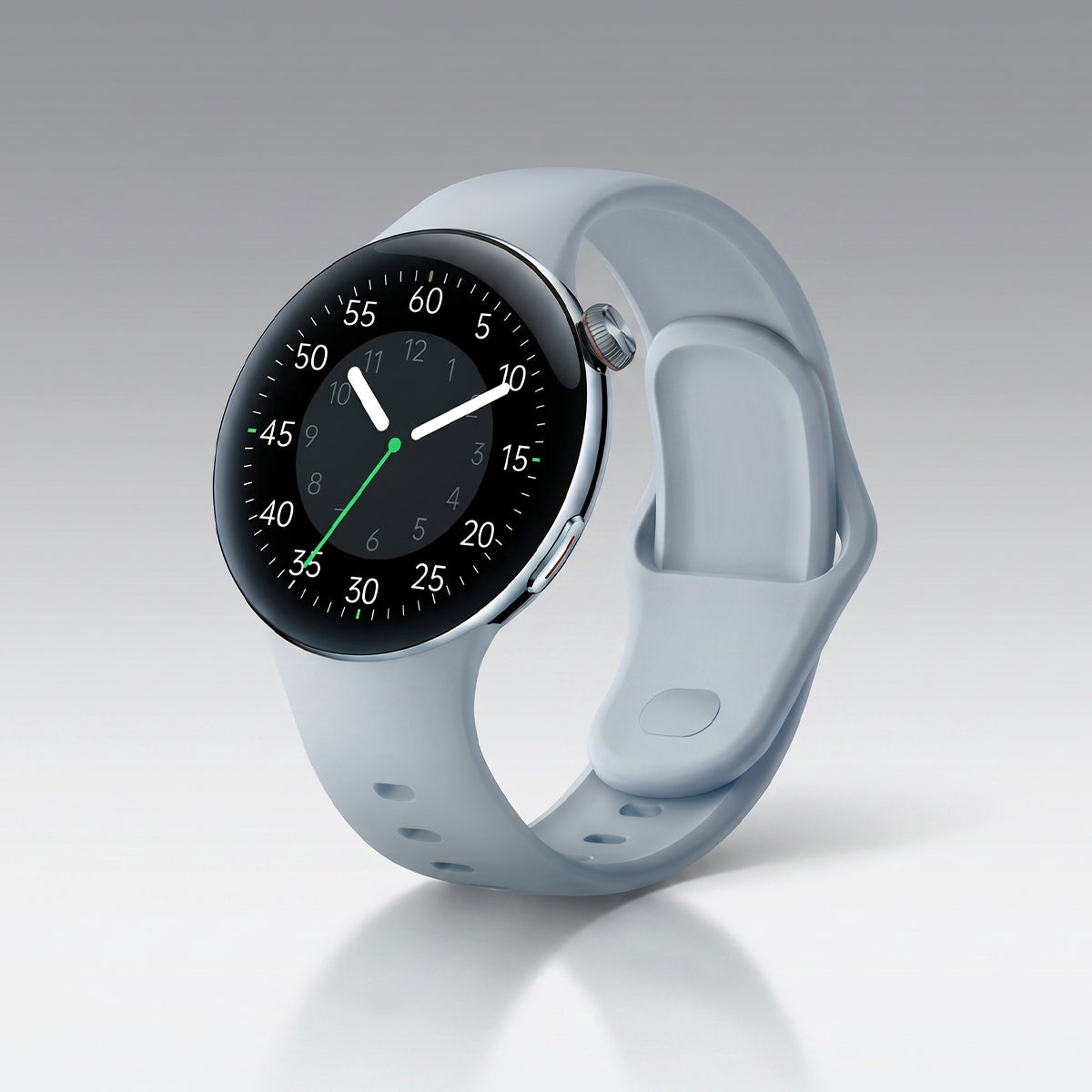









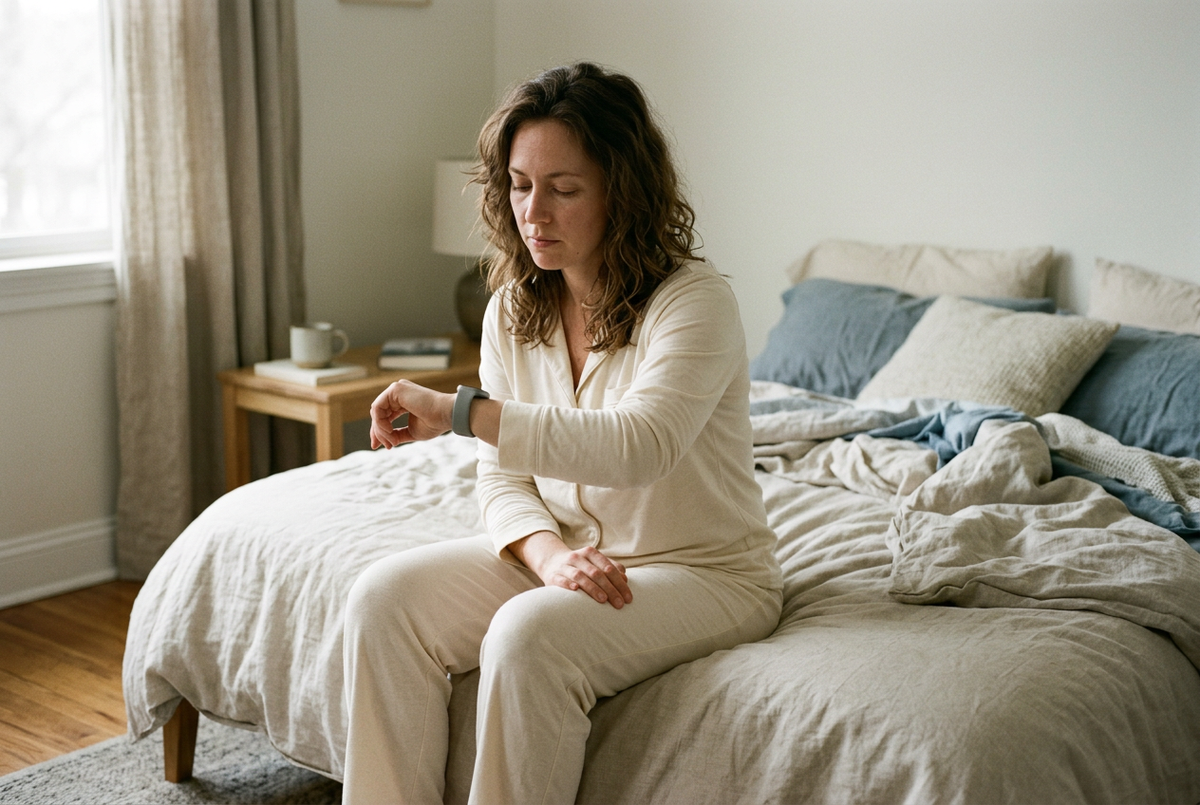
You wake up feeling exhausted, but your wrist buzzes to congratulate you on a "90/100" sleep score. If you are confused by your sleep score meaning, you are not alone. To truly understand this daily number, we need to look at how does sleep tracking work and have smartwatch sleep stages explained.
In short: your watch is not reading your brainwaves; it is estimating your rest based on movement and heart rate. While smartwatches are great for tracking your overall schedule, they are not clinical medical devices. Here is how to actually decode your nighttime data to improve your habits.
How Your Watch Estimates Sleep
Unlike a clinical sleep study (polysomnography) that uses electrodes to measure actual brain activity, consumer smartwatches rely on sensors on your wrist to make educated guesses:
-
Accelerometers (Movement): This sensor detects motion. If your wrist is completely still for a prolonged period, the algorithm assumes you have fallen asleep. When you toss and turn, it logs restlessness or awakenings.
-
Heart Rate and HRV (Heart Rate Variability): As you transition into sleep, your heart rate naturally slows down. The watch tracks these drops, along with the varying time intervals between heartbeats (HRV), to estimate which stage of sleep you are in.
Studies show that consumer wearables are highly accurate at measuring total sleep time, but their ability to perfectly pinpoint specific sleep stages remains an estimation compared to lab equipment.
Deep Sleep, REM, Light Sleep: The Stages Explained
To make sense of the colorful bar charts in your health app, you need to understand the biological purpose of each phase. A healthy adult typically cycles through these stages 4 to 5 times a night:
-
Light Sleep (50-60% of the night): This is the foundational transition phase. Your body is resting, but you can still be easily awakened by noise. It is completely normal for this to make up the bulk of your night.
-
Deep Sleep (15-25% of the night): The physical restoration phase. Your blood pressure drops, breathing slows, and your body repairs muscle tissue and strengthens the immune system. This usually dominates the first half of the night.
-
REM Sleep (20-25% of the night): The mental restoration phase. Rapid Eye Movement (REM) is when you dream. Your brain consolidates memories, processes emotions, and clears out mental clutter. This stage typically dominates the second half of the night.
Why Your Sleep Score Might Not Match How You Feel
A sleep score is simply a proprietary algorithm's grade based on duration, heart rate dips, and periods of restlessness.
A high score does not guarantee you will feel energized. If you stayed perfectly still but suffered from racing, anxious thoughts, your watch might register "light sleep" while your brain was practically running a marathon. Conversely, you might wake up feeling fully refreshed after 6.5 hours, but receive a "poor" score simply because the software heavily penalizes anything under 8 hours.
What You Should Actually Pay Attention To: Long-Term Trends
Fixating on a single night's score can lead to orthosomnia—an unhealthy obsession with perfect sleep data that actually causes sleep-disrupting anxiety. Instead, use your smartwatch to monitor long-term trends:
-
Schedule Consistency: Are your bedtime and wake-up times stable across the week? Consistency regulates your circadian rhythm better than just chasing total hours.
-
Heart Rate Dips: Does your resting heart rate drop significantly during the night compared to the daytime? A lack of a dip can indicate high stress, late-night alcohol consumption, or an impending illness.
-
Overall Duration Trend: Look at your weekly or monthly averages. Are you generally getting 7-8 hours, regardless of what the nightly stage breakdown says?
FAQ: Why does my watch say I slept 8 hours, but I felt awake all night?
If you are lying in bed awake but remaining perfectly still (often out of frustration or trying not to wake a partner), the accelerometer registers zero movement. Combined with a resting heart rate that drops because you are lying down, the algorithm mistakenly logs this motionless resting as "light sleep." Because smartwatches cannot read brainwaves, they struggle to distinguish between quietly lying awake and actual light sleep.



Laisser un commentaire
Ce site est protégé par hCaptcha, et la Politique de confidentialité et les Conditions de service de hCaptcha s’appliquent.