

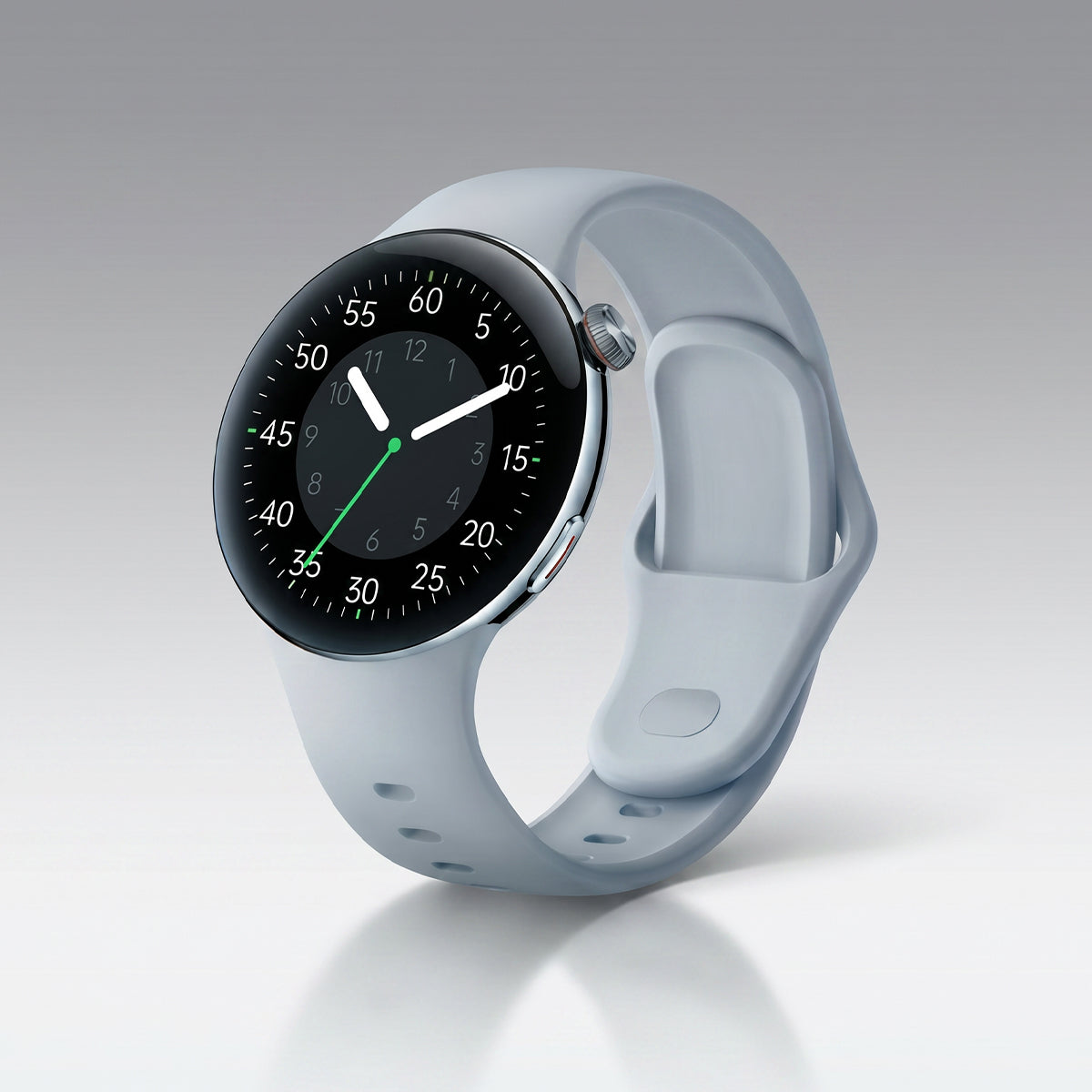







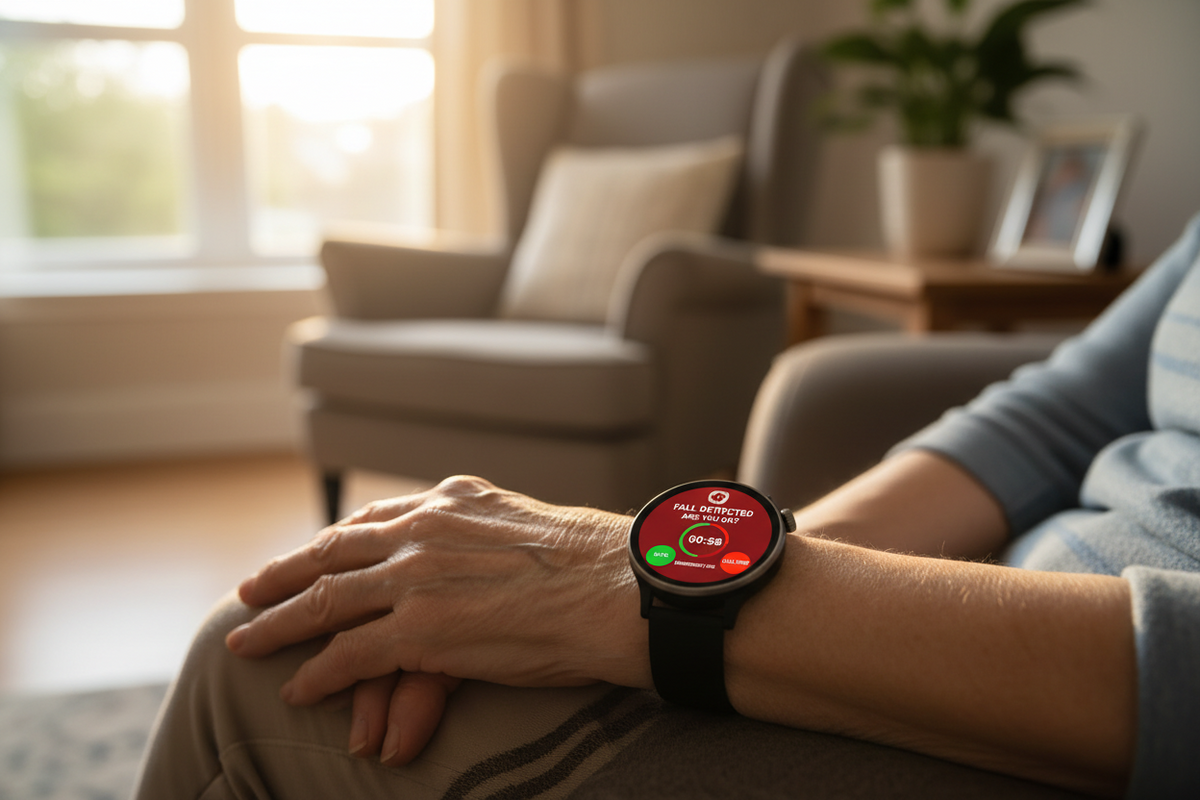
Here's a scary stat: more than 1 in 4 adults over 65 falls each year — and one in five of those falls causes a serious injury.
Here's a scarier one: most people who own a watch with fall detection have never tested it. They just assume it works.
Let's fix that. It takes five minutes.
How Fall Detection Actually Works
Your watch isn't watching you. It's reading motion.
Three things happen in sequence:
-
A hard impact — the accelerometer registers a sudden spike, like a body hitting the floor
-
A period of stillness — after the impact, there's no movement. You're down, not just stumbling
-
A confirmation prompt — the watch vibrates and asks, "Did you fall?" If you don't respond within about 30–60 seconds, it calls for help
That last part is key: it's the silence that triggers the alert, not the fall itself. Which is why it works when you're unconscious — and why it sometimes fires when you're just clapping or dropping your wrist onto a table.
Setting It Up (Do This Today)
-
Turn it on. Fall detection is often off by default, especially for users under a certain age. Check your watch settings manually — don't assume.
-
Add emergency contacts. Fall detection is useless if there's no one to call. Add at least two: a family member and a neighbour or friend.
-
Enable location sharing so responders know where you are.
-
Check your medical ID — blood type, allergies, medications. First responders look for it.
-
Confirm your region supports emergency calling. Some features only work in certain countries.
How to Test It Safely (Without Actually Falling)
Don't throw yourself on the floor. Use these methods instead:
Option 1: The cushion test
Place your watch on a soft cushion or pillow, then firmly pat it while simulating a drop — some watches can be triggered by controlled impact. Results vary, so check your manual.
Option 2: The manual trigger
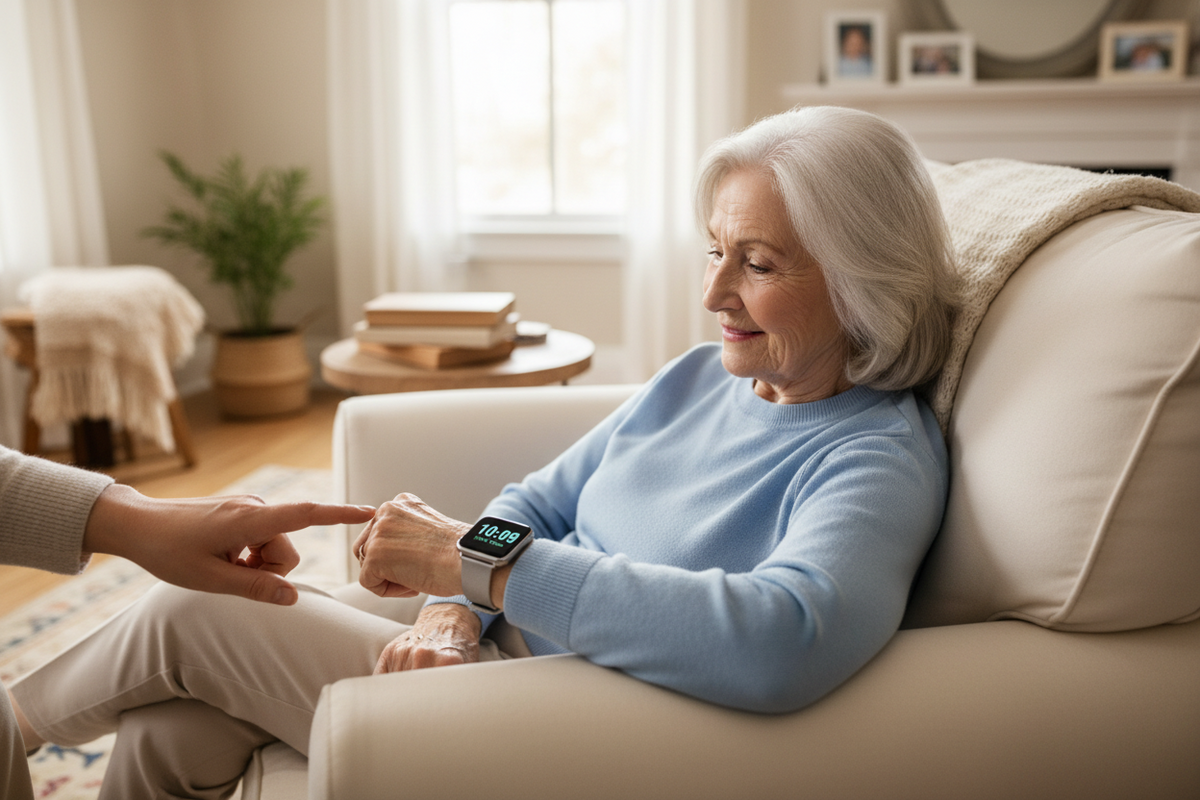
Most watches have a manual SOS you can trigger by holding a button. Test that — it confirms your contacts, calling, and location sharing all work. This is the part that most often fails.
Option 3: The real test
If your watch supports it, simulate a fall by sitting on the floor and lying still (with someone nearby). Wait out the full countdown and let it call. Warn your emergency contact first.
Always tell your contacts beforehand. Otherwise you'll send your whole family into a panic — and they'll stop trusting the alerts.
The Things That Trip It Up
-
Soft falls — sinking into a couch or carpet may not register a strong enough impact
-
Slow falls — if you slide down a wall, there's no sharp spike
-
Loose fit — a watch that slides around reads motion poorly
-
Battery dead — the simplest failure of all. Keep it charged.
-
False alarms — clapping, golf swings, and dropping your arm can trigger it. Annoying, but better than missing a real one.
The Bottom Line
Fall detection is one of the few wearable features that can genuinely save a life. But it's not magic — it needs to be switched on, connected, and tested.
Take five minutes today. Turn it on, add your people, and run a test. Then you'll know it works — before the day you actually need it.
Because "I think it's on" isn't a safety plan. 😉

Commenta
Questo sito è protetto da hCaptcha e applica le Norme sulla privacy e i Termini di servizio di hCaptcha.