

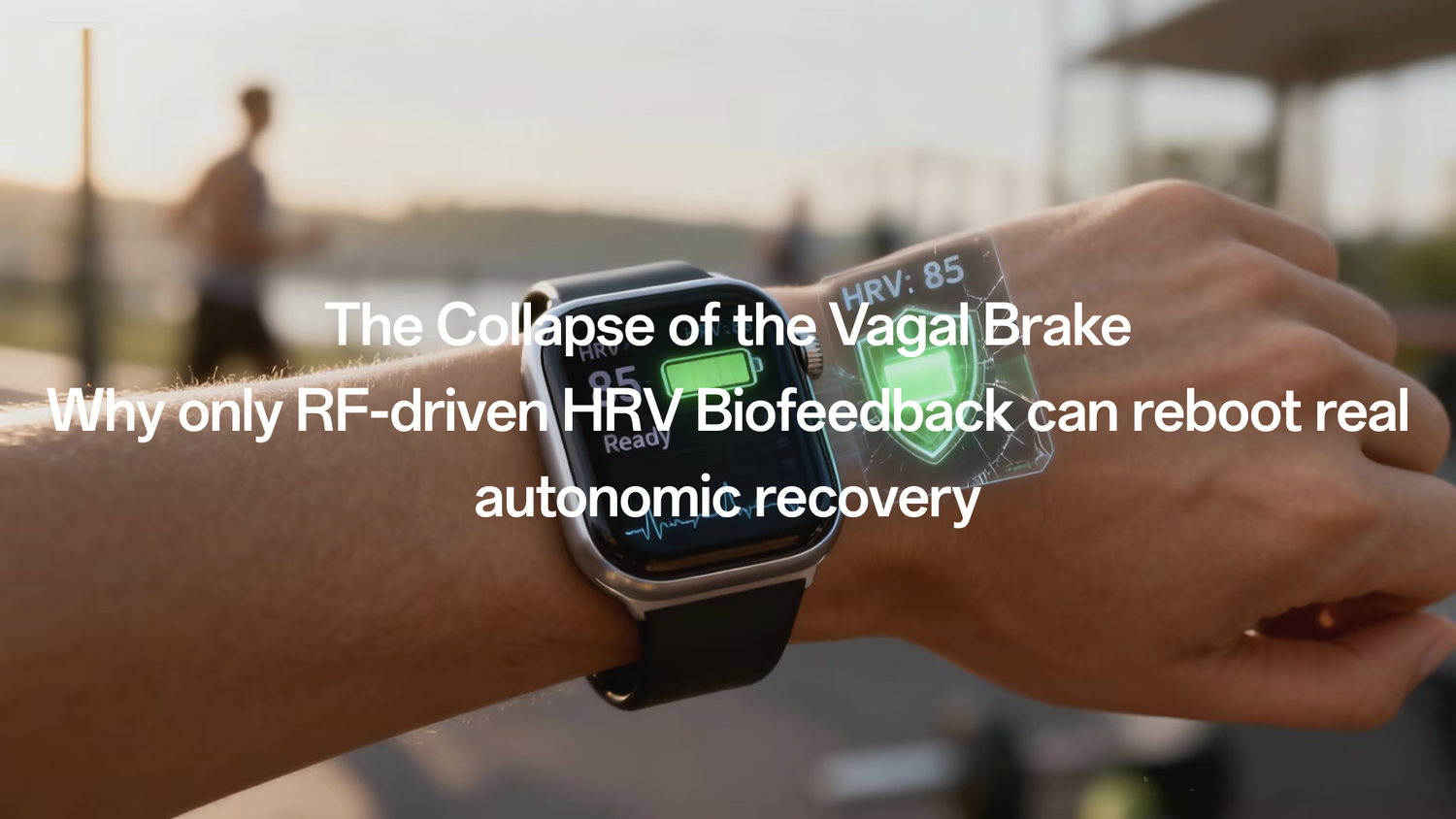
Introduction: The Health Paradox of Our Time
We exist in an era of unprecedented health information, supplement abundance, and fitness tracking. Yet, despite dedicating extraordinary resources to self-improvement, symptoms of chronic anxiety, pervasive exhaustion, and burnout are reaching epidemic levels. Why does the modern human, trying harder than ever before, seem to be fundamentally deteriorating?
The paradox suggests a profound misdiagnosis. We treat the symptoms—the lack of energy, the poor sleep, the escalating anxiety—as isolated problems, when the real crisis is the failure of the body's central operating system to run its necessary repair cycles. The human nervous system is continuously locked in an exhausting state of alarm, and the key to diagnosing this failure lies in mastering the single, quantifiable metric of internal resilience: Heart Rate Variability (HRV).
Chapter 1: HRV: The Scorecard of Your Brain’s Command
Most individuals mistake HRV for simple heart rate data. In truth, HRV is a precise, non-invasive readout of the Brain-Heart Axis (BHA), reflecting the overall flexibility of the Autonomic Nervous System (ANS).
This system is constantly engaged in a tug-of-war between the Sympathetic Nervous System (SNS), the accelerator for action and stress, and the Parasympathetic Nervous System (PNS), the essential vagal brake responsible for recovery and self-regulation. High HRV is the physiological signature of resilience, adaptability, and better physical and mental health.
Why is HRV the master metric? Because it measures the functional integrity of the neural connection between our emotional brain and our physical body. High HRV (specifically vagal tone metrics like RMSSD or HF power) is consistently associated with stronger functional connectivity between the amygdala (the brain’s threat center) and the medial prefrontal cortex (mPFC) (Neuroimage, 2016). This is the physical mechanism of emotional control. When this connection is robust, the prefrontal cortex—the part of the brain responsible for high-level decision-making—can effectively regulate the alarm response.
The Lived Experience: If an individual finds themselves easily startled, unable to settle down after a stressful meeting, or prone to emotional overload, it is not simply "poor self-control." It means the neural machinery that controls the internal brake has objectively weakened. That feeling of anxiety is the physiological result of the vagal brake being disengaged.
Therefore, low HRV is not a benign result of stress; it is a quantifiable measure of system-wide regulatory decline. This failure to control the internal state is what inevitably triggers the body’s downstream collapse, which we will now trace to its chronic consequences.
Chapter 2: The Universal Crisis of System Failure
When the ANS loses its flexibility and the SNS maintains dominance, the body becomes trapped in a perpetual state of emergency. This is the trans-diagnostic health crisis—a single root failure generating multiple, seemingly unrelated diseases.
The physiological sequence is unavoidable:
Stress → SNS dominance → Low HRV → Amygdala unchecked → Inflammation → Impaired Repair → Disease Accumulation.
This loss of ANS adaptability is the mechanism linking various pathologies:
Cardiovascular Fatalism: HRV serves as a critical prognostic marker. A low HRV reading signifies a profound increase in health risk. Specifically, reduced HRV (such as SDNN < 70 ms) is associated with a 1.5- to 2.3-fold higher risk of major adverse cardiovascular events (MACE) (Appl Psychophysiol Biofeedback, 2025). Furthermore, studies have shown that a decrease in ANS function precedes the development of clinical hypertension (Hypertension, 2003). This proves that the system failure is happening long before the organ failure.
The Emotional Cost: The same core deficit drives mental health disorders. HRV metrics reflecting vagal control (RMSSD, HF power) are significantly decreased in patients with depression, panic disorder, and anxiety (Indian J Psychol Med, 2024; Front Psychiatry, 2014). This low HRV state explains why individuals suffering from these conditions are not simply "unmotivated"; their neural system has already lost the physiological capacity to exit the threat-response cycle.
The Inflammation Toll: The prolonged SNS dominance directly correlates with inflammatory biomarkers. Reduced HRV shows a significant negative correlation with elevated levels of inflammatory markers, such as C-reactive protein (CRP) and interleukin-6 (IL-6) (Clin Res Cardiol, 2011).
Therefore, only treating disease endpoints—like prescribing medication for inflammation or high blood pressure—cannot solve the fundamental problem. The system's master switch remains off, meaning any therapeutic intervention is merely temporary stabilization. This implies that truly sustainable health requires a non-pharmacological solution that can re-engineer the ANS's core capacity.
Chapter 3: The Universal Solution: Re-Engineering the Vagal Brake
If chronic stress has physically weakened the system's ability to recover, the solution must be a precise, bottom-up training method that targets the BHA itself. This solution is Heart Rate Variability Biofeedback (HRV-BF).
HRV-BF is not equivalent to passive deep breathing; it is a skilled discipline that uses real-time feedback to guide the breath to the individual's Resonance Frequency (RF), typically between 4.5 and 7 breaths per minute. This frequency is the optimal point where the heart and respiratory rhythms synchronize, maximizing the effects of the vagus nerve.
Evidence of Precision:
Studies show that HRV-BF practiced at the exact RF breathing results in a significantly greater increase in both Low Frequency (LF) power and the Coherence Ratio (CR) (p < .05) compared to merely pacing the breath (Computers in Human Behavior, 2023).
Restoring Capacity:
HRV-BF is proven to improve emotional and physical health and performance (Appl Psychophysiol Biofeedback, 2020). Its efficacy is widespread, demonstrating large effect sizes in improving depression, anxiety, and anger symptoms. Even in chronic pain conditions like fibromyalgia, HRV-BF has shown efficacy by helping the system restore autonomic balance (Appl Psychophysiol Biofeedback, 2007).
This universal efficacy means that if HRV is not restored, any personal effort toward self-regulation or emotional coping is merely "hard-slogging" against a weakened physiological engine.
Chapter 4: Mastery in the Everyday: Technology and the Age of Autonomy
The final piece of the puzzle is accessibility. Precision HRV training was once confined to clinics, but wearable technology and AI have brought this mastery directly to the user, making HRV the most actionable health metric.
High-Resolution Real-Time Insight:
Deep learning models can now detect acute cognitive stress from ultra-short (1-minute) RRI sequences with classification accuracy approaching 80% across diverse populations, including psychiatric cohorts (Frontiers in Psychiatry, 2025).
Measurable Resilience in the Workplace:
Employees participating in a mobile HRV-BfB training demonstrated a significant reduction in personal burnout (Cohen’s d = 0.63) and improved sleep quality (PSQI) in just four weeks (Appl Psychophysiol Biofeedback, 2024).
Self-Directed Change:
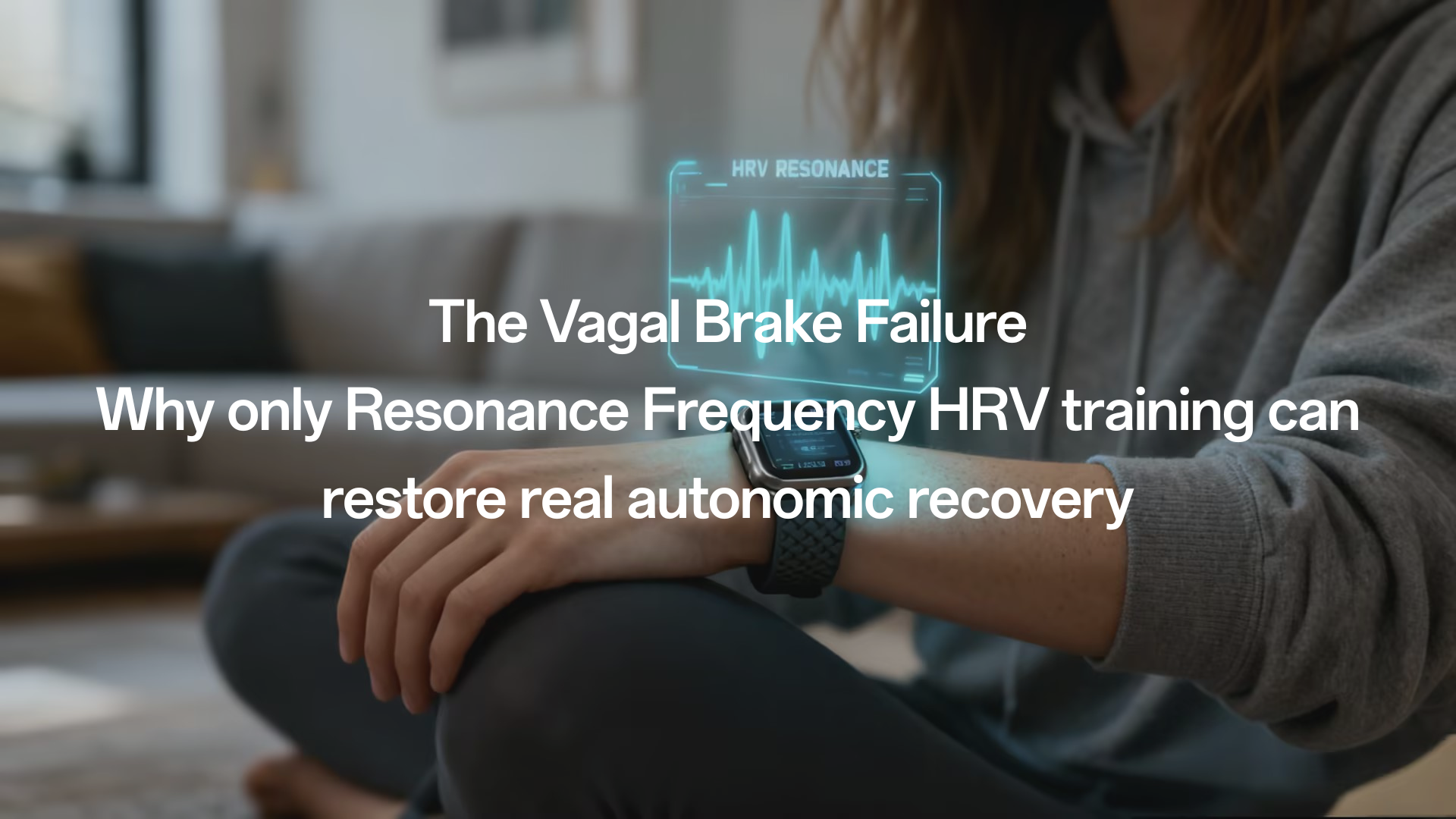
Because HRV training provides immediate, objective feedback—such as visual coherence scores—the user can literally see the moment their vagal brake engages.
Conclusion: The Inevitable Necessity of Balance
The widespread suffering from anxiety, burnout, and chronic disease is a failure of ANS regulation, not a collection of isolated symptoms. If we ignore HRV, we are perpetually misdiagnosing the problem and addressing mere downstream effects.
The evidence is clear: low HRV is the physiological signature of a system that has lost its power to heal itself.
The solution is an inevitable physiological necessity: engaging in HRV Biofeedback to strengthen the BHA through precise RF breathing. This action restores the system's flexibility, shifts the ANS out of emergency mode, and enables the body's natural processes of repair and resilience to finally take hold. The ultimate goal is not to eliminate stress, but to master the switch that allows us to exit it.


Laat een reactie achter
Deze site wordt beschermd door hCaptcha en het privacybeleid en de servicevoorwaarden van hCaptcha zijn van toepassing.