

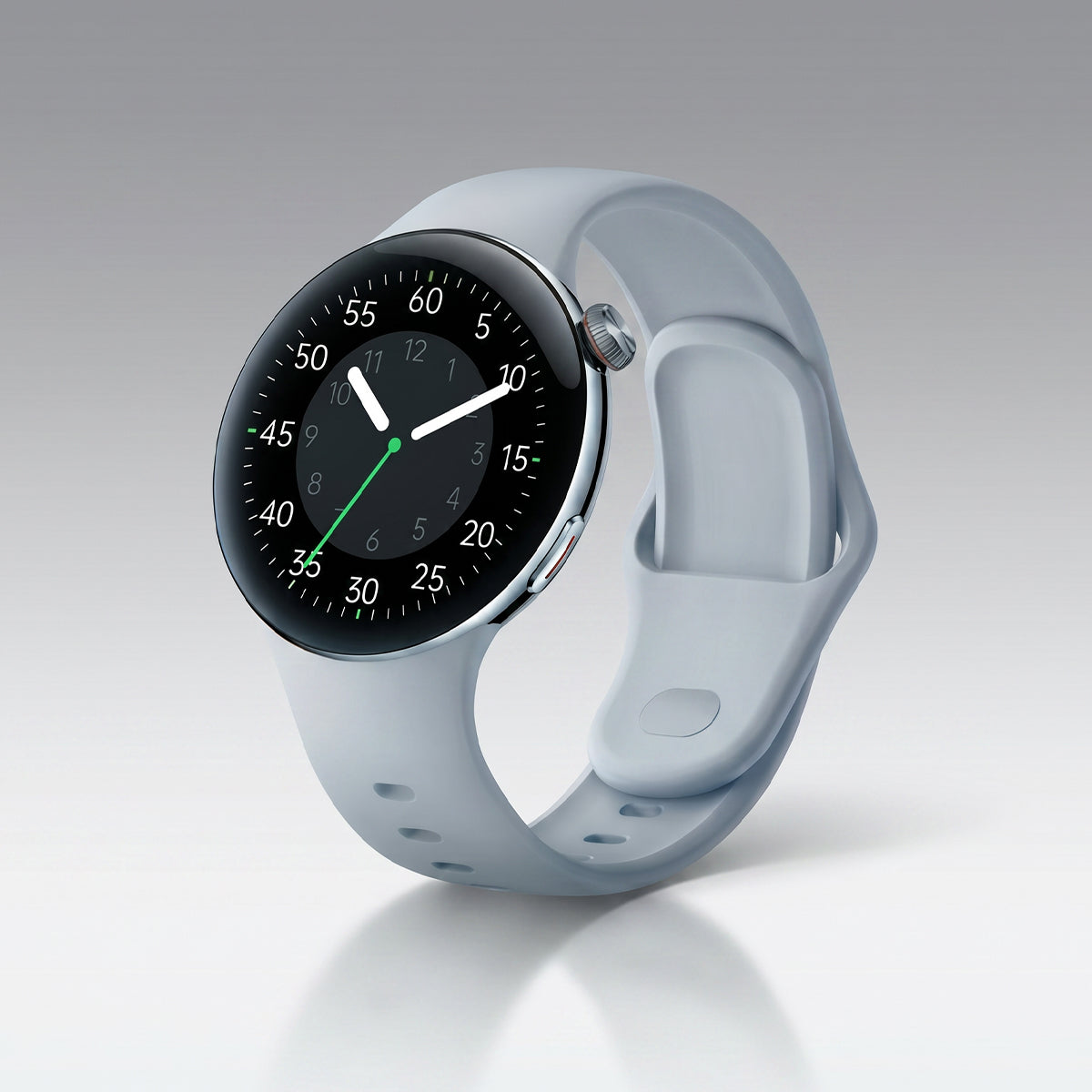







Understanding Wearable Sensor Technology
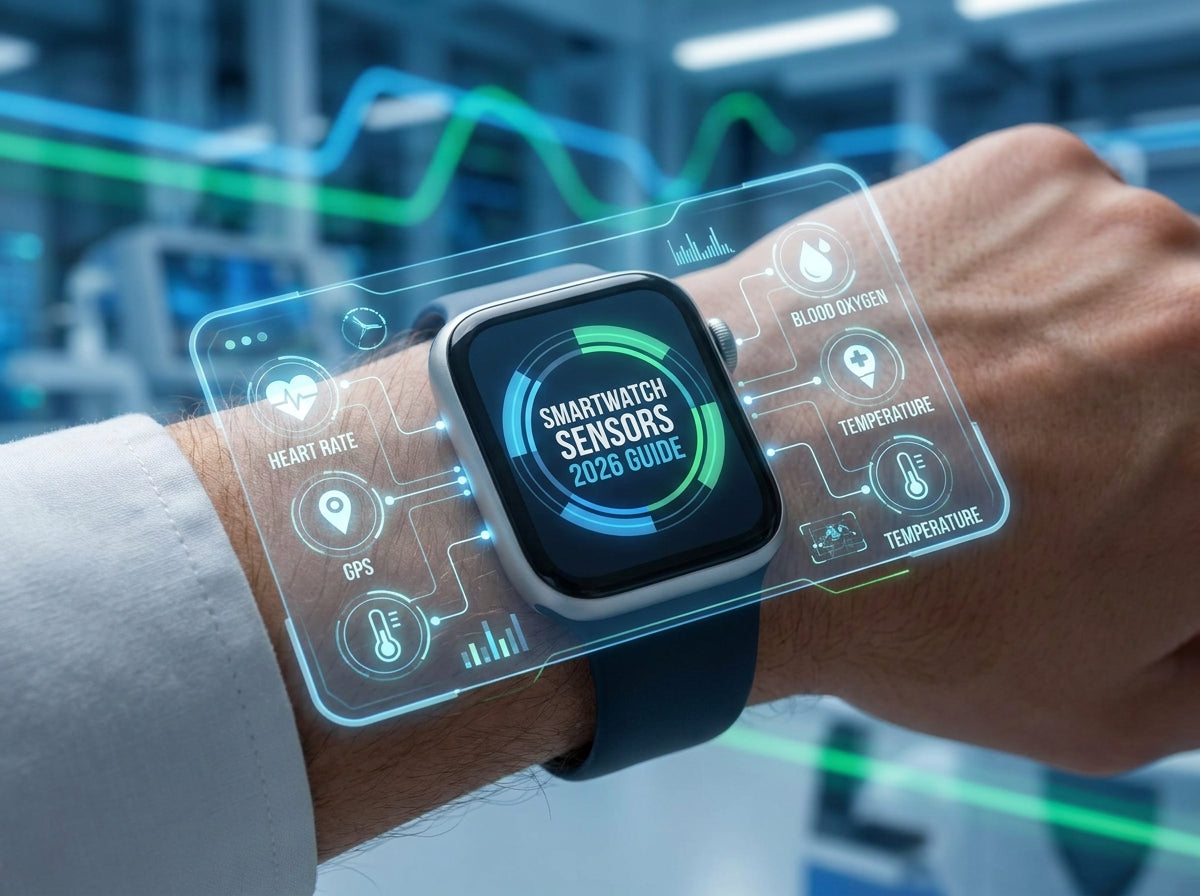
Modern smartwatches are packed with sophisticated biometrics and sensors that seamlessly enable health tracking, activity monitoring, and smart notifications. Whether you are a fitness enthusiast or just keeping tabs on your daily wellness, let's explore the micro-technology powering these wearable devices.
Core Health & Fitness Sensors
Optical Heart Rate Sensor (PPG)
The optical heart rate sensor utilizes Photoplethysmography (PPG) technology. Tiny LED lights emit green or red light into your skin, which then bounces back to a photodiode. As blood pulses through your wrist, the light absorption changes, allowing the algorithm to calculate your heart rate in real-time.
-
Key Capabilities: Continuous heart rate monitoring, Heart Rate Variability (HRV) tracking, and stress level detection.
ECG and SpO2 Sensors
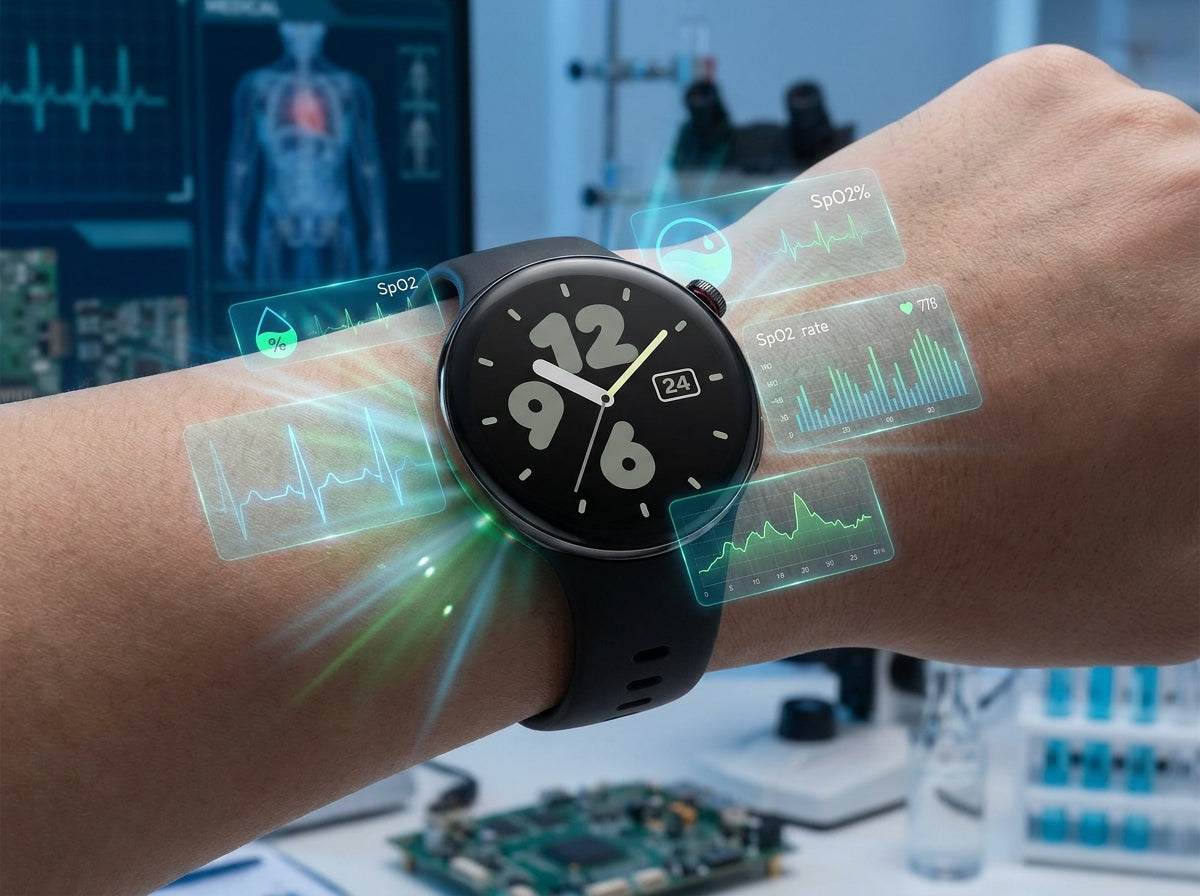
Advanced wearables now act as mini health clinics. Electrocardiogram (ECG) sensors detect the electrical activity of your heart, similar to a medical EKG, helping to identify irregular rhythms like atrial fibrillation (AFib). Meanwhile, Blood Oxygen (SpO2) sensors use red and infrared light to measure oxygen saturation levels in your bloodstream, a vital metric for sleep apnea detection and high-altitude training.
Skin Temperature Sensor
A newer addition to flagship devices, temperature sensors track micro-fluctuations in your body heat. This is primarily used for body temperature trend analysis, ovulation cycle estimation, and early fever detection.
Motion, Location & Environmental Sensors
Accelerometer and Gyroscope
The accelerometer measures movement and vibration across three axes (X, Y, Z). It is the backbone of step counting, automatic activity recognition (like walking, running, or cycling), and life-saving fall detection. The gyroscope adds rotational awareness, significantly improving motion accuracy and enabling seamless gesture controls (like wrist-flicks to wake the screen).
Barometer and Altimeter
Crucial for outdoor enthusiasts and professional climbers, the barometer measures atmospheric pressure to predict sudden weather changes. When combined with an altimeter, it precisely calculates elevation gains. This explains why you will often see serious hikers checking their wrists to monitor pressure drops before a storm hits.
GPS Module
Built-in GPS tracks your exact location via satellite without needing a paired smartphone. It is essential for outdoor workout mapping, accurate distance calculation, and precise pace tracking for runners and cyclists.
Ambient Light Sensor
This subtle but vital sensor automatically adjusts your screen brightness based on surrounding light conditions. It ensures your display is readable in direct sunlight while saving crucial battery life in dark rooms.
Conclusion
From basic step counting to advanced cardiac monitoring, smartwatch sensors work in harmony to provide comprehensive health and activity insights. Understanding these technologies will help you choose the right device for your specific lifestyle and utilize its features to their fullest potential.

Leave a comment
This site is protected by hCaptcha and the hCaptcha Privacy Policy and Terms of Service apply.