

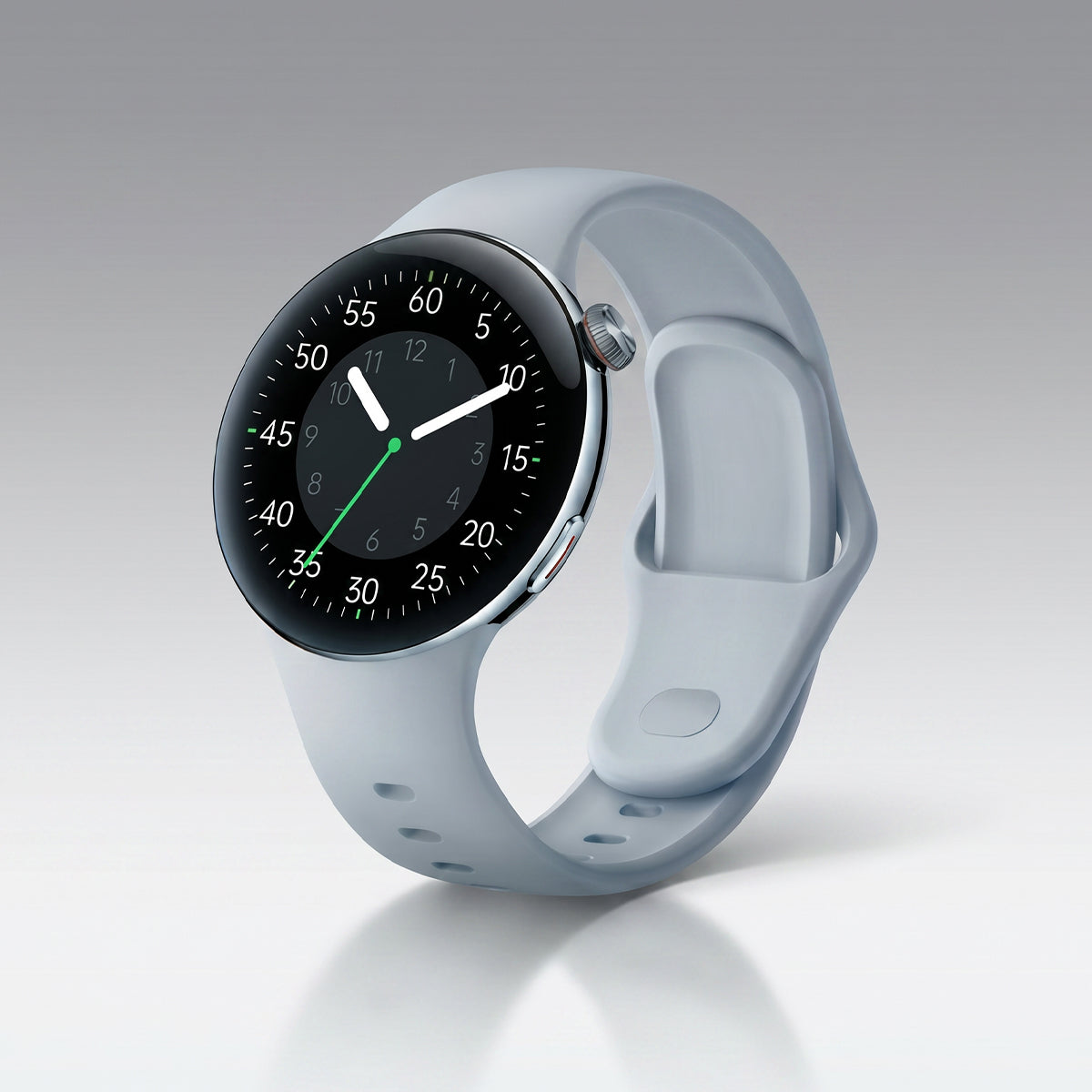









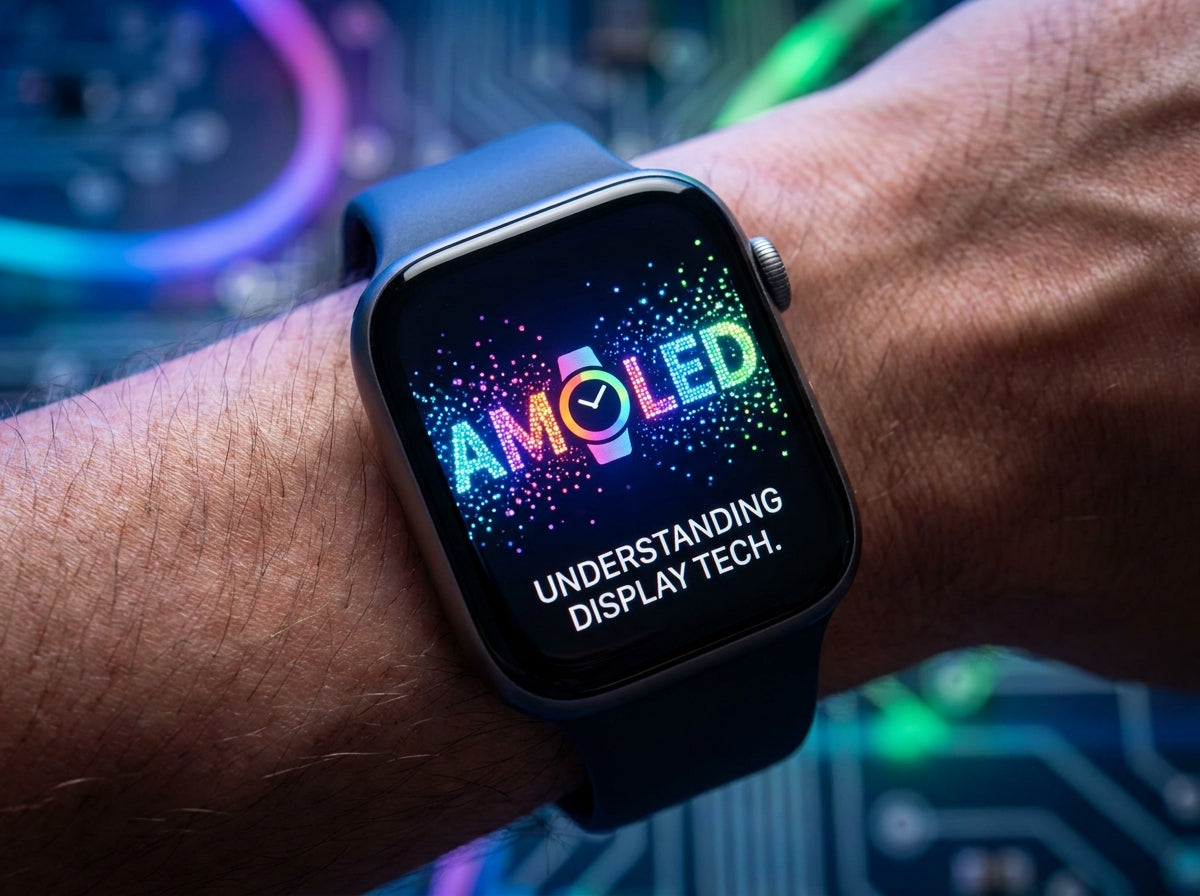
If you’re shopping for a smartwatch, you’ve probably come across the term AMOLED display. But what exactly does it mean, and why does it matter?
Understanding AMOLED technology can help you choose a smartwatch with the right balance of display quality, battery life, and overall user experience.
What Is AMOLED?
AMOLED stands for Active Matrix Organic Light-Emitting Diode.
It’s a premium display technology commonly used in modern smartphones and smartwatches.
Unlike traditional LCD screens, AMOLED displays allow each individual pixel to produce its own light.
How AMOLED Displays Work
AMOLED technology works differently from standard LCD panels:
- Each pixel emits its own light
- No separate backlight is required
- Individual pixels can turn completely off
- Creates true blacks and stronger contrast
This results in deeper blacks, richer colors, and a more premium viewing experience.
AMOLED vs LCD Comparison
| Feature | AMOLED | LCD |
|---|---|---|
| Black Level | True black | Dark gray |
| Color | Vibrant and saturated | More natural |
| Contrast | Very high | Medium |
| Power Usage | Variable (darker content saves power) | Constant |
| Price | More expensive | More budget-friendly |
Benefits of AMOLED for Smartwatches
1. Always-On Display Support
AMOLED screens are ideal for Always-On Display features because:
- Only active pixels consume power
- Time and date can remain visible continuously
- Supports customizable watch faces
- More battery-efficient with dark themes
2. Better Outdoor Visibility
Modern AMOLED displays offer:
- High brightness levels
- Improved sunlight readability
- Effective auto-brightness adjustment
This makes them easier to view during outdoor activities.
3. Superior Color Performance
AMOLED displays are known for their visual quality:
- Rich and vibrant colors
- Adjustable display tuning
- Support for wider color gamuts
- HDR support on some premium devices
4. Slimmer Device Design
Because AMOLED panels do not require a backlight layer:
- Devices can be thinner and lighter
- Curved and flexible designs become possible
- Smartwatches can achieve a more modern appearance
Disadvantages of AMOLED Displays
While AMOLED technology offers many benefits, there are also a few trade-offs.
💰 Higher Cost
AMOLED panels are more expensive to manufacture, which increases device prices.
🔥 Burn-in Risk
Static images displayed for long periods may leave faint image retention over time.
Modern devices reduce this risk significantly, but it can still occur after years of heavy use.
🛠 Higher Repair Costs
AMOLED screen replacements are generally more expensive than LCD repairs.
Should You Choose AMOLED?
Choose AMOLED If:
- You want an Always-On Display
- Display quality matters to you
- You prefer vibrant colors and strong contrast
- Premium design is important
- You value battery efficiency with dark themes
Choose LCD If:
- Budget is your main concern
- You prefer more natural-looking colors
- Long-term durability is your priority
The Future of Display Technology
Display technology continues evolving rapidly.
We’re beginning to see:
- MicroLED development
- Better foldable displays
- Improved power efficiency
- Enhanced outdoor visibility
Future smartwatches will likely become even brighter, thinner, and more energy-efficient.
Conclusion
AMOLED displays provide a premium visual experience with vibrant colors, deep blacks, and excellent contrast.
For many smartwatch users, the improved display quality and modern design are well worth the added cost.
If screen quality is one of your top priorities, choosing a smartwatch with an AMOLED display is a smart investment.

Leave a comment
This site is protected by hCaptcha and the hCaptcha Privacy Policy and Terms of Service apply.