

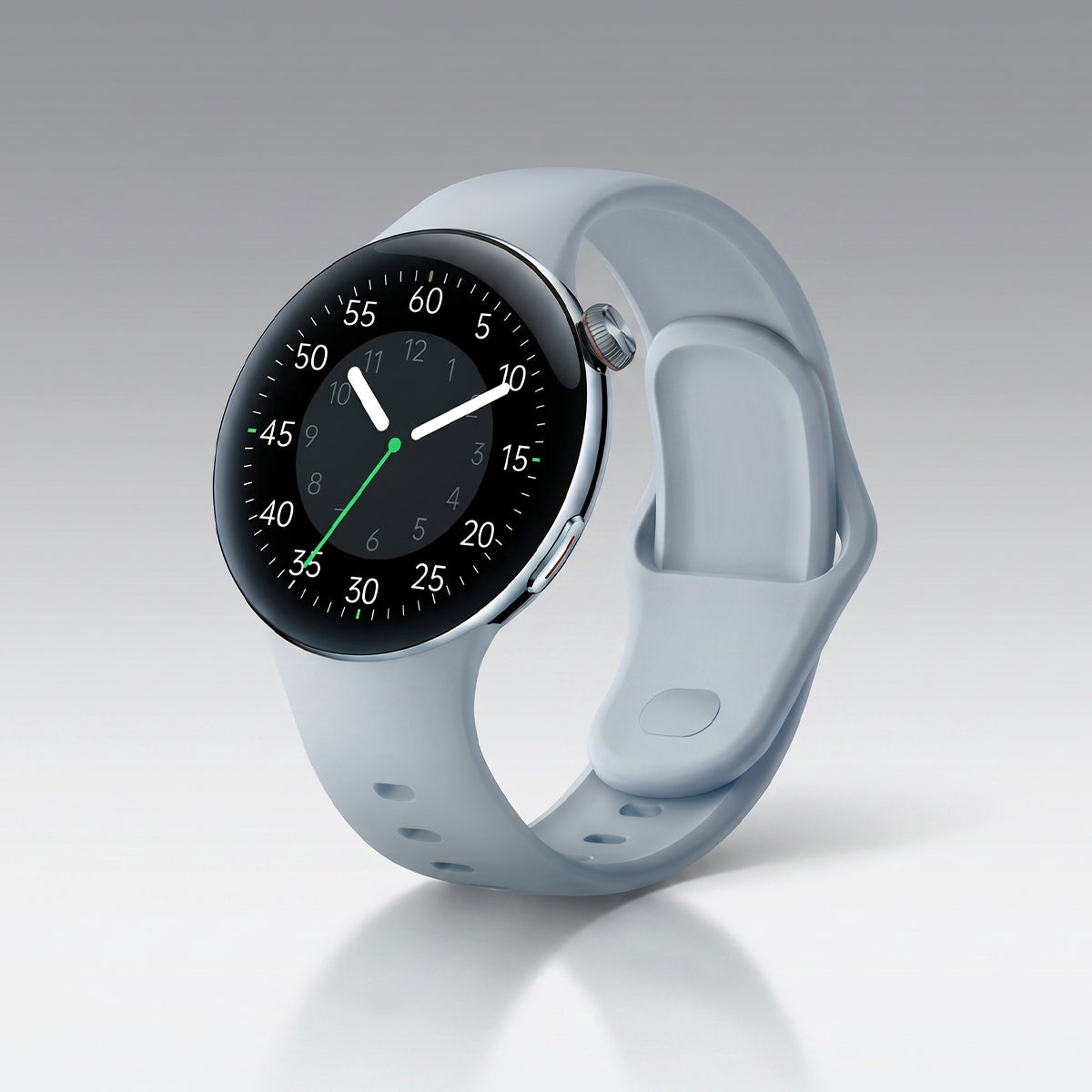










After a grueling workout, looking down at your wrist to see a massive calorie burn feels like a well-earned reward. But are smartwatch calories accurate? To answer directly: No, they are not. While fitness trackers are excellent at measuring your heart rate and step count, smartwatch calorie accuracy is notoriously flawed, often overestimating the energy you burned by 20% to 90%.
If you are relying on these numbers to manage your diet or weight loss, this inaccuracy can completely derail your progress. Here is why the algorithm struggles and what metrics you should be tracking instead.
How Your Watch Estimates Calories
Your smartwatch does not have a magical sensor that measures the actual energy leaving your body. Instead, it acts like a miniature calculator, making an educated guess based on three main data points:
-
Personal Parameters: The baseline data you entered when setting up the device, including your age, weight, height, and biological sex. This calculates your Basal Metabolic Rate (BMR).
-
Heart Rate: Optical sensors track how fast your heart is beating during an activity.
-
Workout Type: The specific activity profile you select (e.g., running, yoga, or strength training) tells the algorithm which formula to apply to your movement and heart rate data.
Why the Algorithm Can't Be Perfect
Even with top-tier sensors, the math fundamentally lacks crucial context about your unique biology.
First, watches cannot easily measure body composition. Two people weighing 160 pounds with the exact same heart rate will burn calories at different rates if one has significantly more muscle mass than the other. Muscle burns more energy than fat, but your watch usually does not know your body fat percentage.
Second, the algorithms struggle with mechanical efficiency. As you get fitter and better at a specific exercise (like running or cycling), your body becomes more efficient and actually burns fewer calories to do the exact same amount of work. Your watch, seeing the same distance and pace, will often assume you burned the same amount as when you were a beginner.
The Research on Calorie Accuracy
If you are doubting your device, science backs you up. Multiple independent studies evaluating top-tier wearables (including Apple Watch, Garmin, and Fitbit) have consistently shown that while their heart rate tracking is highly accurate (often within 5% of clinical chest straps), their calorie expenditure algorithms are the least reliable metric.
Research indicates the error margin for calorie burn is "inconsistent and often large." Even the most accurate devices on the market were found to be off by at least 20%, with some missing the mark by over 90% during certain activities like weightlifting, where heart rate does not correlate directly to calorie expenditure.
What to Use Instead
Instead of treating the calorie counter as gospel, shift your focus to metrics that actually reflect your fitness progress and effort level:
-
Heart Rate Zones: Focus on spending specific amounts of time in target heart rate zones (e.g., Zone 2 for aerobic endurance, Zone 4 for high-intensity intervals). This is a precise measurement of cardiovascular effort.
-
Workout Duration and Consistency: Tracking how many minutes you stay active per week is a far more reliable indicator of long-term health than an estimated calorie number.
-
Rate of Perceived Exertion (RPE): Listen to your body. Rank your workouts on a scale of 1 to 10 based on how hard they felt. If a 3-mile run feels like a 5 today instead of an 8 like it did last month, you are getting fitter.
How to Improve the Estimate
While you can never make the calorie count 100% accurate, you can take steps to prevent the algorithm from going wildly off track:
-
Keep Your Profile Updated: Your weight changes, and so does your age. Make sure your health profile is updated regularly so the baseline BMR calculations are as close to reality as possible.
-
Wear It Snugly: Optical heart rate sensors need a flush fit against your skin. If the watch is loose, light leaks in and disrupts the heart rate reading, which heavily skews the calorie math.
-
Choose the Right Workout Type: Don't just use the "Other" or "Mixed Cardio" setting. Selecting the exact activity helps the watch apply the most relevant algorithm to your movement.
The golden rule of fitness trackers: use the calorie number as a loose trend line, not an absolute truth. If you burned 10% more calories today than yesterday according to the watch, you likely worked harder—just don't use that exact number to justify eating an extra slice of pizza.


Zostaw komentarz
Ta strona jest chroniona przez hCaptcha i obowiązują na niej Polityka prywatności i Warunki korzystania z usługi serwisu hCaptcha.