

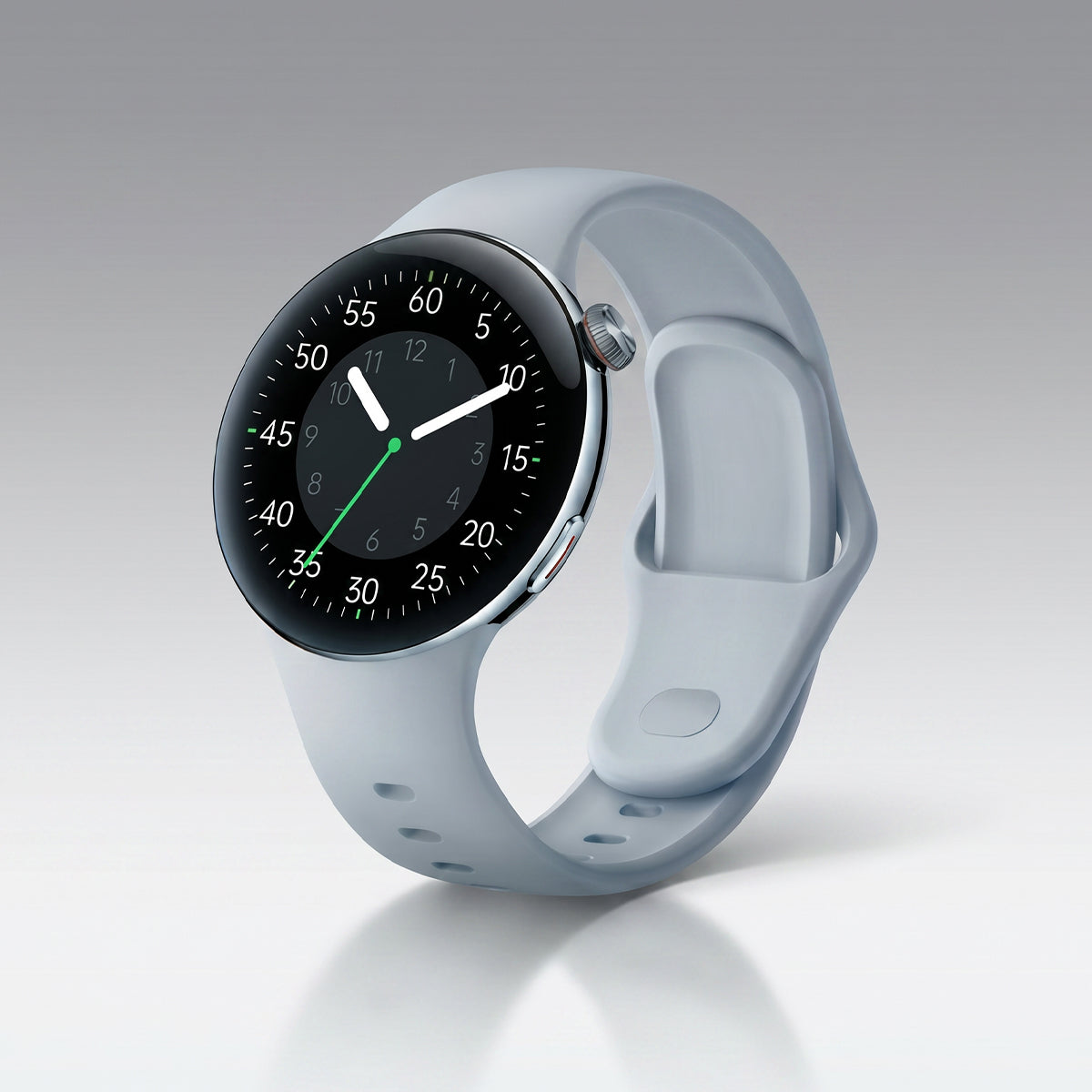









But here's the uncomfortable question: how does a watch on your wrist know what your brain is doing?
Short answer: it doesn't. It's making an educated guess — and once you understand how, you'll read those charts very differently.
The Gold Standard It Can't Use
In a sleep lab, they measure your brainwaves directly with EEG electrodes glued to your scalp. That's the only way to truly know if you're in deep sleep, light sleep, or REM.
Your watch has none of that. No brainwaves. No eye movement sensors. No muscle monitors.
So it does the next best thing: it reads your body and infers what your brain is probably doing.
What Your Watch Actually Measures
Four signals, all night long:
1. Heart rate
During deep sleep, your heart rate drops to its lowest point of the day. During REM, it becomes irregular — faster, slower, jumpy. That pattern is a clue.
2. HRV (heart rate variability)
Deep sleep = high HRV (your body is relaxed). REM = lower HRV (your nervous system is active, almost like you're awake).
3. Movement (accelerometer)
Deep sleep = almost perfectly still. Light sleep = small shifts. REM = occasional twitches but mostly still. Awake = lots of movement.
4. Breathing rate
Slow and steady in deep sleep. Faster and more irregular during REM — especially during dreams.
Optional extras on some devices: skin temperature and SpO₂, which add context but aren't the main drivers.
How the Algorithm Puts It Together
Every 30 seconds or so, your watch takes a snapshot of those four signals. Then it feeds them into a model trained on thousands of people who slept in labs with real EEG.
The model has learned patterns like:
-
Low heart rate + high HRV + no movement = deep sleep
-
Irregular heart rate + irregular breathing + still body = REM
-
Moderate heart rate + some movement = light sleep
-
High heart rate + lots of movement = awake
Then it stitches those 30‑second calls into the blocky chart you see in the morning.
Why Every Brand Gives Different Results
Here's where it gets messy. Two watches on the same wrist can disagree about your deep sleep by 30 minutes.
Why?
-
Different sensors — sampling rates, sensor quality, and placement vary
-
Different training data — models trained on different populations produce different biases
-
Different algorithms — one might weight HRV heavily; another relies more on movement
-
Different thresholds — what counts as "deep" varies by brand
-
Wrist vs. finger vs. ring — placement changes signal quality
Even the best consumer wearables disagree with lab EEG about 20–30% of the time when classifying sleep stages.
What That Means for You
Those charts are directionally useful, not precise.
-
Total sleep time — usually decent, within 20–30 minutes
-
Sleep vs. awake — fairly reliable
-
Deep vs. light vs. REM split — rougher. Think "rough proportions," not exact minutes.
-
One specific night — close to meaningless
-
Weekly trends — genuinely useful
So if your watch says 45 minutes of deep sleep one night and 90 the next, don't panic. It might just be sensor noise.
But if your deep sleep has been trending down for two weeks? That's worth paying attention to.
How to Get Better Data
-
Wear it snug. Loose fit = noisy signal.
-
Keep it charged. Low battery can reduce sampling rates.
-
Go to bed at consistent times. Your baseline matters.
-
Don't drink before bed. Alcohol wrecks sleep architecture and confuses the algorithm.
-
Compare trends, not nights. Look at your weekly averages.
The Bottom Line
Your watch isn't reading your dreams. It's reading your heart, your breath, and your stillness — then guessing what your brain is up to.
It's clever. It's useful. But it's an estimate, not a lab report.
Use it to spot patterns, not to judge yourself. And if your sleep chart looks weird one night, blame the algorithm — not your body. 😴


Zostaw komentarz
Ta strona jest chroniona przez hCaptcha i obowiązują na niej Polityka prywatności i Warunki korzystania z usługi serwisu hCaptcha.