

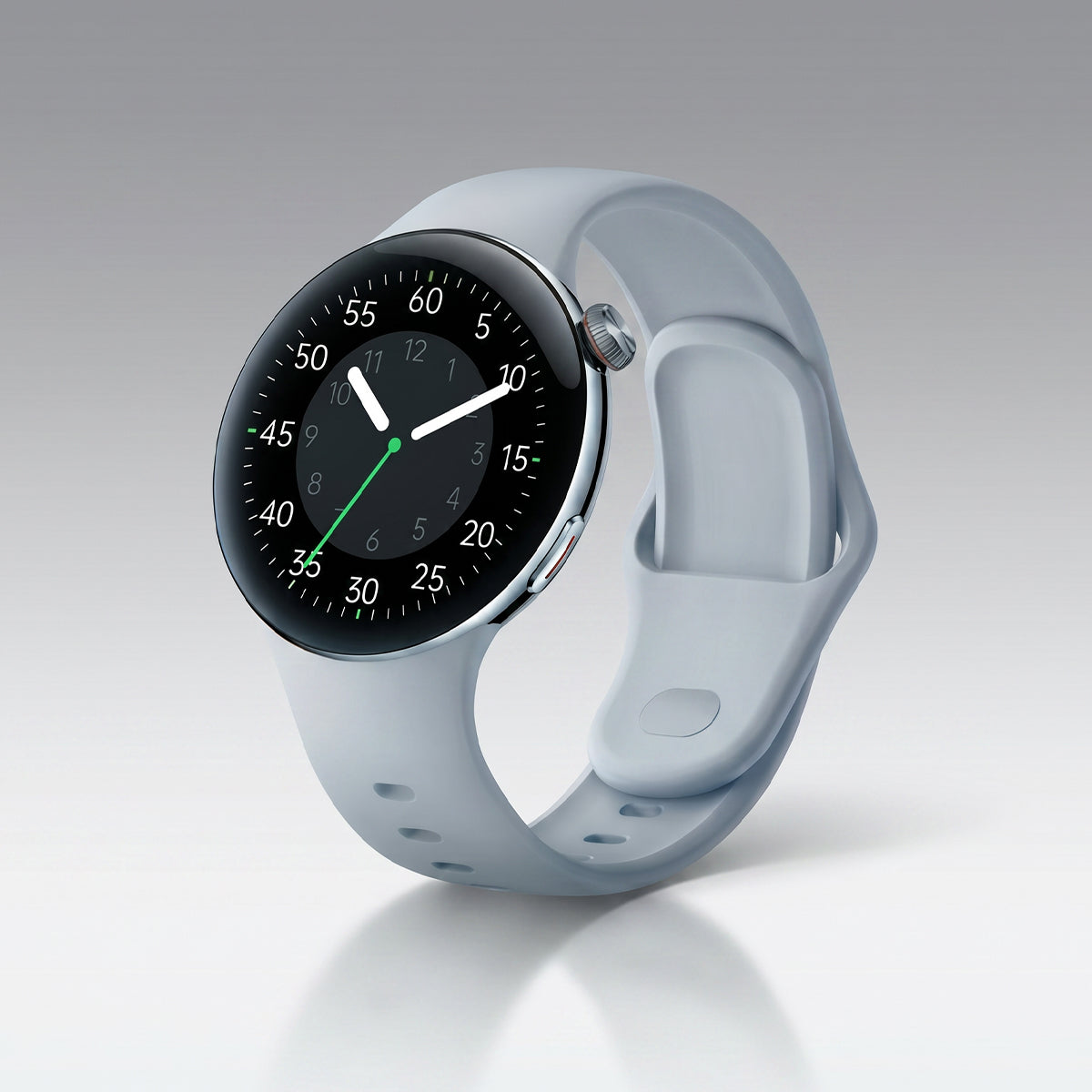







Every night you sleep, your watch logs it. Every run, every restless hour, every skipped workout. Individually, those numbers feel meaningless — just another graph you scroll past.
But what if all of it were feeding something bigger?
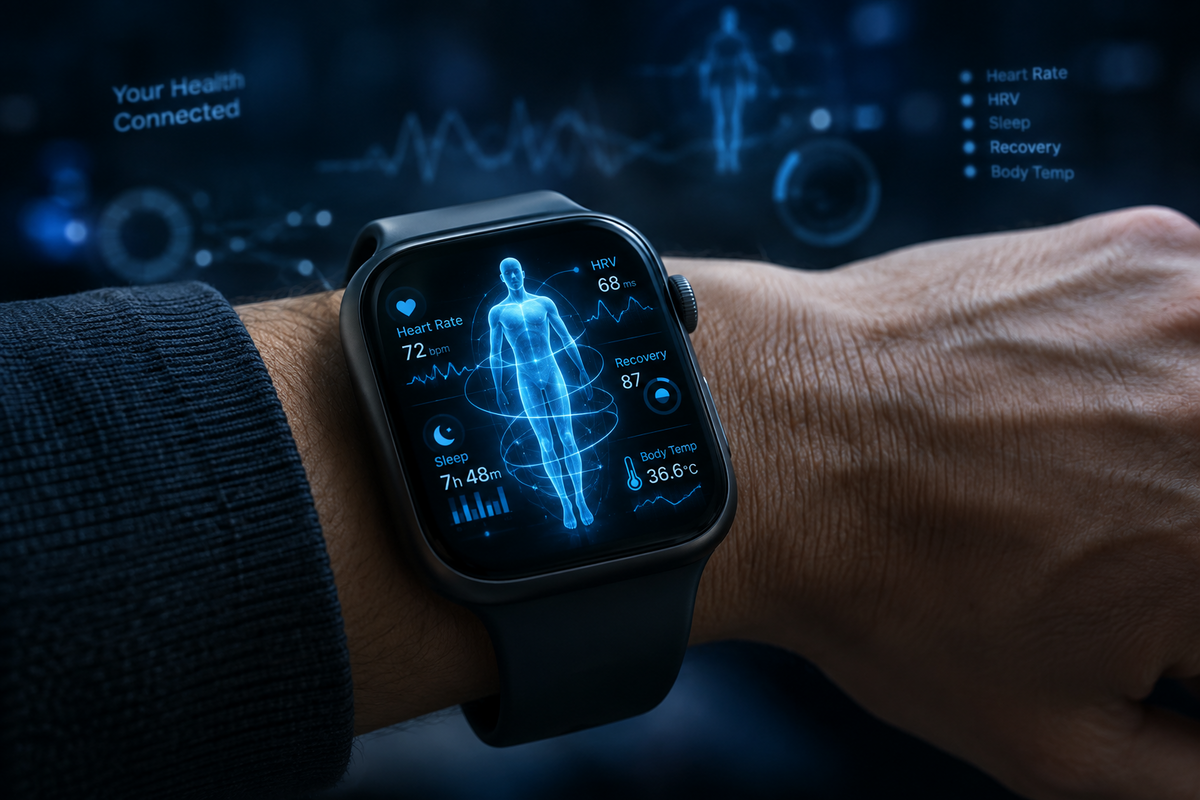
That's the idea behind a digital twin — a virtual model of your body, built from your own data. Not a scan. Not a test. Just the slow accumulation of how you actually live, turned into something that can predict what happens next.
Sounds like sci‑fi. It's closer than you think.
What a Digital Twin Actually Is
A digital twin is a simulation of you — your heart, sleep, stress, recovery, and habits, all modelled together.
Think of it this way:
-
Right now, your data is a pile of separate numbers. Heart rate here. Sleep score there. Steps somewhere else.
-
A digital twin connects them. It understands that a bad night's sleep → lower HRV → higher resting heart rate → worse performance the next day.
-
Once it understands your patterns, it can run simulations. "If you go to bed 45 minutes earlier, what happens to your recovery?" "If you skip your workout today, how does tomorrow look?"
It's not reading your future. It's learning your cause and effect — and using it to make suggestions.
How It Gets Built (No Lab Required)
Your wearable already collects the raw material:
-
Heart rate, HRV, and resting heart rate — your cardiovascular baseline
-
Sleep stages and duration — your nightly repair cycle
-
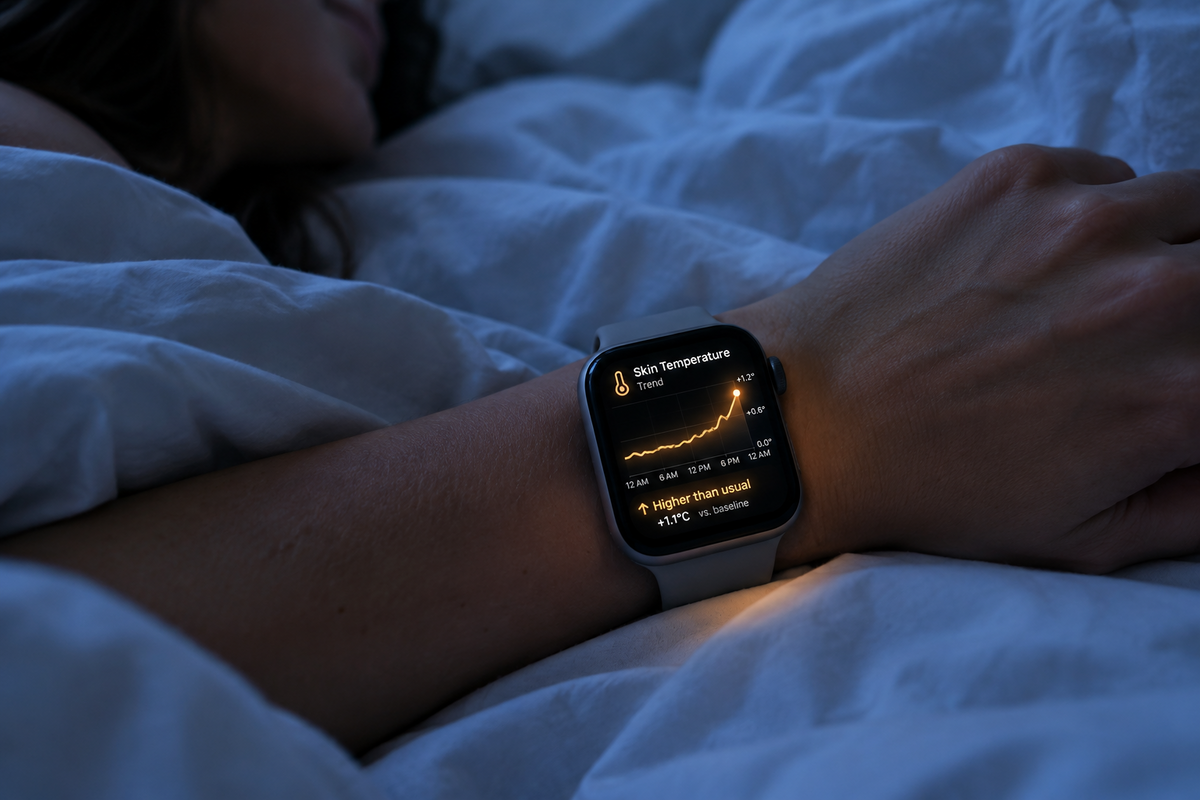
Skin temperature — your body's quiet stress signal
-
Activity and workouts — your load and energy expenditure
-
SpO₂ and breathing rate — your overnight respiratory picture
Feed weeks and months of that into a machine‑learning model, and it starts to learn your normal. Not the average person's normal — yours.
That's the crucial part. A digital twin isn't comparing you to a textbook. It's comparing you to yourself, six months ago.
What It's Good For
1. Spotting drift before it becomes a problem
Your resting heart rate creeping up 4 bpm over three weeks. Your HRV trending down. Nothing dramatic on any single day — but the twin sees the slope.
2. Testing "what ifs" without living them
"Should I train today?" Your twin can weigh your sleep, HRV, and recent load to give you a smarter answer than willpower will.
3. Personalised interventions
Instead of generic advice ("sleep 8 hours"), you get targeted nudges: "Your deep sleep drops when you eat after 9 PM. Try earlier dinners this week."
4. Risk flags for your doctor
A month‑long temperature trend, or a sustained drop in SpO₂, is far more useful to a physician than "I've been feeling tired."
The Honest Caveats
Let's not pretend this is magic.
-
It's only as good as your data. Skip wearing it, and the twin goes blind.
-
Wrist sensors are noisy. Movement, fit, and skin tone all affect accuracy.
-
It can't see what it doesn't measure. Stress, diet, medication, life — your twin doesn't know about any of it unless you log it.
-
It predicts patterns, not diagnoses. A digital twin can say "something's off." It cannot say what or why.
And your data needs to be protected. A detailed model of your body is a deeply personal thing — privacy controls aren't optional here.
Where This Is Heading
Today, digital twins are mostly limited to recovery and performance coaching. Tomorrow, the ambition is much bigger: personalised medication timing, early chronic disease detection, and treatment plans simulated on your virtual self before they ever touch your real body.
Some of that is years away. Some of it is already creeping into your wrist.
The Bottom Line
You've been building a digital twin without knowing it — one night of sleep, one workout, one heartbeat at a time.
The value isn't in any single reading. It's in what those readings say together, over time. Consistency is what turns a pile of data into a model of you.
So wear it. Sleep in it. Let it learn. And one day, that quiet little model on your wrist might know your body better than you do.
Slightly creepy? A little. Also kind of amazing. 😉

发表评论
此站点受 hCaptcha 保护,并且 hCaptcha 隐私政策和服务条款适用。