








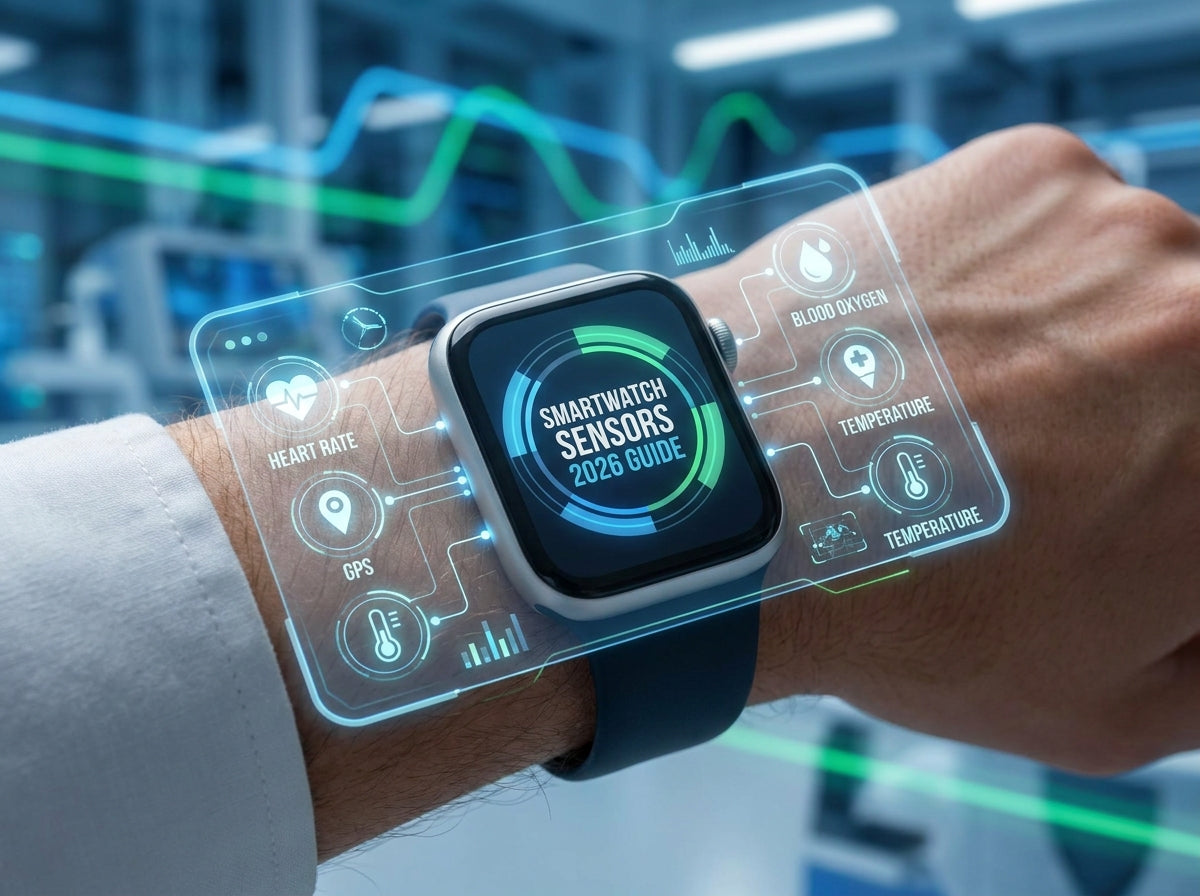
Smartwatches have evolved from simple digital timepieces into essential tools for managing our daily wellness. From tracking your morning run to monitoring your midnight sleep cycles, you might wonder: how do these devices actually work?
This comprehensive guide breaks down the science, sensors, and algorithms behind smartwatch health monitoring technologies.
Core Smartwatch Health Features Explained
1. Heart Rate Monitoring (PPG Technology)
The secret to pulse tracking lies in Photoplethysmography (PPG). If you look at the back of your smartwatch, you will notice flashing green LED lights. Here is how they measure your heart rate:
-
Light Emission: Green LEDs penetrate the top layers of your skin.
-
Light Absorption: Hemoglobin in your blood absorbs this specific light frequency.
-
Signal Conversion: As your heart pumps, blood volume fluctuates. Sensors capture the reflected light and convert these changes into electrical signals to calculate your beats per minute (BPM).
Beyond basic BPM, this optical technology enables Heart Rate Variability (HRV) tracking, providing crucial insights into your daily stress levels and physical recovery status.
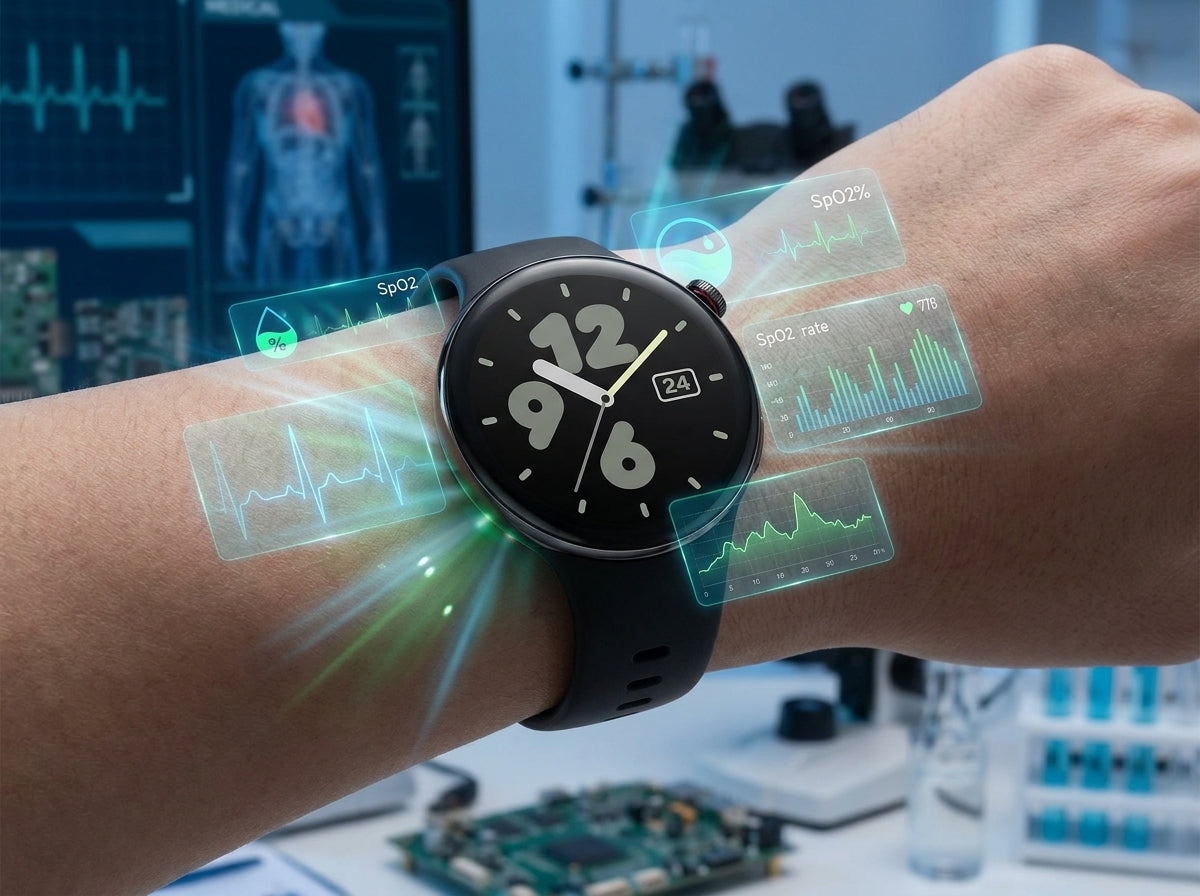
2. Blood Oxygen (SpO2) Tracking
Blood oxygen (SpO2) monitoring uses a similar optical principle to heart rate tracking but relies on two different light sources: red and infrared light.
Oxyhemoglobin (oxygen-rich blood) and deoxyhemoglobin (oxygen-poor blood) absorb these light wavelengths differently. By comparing the ratio of absorbed light, the smartwatch algorithm calculates your oxygen saturation percentage.
Tracking SpO2 is highly valuable for:
-
Monitoring overall respiratory health
-
Acclimating safely during high-altitude travel
-
Flagging potential sleep apnea risks
3. Step Counting and Activity Recognition
Your daily step count relies on a tiny but powerful sensor called a three-axis accelerometer. This hardware detects continuous movement patterns and changes in acceleration.
Advanced algorithms analyze your peak acceleration curves to determine exactly what you are doing. Modern smartwatches take this a step further by combining the accelerometer with GPS and gyroscope data to:
-
Automatically recognize specific workout modes (e.g., cycling, swimming, running).
-
Calculate accurate calorie burn based on your movement intensity.
4. Advanced Sleep Analysis
Comprehensive sleep tracking doesn't rely on just one sensor; it integrates heart rate, breathing rate, and movement data throughout the night.
Using sophisticated algorithms, your smartwatch categorizes your rest into distinct sleep stages:
-
Light Sleep
-
Deep Sleep
-
REM (Rapid Eye Movement)
Some advanced wearables can even detect severe sleep apnea risks by monitoring breathing irregularities while you rest.
The Future of Wearable Health Tech
Smartwatch health monitoring is a marvel of miniaturized engineering, combining optical sensors, accelerometers, and GPS working in perfect harmony. As sensor technology and AI algorithms advance, future wearables will track even more complex physiological metrics, providing deeper, clinical-grade health insights right from your wrist.
What smartwatch health feature do you rely on the most? Let us know in the comments below!

发表评论
此站点受 hCaptcha 保护,并且 hCaptcha 隐私政策和服务条款适用。