

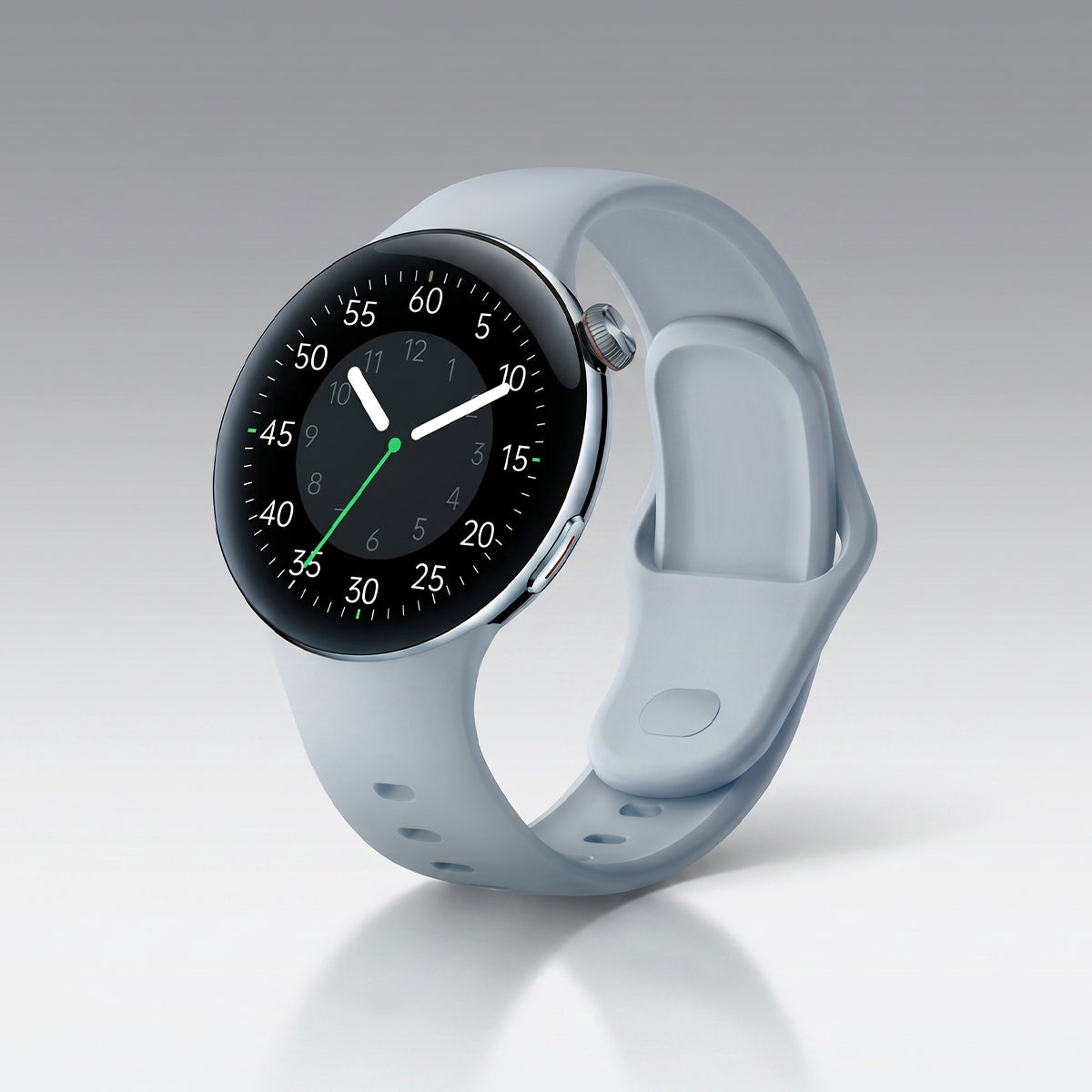










You wake up, grab your phone, and there it is: 8 hours 12 minutes. Deep sleep: 22%. REM: 21%. Sleep score: 84. A solid B‑plus night.
And yet.
You drag yourself to the kitchen. You blink at the coffee maker. You sit down at your desk and feel like you've been hit by a very soft, very slow truck. By 2 PM you're staring at a spreadsheet with the focus of a goldfish.
Your watch says you slept great. Your body disagrees.
This is one of the most common — and most confusing — experiences in wearable health tracking. And it usually comes down to one thing: your watch counted stillness, not sleep.
What your watch actually saw last night
Your watch doesn't know what your brain was doing. It has no EEG, no eye sensors, no way to see the difference between "deeply asleep" and "lying very still, staring at the ceiling, thinking about that email you sent in 2019."
Here's what it does see:
-
Motion. No movement = probably asleep.
-
Heart rate. It drops when you sleep, rises when you're awake.
Then an algorithm — trained on people who actually slept in labs — takes those two signals and guesses what stage you were in.
Most of the time, it's roughly right. But "roughly" is doing a lot of heavy lifting here.
The blind spot that explains everything
Think about the last time you couldn't sleep. You were probably still. Very still. Desperately still. Trying not to wake yourself up further.
Your watch saw a motionless wrist and a slow‑ish heart rate. It logged light sleep.
But you were awake. You know because you were there. You remember the clock ticking. You remember the ceiling.
This is the core flaw: your watch can't tell the difference between sleeping and lying very still. Reading in bed, watching a movie on the sofa, doomscrolling at 2 AM — all of those can get logged as sleep. Fitbit users have reported their devices counting wakefulness as sleep and even logging restless awake time as steps.
So when your watch says "8 hours" and your body says "are you kidding me," your body is usually right. Here's what might have actually happened:
-
You spent 90 minutes lying awake but motionless
-
You woke up five times and don't remember
-
Your sleep was fragmented — all light, almost no deep
-
You were in bed for 8 hours but asleep for 6
The tracker counted time. Your body counted restoration. Those are not the same number.
Before you blame your body, check three things
Sometimes the tracker is just set up wrong. Take five minutes and run through this:
1. Is wrist detection on?
This setting tells your watch "I am actually wearing you right now." Without it, the device may not reliably know when it's on your wrist — which corrupts all sleep data. Most watches have it buried in settings. Turn it on.
2. Is the band snug enough?
Loose fit means motion artifacts. Motion artifacts mean garbage data. Your watch should be flat against your skin, not sliding around.
3. Is there a firmware update waiting?
Sleep algorithms get patched all the time. That update you've been ignoring for three weeks might fix exactly the thing that's been bugging you.
Also worth checking: do you have a bedtime or sleep schedule set? Telling the app when you intend to sleep helps it know when to start looking.
The trick that changes how you read the number
Stop looking at last night. Start looking at last week.
One night's sleep score is close to meaningless. It's one data point, from one sensor, on one night. It could be a noisy reading. It could be the one night you had a glass of wine. It could be anything.
But seven nights? That's a trend. That's a signal.
Ask yourself:
-
Is my total sleep time dropping week over week?
-
Am I getting more awake time than usual?
-
Has my resting heart rate during sleep crept up?
Then — and this is the part most people skip — cross‑check with how you feel. That's the real measurement. Your watch is trying to approximate your body's experience. If the two disagree, your body wins.
Tracker says 8 hours, you feel great? Fine. Trust it.
Tracker says 8 hours, you feel wrecked? Trust yourself.
Tracker says 6 hours, you feel fine? Also trust yourself.
The number is a hint, not a verdict.
When to stop looking at the score entirely
Some people should just turn it off. If the score makes you anxious before bed, or you're chasing a number instead of how you feel, or you've fixed the fit and the wrist detection and it's still wildly wrong — it's not helping you. It's just another thing to worry about.
And if you've been exhausted for weeks despite eight hours in bed? That's a real medical symptom. Talk to a doctor. A sleep tracker can't diagnose sleep apnea, and it definitely can't tell you why you're tired all the time. But it can be the nudge that gets you to ask the question.
The bottom line, which is not a number
Your watch counted stillness. Your body counted rest. Those aren't the same thing, and they never will be.
Fix the setup. Look at trends. Trust how you feel. And if the gap between the chart and your energy keeps growing, put the score down and pick up the phone. A doctor can see things your wrist can't. 😴


发表评论
此站点受 hCaptcha 保护,并且 hCaptcha 隐私政策和服务条款适用。