

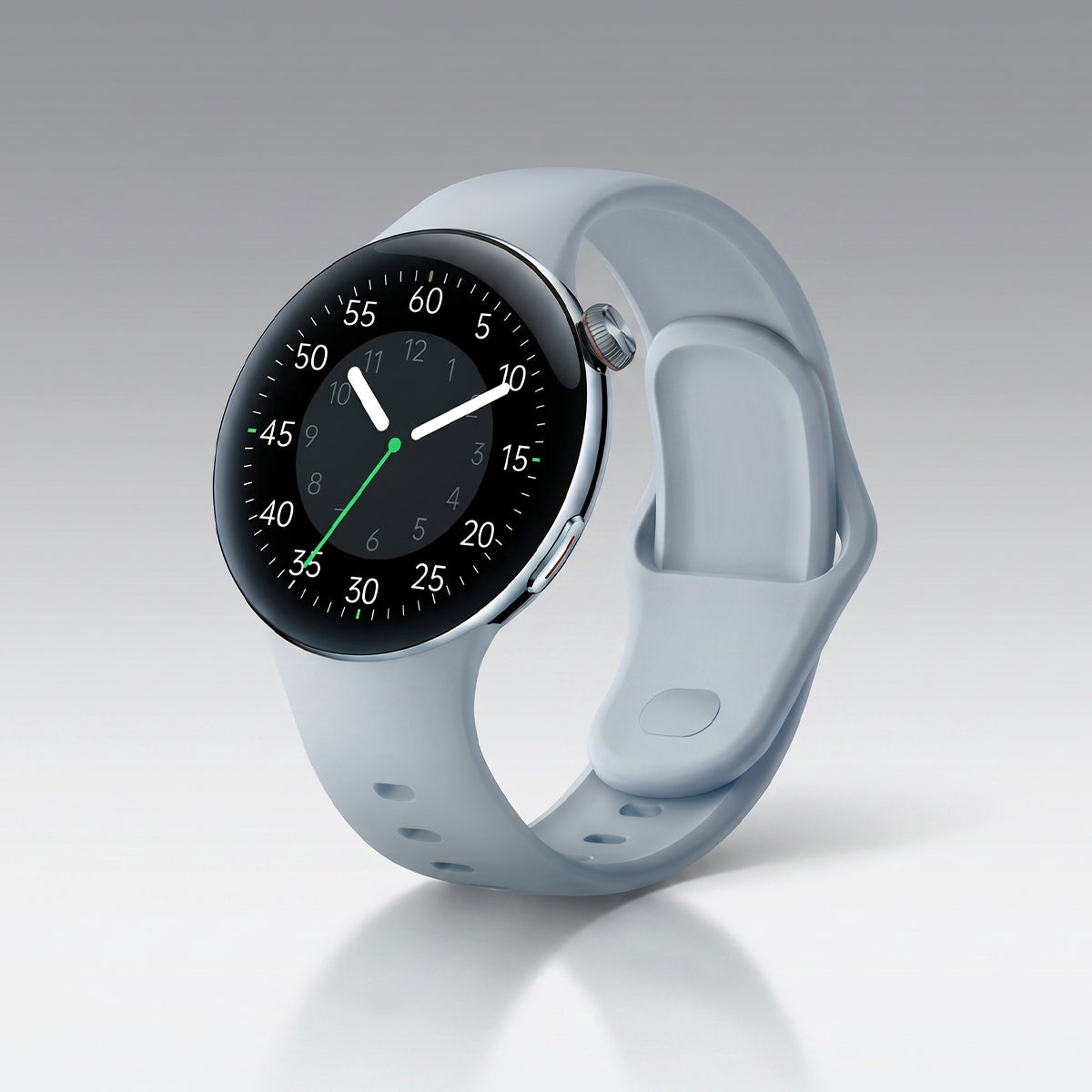









Imagine going to the doctor with a vague complaint — "I feel off" — and the doctor only checks your pulse. No blood pressure. No temperature. No questions. Just two fingers on your wrist, then a diagnosis.
You'd find a new doctor, right?
That's exactly how your smartwatch works — or rather, how it used to work. Early wearables were single-sensor devices. One accelerometer counted steps. One optical sensor guessed heart rate. And they were wrong constantly, because a single sensor is a single perspective, and a single perspective is easy to fool.
Modern wearables are different. They're a room full of specialists comparing notes.
The "Second Opinion" Problem
Here's the core issue: every sensor on your wrist can be tricked.
An accelerometer reads motion — but it can't tell if you're walking or if your arm is just swinging while you're standing still. It also can't tell the difference between a bumpy bus ride and a run.
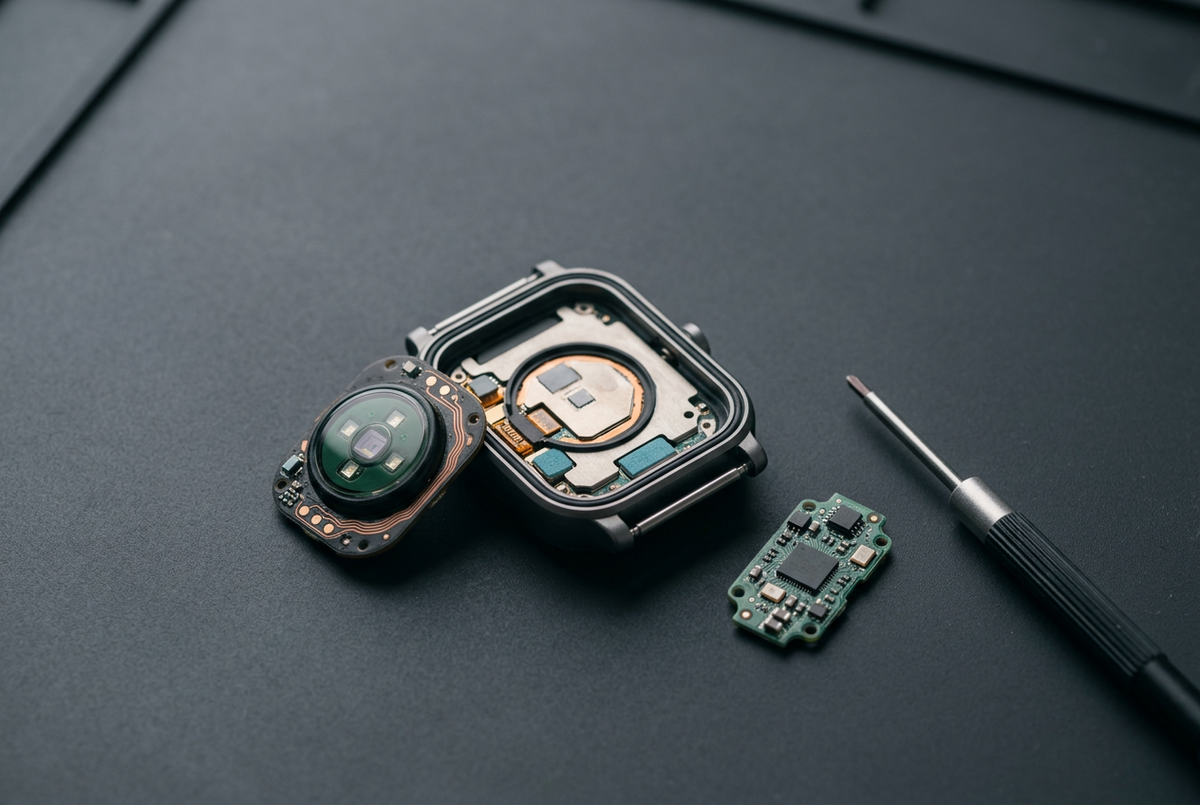
A PPG sensor (the green light) reads blood volume changes — but motion artifacts, sweat, skin tone, and a loose band all corrupt the signal. During a hard workout, it can lock onto your cadence instead of your heartbeat.
An EDA sensor reads skin conductance — but it can't distinguish between stress sweat and exercise sweat. A hot room and a tense meeting look identical.
Each sensor, alone, is a witness who might be lying. Together, they can cross-examine each other.
Who Does What: The Sensor Team
Think of your watch as a diagnostic team, each member with a different specialty.
The Accelerometer and Gyroscope: "What Are You Doing?"
These two motion sensors are your watch's eyes on the outside world.
-
Accelerometer — measures acceleration along three axes. It feels the bounce of walking, the sharper impact of running, the smooth glide of cycling.
-
Gyroscope — measures rotation. How your wrist tilts and turns. It distinguishes a run (arm swinging forward and back) from swimming (rotation your wrist never does on land).
Together, they form a motion fingerprint. Not just "are you moving," but "what kind of movement is this?"
This is how your watch knows you're running before you do. It's not magic. It's pattern recognition on six axes of motion data.
The PPG Sensor: "How Is Your Body Responding?"
Once the motion sensors establish what you're doing, the PPG sensor answers a different question: how hard is your body working?
PPG shines green light into your skin and measures how much bounces back. With every heartbeat, blood volume changes, and the reflected light flickers in a rhythm. That flicker is your pulse.
But PPG alone is fragile. It needs the motion data to know whether your elevated heart rate is from running or from anxiety. It needs the accelerometer to filter out the steps that create noise in the signal.
The EDA Sensor: "How Aroused Is Your Nervous System?"
Some wearables add electrodermal activity sensors — skin conductance. Your sweat glands respond to your sympathetic nervous system, so EDA catches the tiny changes that happen before you notice you're sweating.
But EDA is a blunt instrument. Physical heat and psychological stress produce the same response. A run and an argument look identical.
Adding motion data changes that. The accelerometer tells the algorithm whether you're moving. If you're sitting still and your EDA is rising, that's likely psychological arousal. If you're sprinting, it's exercise. The motion data provides the context that makes EDA meaningful.
How Fusion Actually Works
Here's where it gets interesting — and where the "why one sensor isn't enough" story becomes concrete.
1. Cross-validation. Your watch compares signals. If the accelerometer says you're running but the PPG says your heart rate is 72, one of them is wrong. The algorithm weighs the evidence and decides which to trust.
2. Noise cancellation. Motion artifacts corrupt PPG. But if the watch knows the motion pattern — because the accelerometer tracked it — it can subtract the noise. What's left is a cleaner pulse signal.
3. Context tagging. The same heart rate means different things in different contexts. 120 bpm while sitting on the couch is very different from 120 bpm during a sprint. The motion sensors provide the context that makes the heart rate meaningful.
4. Confidence scoring. Some watches use a "signal quality" indicator. That's fusion at work — the watch is telling you how confident it is based on how well the sensors agree.
Research backs this up. A 2026 study on stress detection found that PPG-only and EDA-only models had limited accuracy, but adding accelerometer and gyroscope data significantly improved precision. The sensors aren't just redundant — they're complementary. Each one fills a gap the others can't.
Why "More Sensors" Doesn't Mean "More Accurate"
Here's the counterintuitive part: a watch with five sensors isn't automatically better than a watch with three. Fusion is only as good as the algorithm doing the fusing.
The sensor is the hardware. The algorithm is the brain. A well-tuned three-sensor system can outperform a poorly integrated five-sensor system. This is why two watches with identical sensor specs can produce wildly different heart rate readings during a workout.
The fusion algorithm has to solve several problems simultaneously:
-
Which signal is most reliable right now? (PPG during rest, accelerometer during motion)
-
How should conflicting signals be weighted? (If PPG says 140 and motion says you're sitting, something is wrong)
-
When should the watch flag a reading as unreliable? (Signal quality indicators are fusion output, not sensor output)
The best wearables don't just collect more data. They know which data to trust, moment by moment.
Why This Matters for You
Understanding sensor fusion changes how you read your data.
When your heart rate looks wrong during a workout, it's usually because the fusion algorithm couldn't resolve a conflict — the motion said "running" but the PPG signal was too noisy to read. The watch chose wrong.
When your stress score spikes while you're sitting still, the motion sensors confirmed you weren't moving, so the EDA and HRV signals carried more weight. That's fusion working correctly — you were physiologically aroused even though you weren't active.
When your step count is way off while pushing a stroller, the accelerometer saw arm movement but the gyroscope didn't see the rotation pattern of walking. The fusion algorithm wasn't confident enough to count the steps.
The pattern is always the same: your watch is a committee, not a single expert. When the committee agrees, the reading is good. When the committee is confused, the reading is noise.
The Bottom Line
Your watch doesn't have one sensor. It has a team — motion sensors that establish context, optical sensors that track your body's response, and algorithms that cross-reference and correct.
No single sensor is enough. Each one can be fooled by the right conditions. Fusion is how your watch turns a room full of noisy opinions into a single, confident number.
So the next time your heart rate looks accurate during a run, or your stress score spikes while you're sitting still, you'll know: that's not magic. That's a committee doing its job. 🤝


Efterlad en kommentar
Denne side er beskyttet af hCaptcha, og hCaptchas Politik om beskyttelse af persondata og Servicevilkår er gældende.