

Chapter I: The High-Tech Sensor, The Low-Tech Method
The High-Stakes Bet on Your Wrist
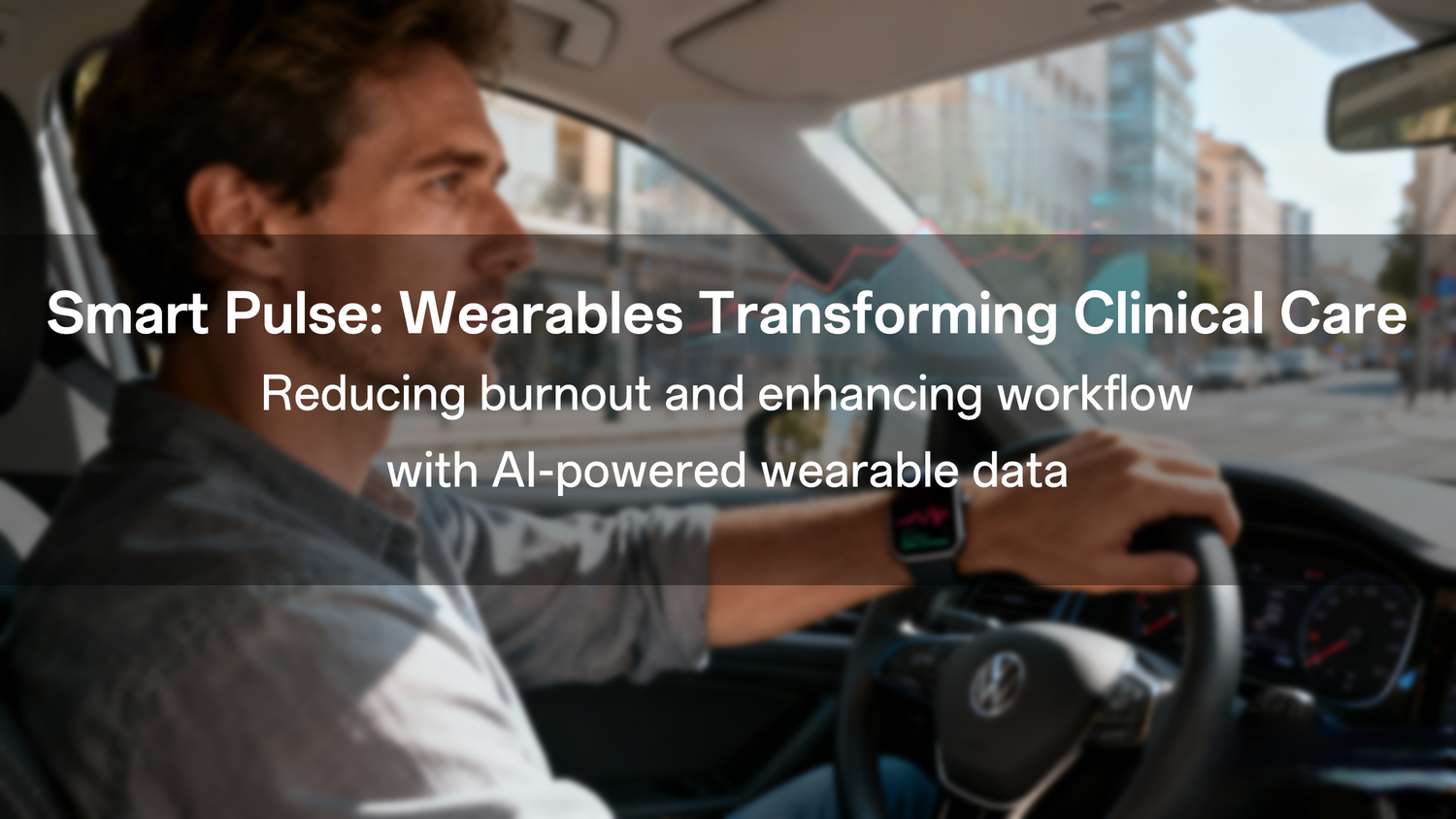
The smartwatch has been deployed to the frontline of transportation safety, capable of measuring physiological and motion signals such as heart rate activity, electrodermal activity (EDA), and temperature. This miniature sensor carries the promise of eliminating human error by continuously tracking the driver’s physiological state — a far more objective method than traditional questionnaires.
Yet, a paradox defines its current use: despite possessing the ability to provide continuous, contextualized physiological data, research and commercial applications often ignore this capacity. The failure lies not in the device but in the methodology — in clinging to short-term, analog-era testing frameworks unfit for continuous digital systems.
The True Measure of Safety
Across transport sectors—from rail to aviation—the mission of wearables is to minimize accidents linked to human error by evaluating a driver’s fitness to operate. To achieve that, the data must present an unbiased, dynamic portrait of the driver’s physical and mental state, free from the distortions of self-reporting. Yet, the promise of wearable-driven safety is too often undermined by procedural inertia: the persistence of outdated study designs that flatten complex human data into short-term snapshots.
Chapter II: The Tyranny of the Short-Term Snapshot
The core methodological flaw in driver fatigue research is its reliance on momentary data collection. Despite using devices designed for continuous monitoring, many studies capture only short physiological recordings and ignore the wealth of contextual data gathered before and after the driving task.
2.1. The Illusion of the Five-Minute Rest
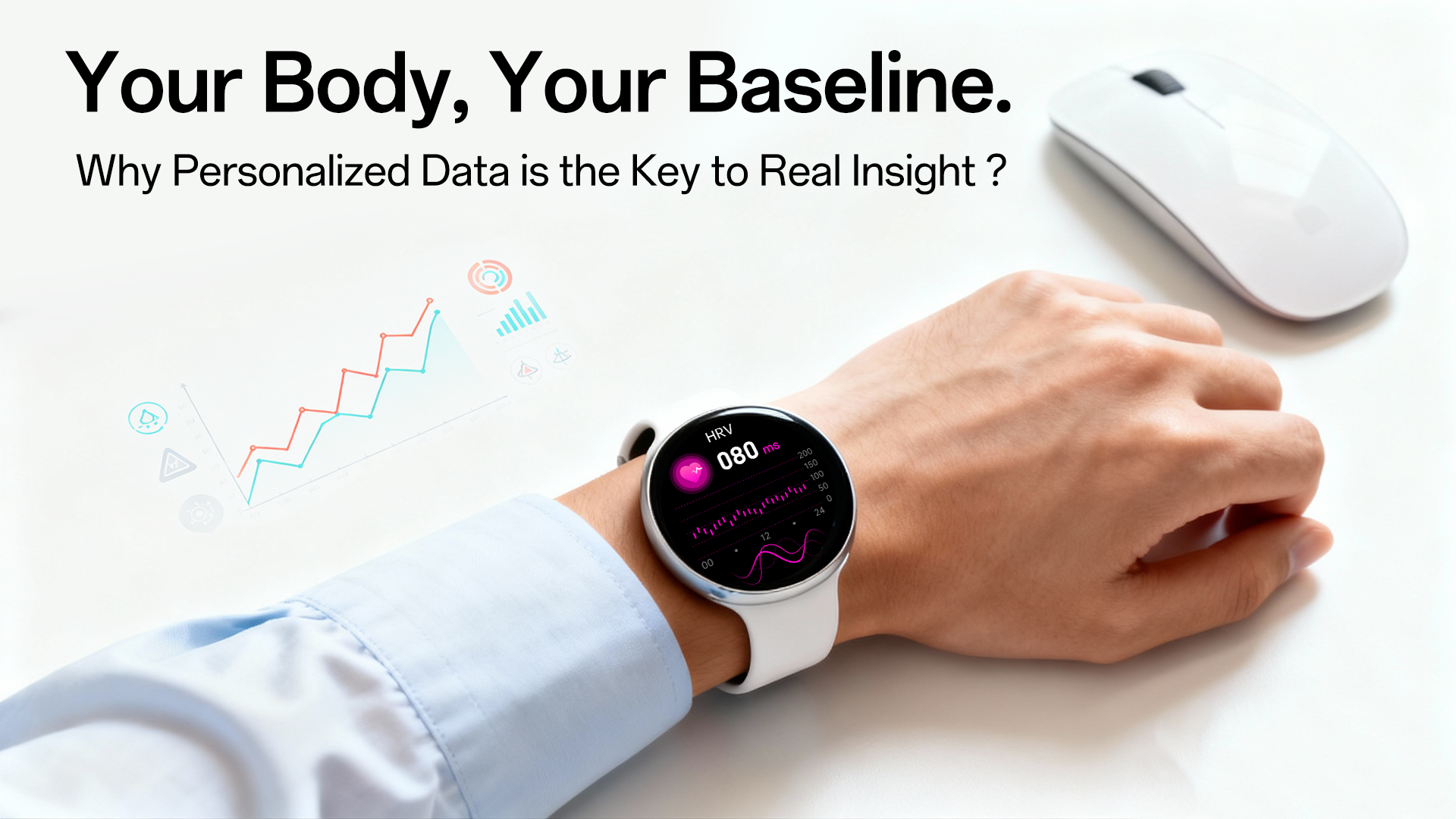
To assess driver stress or fatigue, researchers must first define a baseline “neutral” state. The prevailing practice, however, is to record baseline signals for only 5–10 minutes prior to the experiment.
This approach is fundamentally flawed:
-
Contaminated Baseline: Participants often experience excitement or nervousness before entering a driving simulator. These emotional spikes distort physiological measurements, corrupting the baseline against which stress is later compared.
-
Temporal Insufficiency: A five-minute window cannot reflect a genuine resting state. Physiological recovery is dynamic, and such brief sampling captures noise rather than equilibrium.
As a result, “baseline” readings often represent a false calm — an illusion of rest that undermines the accuracy of fatigue models.
2.2. The Systemic Flaw: Ignoring the Device’s Power
Despite having access to smartwatches capable of 24-hour monitoring, many researchers still rely on manual questionnaires to track sleep quality or pre-test fatigue levels. This represents a critical methodological disconnect.
“To our surprise, researchers relied on questionnaires to control sleep quality and duration instead of exploiting the sleep-tracking capabilities of the commercially available smartwatches they employed during their study.”
(Barka & Politis, 2024)
By privileging self-report over objective measurement, researchers discard the device’s core advantage: continuous, unbiased physiological insight. This oversight is more than an academic lapse — it squanders the opportunity to model fatigue as a longitudinal process, not a single event.
Chapter III: The Unlocked Potential — Assessing Fitness to Drive
The true revolution in transportation safety lies in redefining Fitness to Drive — shifting the metric from “momentary alertness” to long-term recovery capacity. Smartwatches, when leveraged for continuous monitoring, provide precisely this longitudinal insight.
3.1. The AI-Driven Context: A Multidimensional View
To predict fatigue accurately, systems must integrate long-term physiological trends — analyzing how sleep quality, heart rate variability, and activity patterns interact to reveal underlying recovery or chronic stress. Only AI-driven, multivariate models can process this complexity at scale.
| Recovery Metric | Quantifiable Insight (Contextualized) | Source |
|---|---|---|
| Long-term Sleep Quality (DST, SST) | Evaluates the body’s recovery capacity and resource restoration. Adults typically spend 10–15% of sleep in the deep phase; poor deep sleep correlates strongly with risky driving behavior. | Hwang et al., 2023 |
| Resting Heart Rate (RHR, mR, MR) | Persistent elevation signals long-term sleep disturbance and higher accident risk. Normal RHR range for older adults is 60–100 bpm. | Njoba et al., 2021 |
| Physical Activity Levels (S) | Physical activity serves as the most reliable indicator of overall health status, appearing in 71.8% of wearable health monitoring studies. | — |
These variables must be processed holistically rather than in isolation. A high resting heart rate might indicate stress — or simply poor recovery from insufficient sleep. Only longitudinal, AI-powered correlation can differentiate the two.
3.2. Validation of the Longitudinal Model
Continuous monitoring enables AI (such as HADA, a PCA-based anomaly detection algorithm) to uncover hidden correlations among heart rate, sleep, and activity patterns.
Empirical results validate this approach: in a two-year study, PCA-based systems achieved 100% sensitivity and 98.5% accuracy, identifying subtle physiological deviations predictive of future health events (Rosca et al., Applied Sciences, 2025).
This high performance is not incidental. Algorithms are periodically retrained per individual, allowing adaptation to natural physiological drift due to aging, medication, or illness. This personalized recalibration is the cornerstone of trustworthy, adaptive safety systems — a model built on evolution rather than static calibration.
Chapter IV: The Action Blueprint — Defining Trustworthy Data
To close the gap between wearable technology and real-world safety impact, researchers must establish digital-era data protocols that match the sophistication of the tools they employ. The smartwatch should no longer serve as a temporary lab instrument; it must function as a continuous health archivist.
🧩 Actionable Protocol: Digital Mandates for Data Integrity
-
Mandate Continuous Baseline Collection:
Move beyond laboratory snapshots. Collect a minimum of 7 days of resting heart rate, deep sleep (DST), and superficial sleep (SST) data under normal daily conditions. Ideally, establish longitudinal baselines spanning 80–355 days for reliable health routines. -
Ensure Model Personalization:
Fatigue detection algorithms must be periodically retrained per individual, accounting for physiological shifts caused by aging, stress, or recovery patterns. Static models risk misinterpreting deviations as anomalies. -
Prioritize AI Over Simplistic Metrics:
Adopt advanced classifiers — KNN, Random Forest, or PCA-based hybrids — capable of achieving up to 99.42% accuracy in binary drowsiness classification. Relying solely on heart rate thresholds is scientifically obsolete.
The Gap Between Technology and Practice
The smartwatch’s capacity to produce unbiased health representation is invaluable, particularly when drivers may consciously withhold information about fatigue or illness. Yet, until data protocols integrate continuous and contextual metrics, the system’s predictive potential will remain largely theoretical.
The challenge, therefore, is not technological but procedural: bridging the widening chasm between what the device can measure and what research protocols permit it to measure.
Conclusion: The Quiet Confidence of Personalized Data
The debate over wearable utility in transportation safety is not about capability — it’s about courage. The technology already exists to detect subtle physiological changes with 98.5% accuracy. What remains missing is methodological modernization.
The failure lies not in the device, but in human conservatism — the tendency to confine cutting-edge sensors within outdated, low-resolution frameworks.
The future of road safety will not be built on louder alarms or more sensors flashing on dashboards. It will be built on the quiet confidence of longitudinal data — systems that understand the driver’s recovery, adaptation, and readiness long before ignition.
Safety, ultimately, begins before the drive, in the silent dialogue between body and algorithm — a conversation smartwatches are already fluent in.


Leave a comment
This site is protected by hCaptcha and the hCaptcha Privacy Policy and Terms of Service apply.