

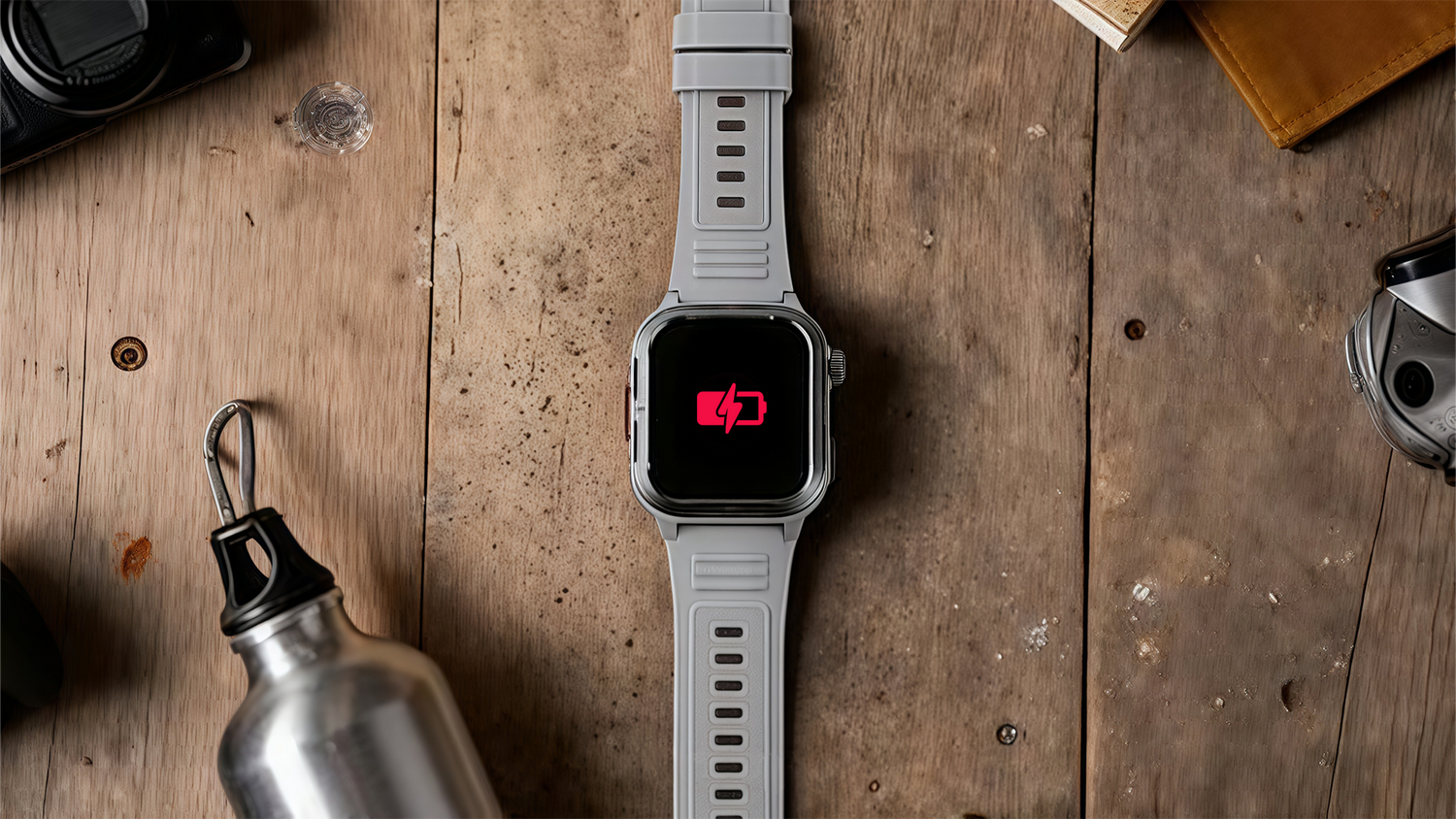
Wearable medical devices have become a foundational element of modern healthcare, providing the capability for continuous, reliable, and unobtrusive monitoring of vital physiological parameters, which is critical for managing chronic conditions and enabling real-time sensing. However, the core challenge constraining this paradigm shift is power management. Achieving long-term wearability requires a fundamental system design trade-off between device size, performance, and operating time. Consequently, limited battery life remains a critical bottleneck, severely impacting the user experience and the practicality of continuous use. This structural limitation necessitates a comprehensive, multidisciplinary approach that targets efficiency from the sensor level up to system-level resource allocation.
I. The Cost of Precision: The Sampling Rate Dilemma
The central conflict in wearable design is the energy cost associated with high-resolution data acquisition. Medical wearables require persistent activity, involving continuous sensing and frequent data transmission, which consumes significant energy, particularly when dealing with high-resolution signals like Electrocardiogram (ECG), Electroencephalography (EEG), or Photoplethysmography (PPG).
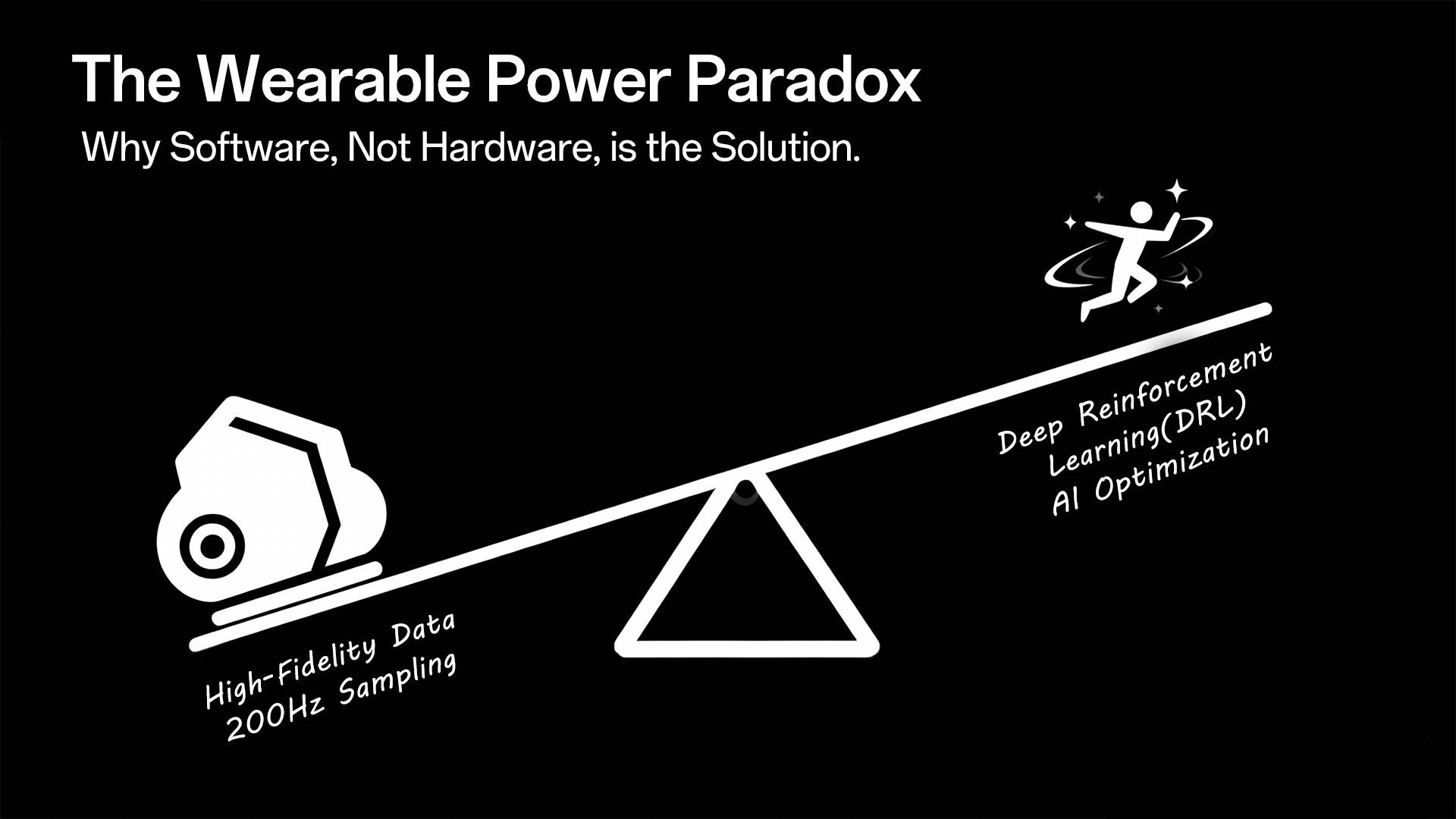
The sampling frequency of sensors is a primary determinant of both data fidelity and power consumption, creating an inverse relationship with battery life. For instance, while basic Heart Rate (HR) estimation can be reliably performed with sampling rates as low as 5–10 Hz, accurate measurement of complex cardiovascular indicators, such as Pulse Rate Variability (PRV) and Heart Rate Variability (HRV) indices, requires much higher fidelity, typically necessitating rates of 100 Hz or 200 Hz.
Empirical evidence confirms the steep energy increase associated with high sampling rates. A self-sustainable, battery-free smart wristband, which utilized solar energy harvesting, demonstrated this trade-off starkly:
- To achieve self-sustainability at a 50 Hz sampling rate, the device required only 1.45 hours of indoor light exposure (1000 lux) per day.
- However, increasing the sampling rate to 200 Hz demanded 4.74 hours of daily light exposure for the same sustainability goal, illustrating a proportional increase in power demand.
This constraint necessitates the adoption of sophisticated Low-Power Techniques (LPTs) which span hardware design, software techniques (like adaptive sampling and data compression), and system-level optimization.
II. Resolving the Conflict: Edge Intelligence and Collaborative Inference
To overcome the energy deficit imposed by high-resolution sensing, engineers have shifted computational burdens away from raw data transmission toward intelligent processing and collaborative architectures.
1. Onboard Processing and Data Compression
Wireless communication, such as Bluetooth Low Energy (BLE), is one of the most power-hungry components of a wearable system. The software technique of onboard processing mitigates this by allowing the device's microcontroller (MCU) to process data locally, transmitting only essential, compressed information or extracted features, rather than raw signal streams.
One proof-of-concept demonstrated the efficiency gains of this approach. While raw PPG data sampled at 200 Hz required 5.631 seconds of transmission time per hour via BLE, transmitting only the processed 2-byte heart rate value hourly required merely 0.96 ms. In experimental settings, employing onboard processing functionality reduced the energy consumed by BLE data transmission by approximately 2 J per day. This strategy aligns with the broader adoption of Signal Compression LPTs, such as Compressive Sensing (CS), which is widely utilized across physiological monitoring systems (e.g., in 42% of works reviewed for ECG signals) to minimize power consumption by reducing the samples needed for reconstruction.
2. Dynamic Task Offloading (Collaborative Inference)
For highly complex tasks, such as running Deep Learning (DL) models necessary for accurate detection of Motion Artifacts (MAs), the local computational cost is often prohibitive. Collaborative Inference Systems (CHRIS) leverage the synergy between the resource-constrained smartwatch and a more powerful, connected mobile device (smartphone) to dynamically offload complex workload.
CHRIS operates by introducing a decision engine that assesses the "difficulty" of the input data—for example, based on the presence of MAs detected by an activity recognition algorithm—to determine the optimal execution location. Simple, low-power algorithms are executed locally, while complex, high-accuracy DL models are sent to the smartphone.
This approach yields superior performance per unit of energy consumed:
- In one benchmark, CHRIS achieved a Mean Absolute Error (MAE) of 5.54 BPM—roughly equivalent to the state-of-the-art model TimePPG-Small (5.60 BPM MAE)—while simultaneously reducing the smartwatch's energy consumption by $2.03\times$.
- This was achieved by intelligently offloading approximately 80% of the prediction windows to the mobile device for processing.
III. The Future: Deep Reinforcement Learning for Adaptive Power Management
Traditional power management techniques relying on static, predefined rules are insufficient because they fail to capture the nuances of dynamic user behavior and context. The solution lies in applying Deep Reinforcement Learning (DRL) to create self-aware, adaptive management systems.
The SmartAPM (Smart Adaptive Power Management) framework, an innovative DRL-based approach, addresses this by utilizing a multi-agent architecture to enable fine-grained control over individual device components—including the sensor, CPU, and GPS—optimizing power usage in real-time.
Simulation results demonstrate the significant performance gains of this adaptive strategy over static baselines:
| Performance Metric | Static Power Management (Baseline) | SmartAPM Framework | Improvement | Source |
|---|---|---|---|---|
| Battery Life Extension | 0% | 36.0% | 36.0% | (Sunder et al., 2025, Scientific Reports) |
| User Satisfaction Score | 70 | 87.5 | 25.0% | (Sunder et al., 2025, Scientific Reports) |
| Adaptation Time | N/A | 18.6 hours | 61.3% faster than next best method | (Sunder et al., 2025, Scientific Reports) |
| Computational Overhead | 1.0% | 4.2% | Within the <5% target | (Sunder et al., 2025, Scientific Reports) |
SmartAPM’s success stems from its ability to personalize energy strategies rapidly (adapting to new user patterns within 24 hours) through a hybrid learning paradigm that integrates on-device responsiveness for immediate needs with cloud-based learning for long-term optimization. The framework maintains an optimal balance between power savings and user satisfaction through a reward function that includes a “frustration detection” mechanism to quickly correct unsatisfactory power management decisions.
IV. Challenges to Sustained Adoption and Evolving User Metrics
Despite these technical leaps toward energy efficiency, widespread adoption and the full integration of wearables into clinical practice face non-technical hurdles related to privacy and evolving user expectations.
- Privacy and Security: The continuous data stream collected by medical wearables—including sensitive information like heart rate and physiological patterns—creates substantial data privacy risks, such as unauthorized access, surveillance, and misuse by third parties. The decentralized, multi-stakeholder nature of the wearable ecosystem complicates accountability, necessitating robust security protocols, data anonymization, and stringent compliance with regulations like HIPAA and GDPR.
-
Shifting Consumer Focus: User preferences are moving away from simple activity tracking toward more sophisticated biometric insights. A comparison of user experience between 2016 and 2023 highlighted a clear trend:
- Brand Dominance: By 2023, Apple (44%) had overtaken Fitbit (21%) as the most popular wearable activity tracker brand.
- Feature Usefulness: The perceived usefulness of the fundamental step count feature significantly decreased, while Heart Rate monitoring saw an increase in perceived usefulness (rising from 63% in 2016 to 70.5% in 2023) and was ranked as the top useful feature. This change reflects a growing user engagement with advanced fitness regimens, such as high-intensity interval training, which rely heavily on real-time cardiac metrics.
Ultimately, the future of wearable technology is contingent upon the integration of energy harvesting methodologies, such as solar, kinetic, and thermoelectric converters, to achieve self-sustaining operation. This strategy, combined with adaptive power management systems like SmartAPM, will be essential to ensure that devices can provide continuous, high-fidelity physiological monitoring without sacrificing the user adherence and comfort necessary for success in the rapidly expanding healthcare market.

Dejar un comentario
Este sitio está protegido por hCaptcha y se aplican la Política de privacidad de hCaptcha y los Términos del servicio.