








Nous vivons à une époque où l'auto-quantification est devenue la norme. Nos appareils, portés discrètement aux poignets et aux doigts, transmettent en continu des données censées fournir une analyse approfondie de notre santé, notamment la variabilité de la fréquence cardiaque (VFC), une mesure subtile du système nerveux autonome (SNA).
Mais plus nous effectuons de suivis, plus il devient facile de confondre ce qui est mesurable avec ce qui a du sens. La technologie est sensible, mais elle est fondamentalement insensible au contexte de nos vies. Ce décalage crée un paradoxe du stress : votre appareil peut détecter avec précision que votre corps est activé, mais il ne peut pas déterminer si cette activation est due à un entraînement sain et stimulant ou à une anxiété chronique et destructrice.
Pour résoudre ce paradoxe, il nous faut adopter un nouveau modèle cognitif : le dispositif portable est l’alarme ; l’humain, l’interprète. L’objectif n’est pas de supprimer la surveillance physiologique, mais de clarifier la frontière entre signal objectif et signification subjective. Le prochain enjeu des technologies de la santé n’est pas la précision, mais l’autonomie .
Chapitre I. Le dilemme de l'alarme : pourquoi le signal est neutre
La physiologie émet des signaux d'alarme ; seuls les humains expriment le sens. Le paradoxe du stress repose sur un fait simple, mais profond : le système de défense fondamental de l'organisme réagit de la même manière face au danger et à l'excitation.
1.1 La cécité du changement physiologique aigu
La plupart des méthodes de suivi du stress reposent sur la photopléthysmographie (PPG) pour mesurer les variations de la fréquence cardiaque (FC) et de la variabilité de la fréquence cardiaque (VFC). Cependant, ces informations physiologiques sont intrinsèquement neutres .
Les scientifiques et les utilisateurs sont confrontés à un défi fondamental : les réponses physiologiques aiguës (comme l’augmentation de la fréquence cardiaque et la diminution de la variabilité de la fréquence cardiaque) sont indiscernables entre le stress adaptatif (par exemple, l’excitation, l’exercice physique) et le stress inadapté (par exemple, une charge émotionnelle chronique). De fait, les chercheurs qui développent des algorithmes de détection du stress doivent constamment se poser la question suivante : le dispositif détecte-t-il une réponse au stress psychologique ou une réponse au stress physiologique pendant l’exercice ? Bien souvent, les signaux physiologiques eux-mêmes ne fournissent pas cette information cruciale.
1.2 Lorsque le signal sonore de l'alarme est insuffisant pour la sécurité cardiaque
L'idée qu'une baisse de la VFC signale automatiquement une menace cardiovasculaire est une hypothèse dangereuse qui a été remise en question par des recherches cliniques concrètes.
Une étude menée auprès de médecins urgentistes – une population soumise à un stress professionnel extrême – a révélé que les valeurs courantes de la variabilité de la fréquence cardiaque (VFC), telles que le RMSSD et le SDNN, ne présentaient aucune corrélation fiable avec la survenue de modifications du segment ST-T (marqueurs ECG d'altérations cardiaques potentielles) pendant les interventions. Contrairement aux conclusions habituelles des études sur le stress, cette recherche a même observé que des valeurs de SDNN plus élevées étaient parfois associées à une probabilité accrue de ces anomalies ECG (Maleczek et al., 2025, Front. Physiol.).
Conclusion : Cette étude souligne que, si un faible score de VFC peut indiquer de manière fiable une activation du système nerveux autonome (le signal d’alarme), il est insuffisant pour détecter des modifications ischémiques ou garantir une sécurité cardiaque totale lors d’événements stressants. La mesure de la VFC doit donc être considérée comme un indicateur non spécifique dont la pertinence clinique nécessite une validation externe.
Chapitre II. Vous êtes le traducteur : injecter du contexte humain
Le corps envoie des signaux ; seuls les humains peuvent leur fournir le contexte. La recherche ne fait que confirmer ce que l’intuition pressentait déjà : interpréter correctement l’activation physiologique est le seul moyen d’éviter de confondre un défi stimulant avec un épuisement chronique.
2.1 Mise en contexte : Filtrage actif pour des données de qualité
Pour devenir un traducteur efficace, la première responsabilité de l'utilisateur est de maîtriser les interférences qui perturbent l'alarme. Il ne s'agit pas d'une simple mesure passive, mais d'une intervention active dans le flux de données.
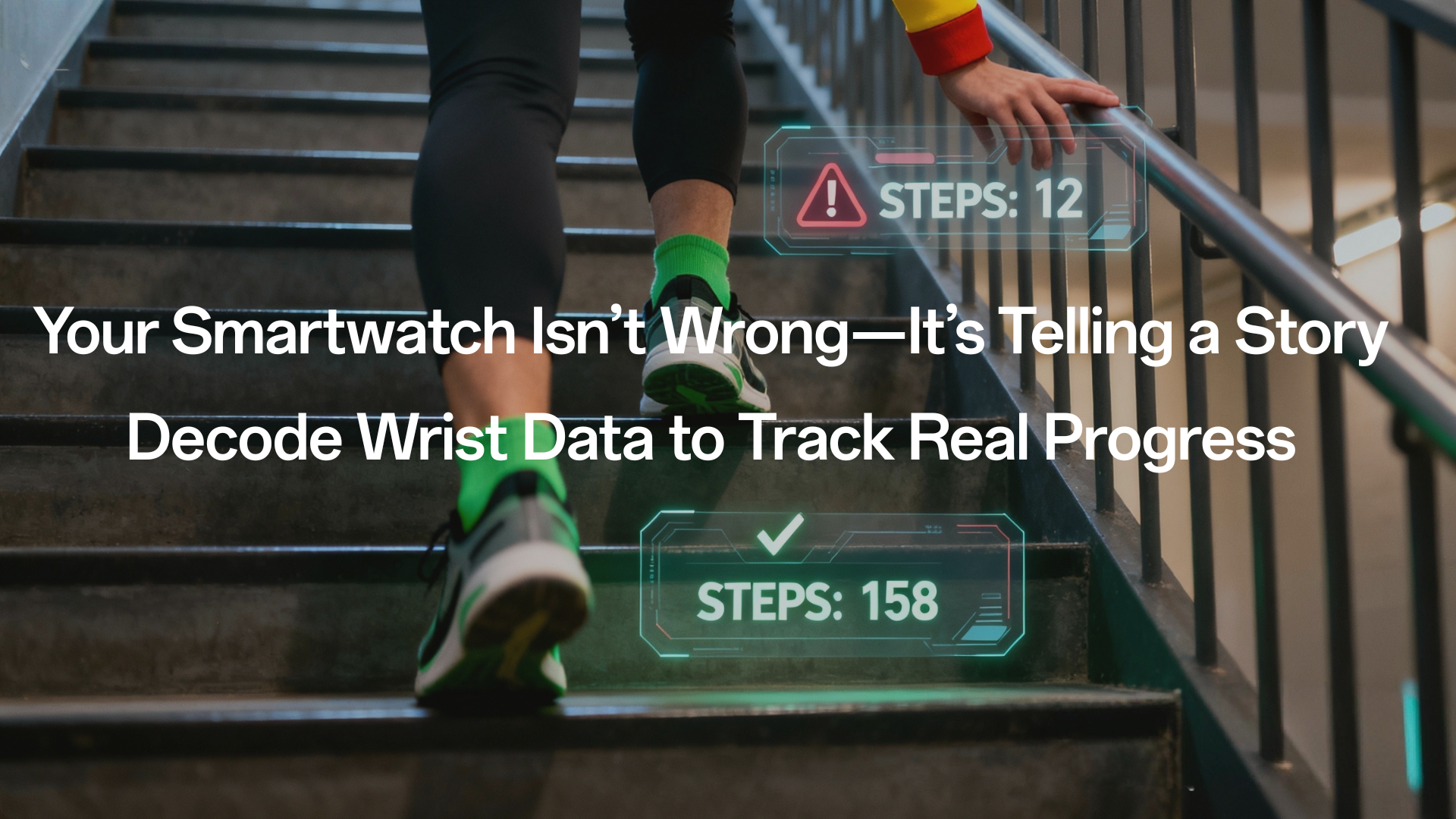
- Réduction des perturbations liées aux mouvements : La précision des objets connectés diminue notoirement lors d’une activité physique et est très sensible aux artefacts de mouvement. Les utilisateurs doivent donc exploiter activement les données de l’accéléromètre et du gyroscope (fonctionnalités communes à la plupart des objets connectés) pour filtrer les réponses physiologiques induites par le mouvement. Cette étape cruciale permet à l’appareil d’isoler les facteurs de stress psychologiques plus subtils.
- Adoptez des mesures stables : la standardisation de la posture et du moment de l’examen améliore considérablement la qualité du signal. La recherche confirme que les mesures de la VFC sont plus fiables lorsqu’elles sont effectuées dans des conditions standardisées . Par exemple, des études comparant la VFC basée sur la PPG à l’ECG de référence ont montré une excellente fiabilité en position couchée par rapport à la position assise.
Il ne s'agit pas d'instructions techniques, mais de rappels : votre vigilance fait partie intégrante du processus d'acquisition des données. En choisissant de mesurer dans un environnement calme et stable (même pendant seulement 2 minutes pour obtenir des valeurs RMSSD/SDNN adéquates à court terme), vous affinez activement le signal pour une interprétation pertinente.
2.2 Ancrages situationnels : combler le fossé avec des données subjectives
Le deuxième acte de traduction, et le plus crucial, consiste à fournir le récit qui se cache derrière le nombre.
- Vérification contextuelle en temps réel : Si l’objectif est de comprendre le stress en temps réel, l’application doit inviter le participant à répondre à des questions sur le facteur de stress et son état émotionnel (émotions et cognitions) peu après l’événement physiologique (par exemple, dans les cinq minutes). Cette approche valide le signal physiologique et détermine le type de facteur de stress , lui conférant ainsi la signification nécessaire.
- Suivi longitudinal : Les chercheurs s’efforcent d’intégrer les biomarqueurs numériques aux journaux de sommeil auto-déclarés en continu et aux questionnaires cliniques bihebdomadaires (évaluant l’anxiété, la dépression et l’insomnie). Les utilisateurs peuvent reproduire cette démarche en enregistrant proactivement leurs facteurs de stress ou leurs activités clés (comme les « tâches stressantes ») avec leurs heures de début et de fin dans leurs applications (Roos & Slavich, 2023, Brain Behav. Immun.). Cette contribution humaine volontaire crée les points d’ancrage contextuels nécessaires aux algorithmes sophistiqués pour devenir véritablement prédictifs.
Chapitre III. La limite de la sagesse : des limites qui exigent le jugement humain
Le prochain défi des technologies de la santé ne réside pas dans la précision, mais dans l'autonomie. Aucun dispositif portable n'étant parfait, l'utilisateur doit comprendre les limites techniques et biologiques qui nécessitent une surveillance constante et critique.
3.1 La biologie individuelle requiert un étalonnage personnel
L'appareil est conçu pour une personne moyenne théorique. Tout écart par rapport à cette moyenne (teint, corpulence, traitement médicamenteux, etc.) exige que l'utilisateur devienne son propre expert en données.
- La question du teint : les capteurs PPG utilisent principalement la lumière verte des LED . Or, cette lumière étant davantage absorbée par la mélanine, la précision de cette technologie peut être réduite chez les personnes à la peau plus foncée (Coste et al., 2025, Sensors ; Koerber et al., 2023, J. Racial Ethn. Health Disparities). Cette disparité implique que les utilisateurs ne peuvent se fier aveuglément aux scores standardisés ; ils doivent apprendre à connaître leur propre signature spectrale et s’interroger sur les données qui semblent incohérentes.
- Médicaments et métabolisme : les données physiologiques doivent être interprétées en tenant compte du contexte pharmacologique et métabolique de chaque individu. Les médicaments couramment prescrits pour le TDAH peuvent accroître l’activité du système nerveux sympathique , tandis que les antihypertenseurs peuvent atténuer la réponse au stress . De même, un excès de masse grasse (obésité) peut modifier les signaux électriques et optiques détectés par les capteurs EDA. Un interprète doit prendre en compte ces conditions chroniques lors de l’interprétation d’un score de stress aigu.
3.2 Le problème de la boîte noire et le piège de l'échantillonnage
Les systèmes qui génèrent votre score de stress final, en apparence simple, sont souvent opaques, ce qui oblige l'utilisateur à être le garant de la qualité des données.
- Algorithmes propriétaires : La plupart des fabricants d’objets connectés ne donnent pas accès aux données physiologiques brutes et non filtrées , et ne divulguent pas publiquement les algorithmes propriétaires utilisés pour la réduction du bruit, le filtrage des artefacts et le calcul du score final. Le « score de stress » obtenu est donc une estimation , et non une donnée physiologique brute, ce qui oblige l’utilisateur à interpréter la « meilleure estimation » du système.
- Problème d'échantillonnage : même avec des données précises, la fréquence d'échantillonnage de l'appareil peut rendre le résumé inutilisable. Par exemple, un appareil peut mesurer la fréquence cardiaque avec précision toutes les 5 ou 6 secondes pendant l'exercice, mais ne mesurer la variabilité de la fréquence cardiaque (VFC) qu'une fois par heure pendant le sommeil. Cet échantillonnage horaire aléatoire collecte des données pendant des phases de sommeil très différentes, ce qui donne des informations inexploitables lorsqu'on calcule un score de VFC nocturne moyen. Il est donc essentiel que les utilisateurs vérifient que la fréquence d'échantillonnage corresponde à leurs objectifs de suivi.
Conclusion : Le partenariat homme-machine
Les technologies portables offrent un accès précis et non invasif à notre système nerveux autonome, permettant de détecter précocement divers problèmes, du stress chronique aux maladies. Cependant, l'efficacité de ce système dépend de l'intelligence qui interprète ses données.
L'objectif du développement des technologies portables n'est pas de remplacer la perception humaine, mais de l'affiner . Il est essentiel de distinguer l' alarme objective du dispositif (la détection d'une activation physiologique) de l'interprétation subjective de l'utilisateur (qui lui attribue une signification en fonction du contexte, des mouvements et des antécédents médicaux).
Cette clarté nous permet d'avancer avec confiance vers un avenir de coexistence homme-machine dans le domaine de la santé.
Pour les concepteurs et les utilisateurs d'objets connectés, comprendre cette limite est essentiel pour garantir que la technologie serve la santé et non l'illusion de la précision.

Laisser un commentaire
Ce site est protégé par hCaptcha, et la Politique de confidentialité et les Conditions de service de hCaptcha s’appliquent.