

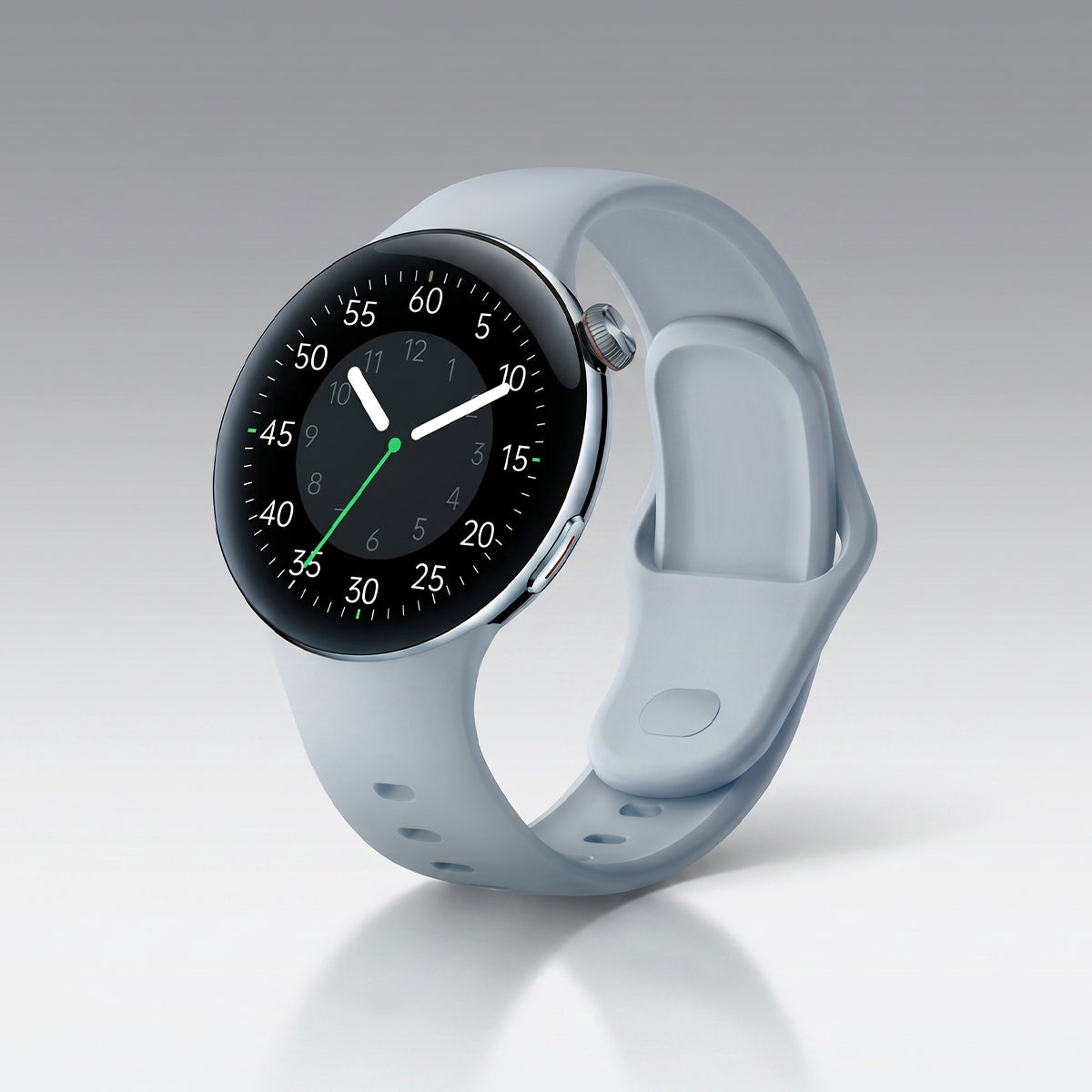









Your watch buzzes. "High stress detected." You look at the screen, then at your life, and think: really? I'm just sitting here.
Or the opposite. You're wound tight, jaw clenched, deadline looming — and your watch says your stress level is "low." You want to throw it across the room.
Here's what's actually happening: your watch isn't measuring stress. It's measuring heart rate variability, then guessing what that means about your nervous system. It's a clever guess. It's also an incomplete one.
What HRV Is, in Plain English
Your heart doesn't beat like a metronome. The gap between beats varies — sometimes slightly longer, sometimes slightly shorter. That variation is HRV, and it's one of the best non‑invasive windows into your nervous system.
The logic goes like this:
-
High HRV — your body is relaxed, recovered, adaptable. Your parasympathetic nervous system ("rest and digest") is in charge.
-
Low HRV — your body is under load. Your sympathetic nervous system ("fight or flight") is dominant. That could be stress, poor sleep, illness, or hard training.
So when your watch says "stress," what it really means is: your HRV is lower than your baseline, and we're interpreting that as your body being under pressure.
That's not the same as "you feel stressed." It's a physiological proxy. Sometimes the two align. Sometimes they don't.
How Your Watch Calculates a Stress Score
The process happens quietly, all day:
-
PPG sensor shines green light into your skin and detects blood volume changes with each heartbeat.
-
Algorithm extracts the timing between beats — that's your HRV.
-
Comparison against your personal baseline, built over days or weeks.
-
Score — most watches output a 1–100 number, or a simple low/medium/high label.
Some watches only measure HRV at rest or overnight. Others sample periodically throughout the day. The score updates as your HRV shifts.
The catch: that PPG signal is fragile. Wrist movement, sweat, skin tone, ambient light, and even how tight your band is can all corrupt the reading. A stressful meeting and a bumpy bus ride can produce the same noisy signal — and your watch can't tell the difference.
The EDA Sensor: A Second Opinion
Some wearables add another sensor: EDA (electrodermal activity), also called skin conductance.
Your sweat glands are controlled by your sympathetic nervous system. When you're aroused or stressed, they get slightly more active — even before you notice sweat. EDA sensors measure tiny changes in how your skin conducts electricity, which correlates with that sweat response.
EDA catches what HRV misses. HRV tells you about your heart's rhythm. EDA tells you about your skin's response. Together, they give a more complete picture of your autonomic nervous system.
But EDA has its own limits: sweat from heat or exercise looks the same as sweat from stress. And not every wearable has an EDA sensor — it's more common on rings and dedicated stress‑tracking devices than on standard watches.
Why Stress Scores Are Approximate, Not Precise
Here's the research, in one paragraph:
Studies comparing consumer wearable stress scores to validated psychological questionnaires have found moderate positive correlations — typically in the range of r = 0.495 to 0.597. That's meaningful. It means the watch is picking up something real.
But it's not a diagnosis. A correlation of 0.5 means roughly 25% of the variance in stress scores is explained by actual perceived stress. The rest is noise: movement, sensor error, individual physiological differences, and the fact that "stress" is a subjective experience no sensor can fully capture.
A few specific reasons your score might be off:
-
You're moving. Motion artifacts corrupt PPG. A walk to the kitchen can read as "elevated stress."
-
You're sick. Illness raises heart rate and lowers HRV. Your watch reads stress; your body is fighting an infection.
-
You drank coffee. Caffeine raises heart rate and can lower HRV — not because you're stressed, but because it's a stimulant.
-
You're excited, not anxious. Arousal is arousal. Your watch can't tell the difference between a job interview and a roller coaster.
-
Your baseline is still calibrating. The first week or two of data is not reliable. The watch is learning what "normal" looks like for you.
How to Actually Use Stress Data
The score isn't useless. It's just not a verdict. Here's how to make it work for you:
1. Watch the trend, not the number.
One "high stress" reading means nothing. A week of elevated scores — especially at the same time each day — is a pattern worth paying attention to.
2. Cross‑check with your body.
Does the score match how you feel? If your watch says "high stress" and you feel fine, trust yourself. If it says "low stress" and you're wound tight, also trust yourself. The score is a prompt for reflection, not a replacement for it.
3. Use it as a nudge, not a diagnosis.
If your watch flags elevated stress, take it as a gentle reminder: maybe take a breath. Maybe go for a walk. Maybe skip the second coffee. That's it. No spiraling.
4. Pair it with recovery habits.
The most useful thing about stress tracking is seeing what actually lowers your score. A 5‑minute breathing exercise. A short walk. A good night's sleep. Your watch can show you what works — if you experiment and watch the trend.
5. Don't let it stress you out.
The irony is real: some people see "high stress" on their wrist and feel more stressed. If that's you, turn the feature off. A tool that makes you anxious isn't a tool. It's a trigger.
The Bottom Line
Your watch doesn't measure stress. It measures HRV, compares it to your baseline, and makes an educated guess about your nervous system. Sometimes it's right. Sometimes it's confused by a bus ride and a cup of coffee.
Use it as a mirror, not a judge. Let it nudge you toward rest when the trend says you need it. And when it disagrees with your own experience, trust the person wearing the watch — not the watch itself. 🧘

Laisser un commentaire
Ce site est protégé par hCaptcha, et la Politique de confidentialité et les Conditions de service de hCaptcha s’appliquent.