


Traditional medical assessment, relying on sporadic blood tests or single-night monitoring, cannot detect the earliest indicators of chronic disease. Why? Because diseases like Metabolic Syndrome and neurodegeneration do not begin with a single faulty reading; they start with the slow, subtle collapse of the body's fundamental 24-hour rhythms.
Your wearable device—functioning as a continuous physiological radar—is uniquely positioned to capture this deterioration. It shifts the focus from simply logging the quantity of your sleep to quantifying the quality and intensity of your daily and nightly physiological waves.
I: The First Signal—When Your Heart Loses its Contrast
Core View: The earliest, most objective sign of severe systemic strain is a measurable failure in your heart’s ability to transition between peak daytime stress and deep nighttime rest. This "loss of contrast" (amplitude collapse) is the heart's first warning of metabolic risk.
1.1 The Collapse of Rhythmic Intensity
A healthy body should exhibit a strong rhythm: high activity and high heart rate (HR) during the day, followed by deep relaxation and low HR at night. When this essential contrast fades, the heart’s rhythm becomes rigid and flat, indicating that the autonomous nervous system (ANS) is losing its ability to switch between states.
- Metabolic Disease’s Cardiac Fingerprint: Studies analyzing wearable-derived HR data have shown distinct rhythm failures in patients with Metabolic Syndrome (MetS). MetS is strongly associated with significantly higher average HR (MESOR) and significantly higher minimum HR during sleep (L5_HR, $P<.001$).
- Visualization: The Wave Intensity Index (RA_HR): Researchers quantify this contrast failure using the Relative Amplitude (RA_HR). RA_HR measures the strength of your rhythm (the height difference between the peak and the valley). In MetS patients, RA_HR was found to be significantly lower ($P<.001$). This reduced heart rate variability (HRV) is itself a recognized cardiovascular risk factor, prevalent in conditions like MetS and hypertension.
Transition: This collapse of rhythmic contrast is not isolated to the heart. It operates under a single, unifying principle: the less contrast your physiology shows over 24 hours, the higher your systemic risk.
II: The Universal Rule—Reduced Robustness Predicts All Risks
Core Insight: Different organ systems—from your cardiac function to your motor skills and mental health—all follow the same underlying biological logic: Reduced 24-hour rhythm robustness (stability and amplitude) is a general feature of aging, disease, and increased mortality.
2.1 Activity Amplitude: The Life Force Oscillation
Your daily movement patterns, tracked by the accelerometer (Actigraphy), are a measurable indicator of circadian robustness. When the difference between your active hours and your resting hours shrinks, it signals that the entire physiological system is losing its vigor.
- Activity and Mortality: Reduced rest-activity rhythm amplitude is associated with lower risks of cardiovascular, metabolic, respiratory, infectious diseases, cancer, and all-cause mortality in large prospective cohorts, such as the UK Biobank. Conversely, a blunted rhythm is linked to an increased rate of biological aging.
- Neurocognitive Warning: The collapse of robust activity rhythms is a strong indicator of neurological stress. Impaired 24-hour activity patterns are associated with an increased risk of Alzheimer’s disease and Parkinson’s disease. Furthermore, activity rhythm abnormalities are linked to a higher prevalence of psychiatric disorders such as Major Depressive Disorder (MDD) and bipolar disorder, and negatively correlate with subjective mental health. Wearable-derived sleep and circadian rhythm features have been successfully used to accurately predict mood episodes in mood disorder patients.
2.2 Respiratory Metrics: The Silent Choking Count
The principles of rhythm instability extend into cardiopulmonary health, where wearables leverage sensor fusion to detect sleep disorders that traditional spot-checks often miss.
- SDB Screening: Wearable devices have the potential to assess Sleep-Disordered Breathing (SDB) or Sleep Apnea (OSA). Many devices incorporate pulse oximetry (SpO2), which enables the detection of episodic oxygen desaturation (intermittent hypoxia).
- Visualization: SpO2 Events = "Silent Choking Count": These drops in oxygen are a critical hallmark of sleep apnea and are strongly associated with adverse cardiovascular outcomes. AI models for SDB detection primarily rely on Respiratory Data (54%) and Heart Rate (48%).
Transition: These physiological patterns—from heart strain to fragmented activity and low oxygen events—generate vast, continuous data streams. This volume is precisely why traditional single-point lab tests struggle, and why AI is essential for seeing the invisible disease signature.
III: The AI Advantage—Measuring the Waveform, Not the Value
Core Argument: The predictive leap achieved by wearables is not due to measuring heart rate values, but in using Artificial Intelligence (AI) and Explainable AI (XAI) to analyze the frequency and stability (the waveform) of continuous, multi-day rhythms.
3.1 Why Continuous Data Defeats Spot Checks
Traditional diagnosis relies on snapshot measures (e.g., blood pressure once a day, or a single night of PSG). However, the complex dynamics of circadian rhythms require continuous, dense sampling over multiple cycles (usually at least a week) to accurately quantify their amplitude, stability (IS), and fragmentation (IV).
- The Inadequacy of Duration: Wearable research confirms that simple sleep duration metrics (like Total Sleep Time, TST) often show limited statistical significance in detecting MetS risk. Instead, heart rate–based circadian rhythm markers are shown to have stronger associations.
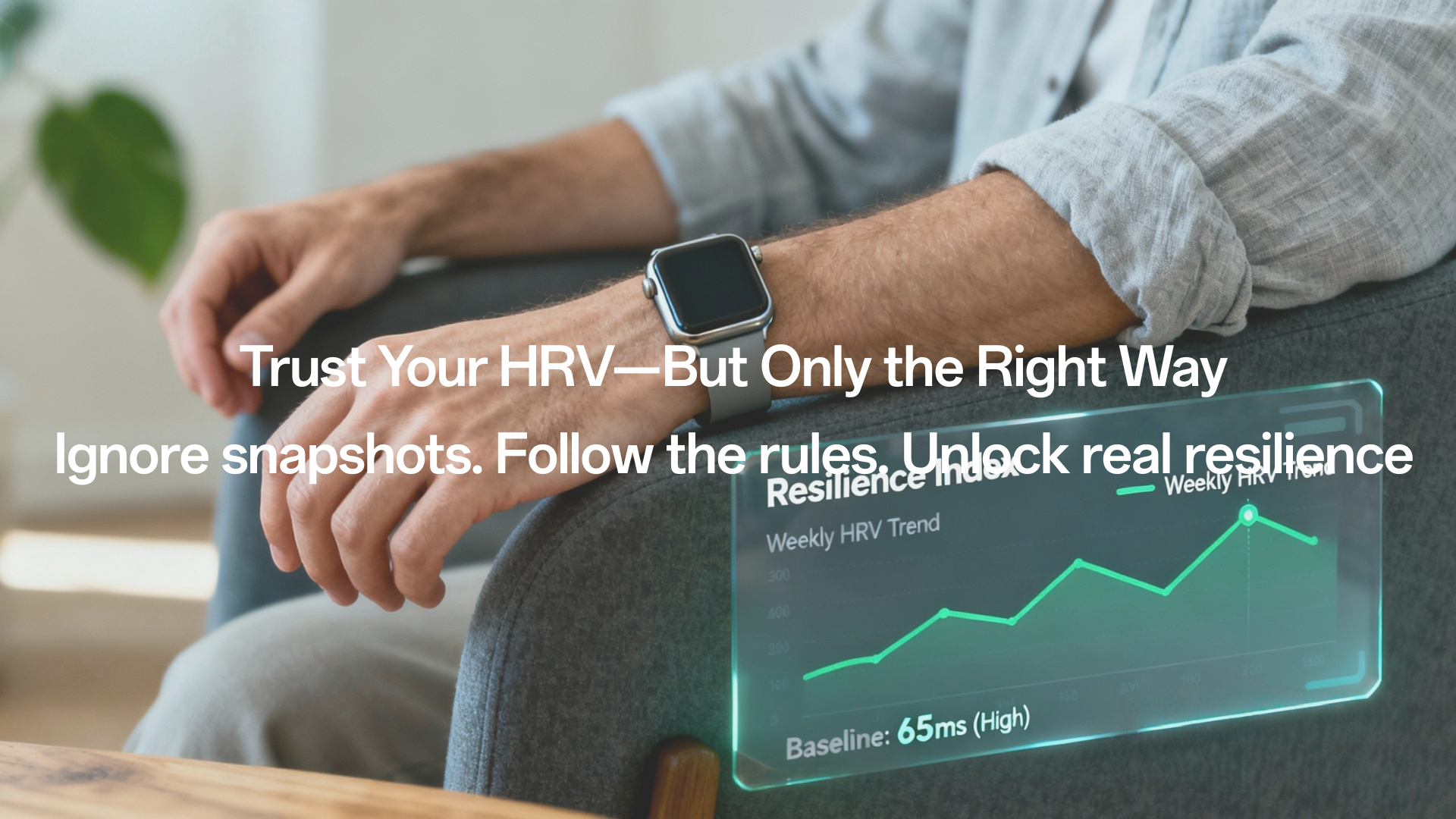
- The Power of PRV/HRV: Heart Rate Variability (HRV) (or the surrogate PRV, pulse rate variability, measured by PPG) is a recognized marker of autonomic nervous system function. A higher HRV is generally favorable, while a lower HRV is associated with adverse health consequences. However, interpreting HRV requires a continuous, uninterrupted, high-quality data stream over several minutes. Longitudinal tracking of HRV is crucial for cardiovascular risk assessment.
3.2 AI’s Deep Dive: Measuring "Waveform Stability"
The newest AI models move beyond simple amplitude into frequency analysis, offering powerful, predictive visualizations of rhythm quality.
- Visualization: CCE_MF = "Waveform Stability/Vigor": Using Explainable Artificial Intelligence (XAI), such as EBM and SHAP models, researchers identified a novel marker: Continuous Wavelet Circadian Rhythm Energy (CCE_MF). This metric assesses the energy or intensity of the heart rate signal within a mid-frequency range (around a 1-hour cycle).
- CCE_MF and Disease Risk: XAI models found that CCE_MF is the most important marker for identifying circadian patterns related to MetS. A decrease in CCE_MF values (MetS group was 0.005 lower, $P<.001$ in Wilcoxon test) correlated with an increased contribution to MetS risk. This low energy may suggest a lack of fluctuations driven by normal physical activity, digestion, or robust ANS balance.
Transition: The scientific case for these continuous, rhythm-based biomarkers is overwhelming. However, to leverage this power—to trust your watch as your personal health radar—you must understand the inherent limitations and necessary cautions that come with using consumer-grade sensors.
IV: Your Personal Radar—Interpreting the New Metrics
Core Justification: Wearable devices offer a unique window into sleep and health by co-recording autonomic parameters and estimating circadian features. They represent a paradigm shift towards continuous monitoring and personalized health interventions.
4.1 Wearable Limitations: Accuracy and Data Black Boxes
While powerful, the data derived from CHTs often face limitations that users and clinicians must acknowledge:
- PPG Artifacts: The Photoplethysmography (PPG) signal used for HR and HRV/PRV analysis is highly susceptible to artifacts caused by movement. For HRV analysis, data can only be considered reliable under conditions of no movement, such as during sleep.
- PRV vs. HRV Disparity: What wearables measure is Pulse Rate Variability (PRV), which is derived from the peripheral pulse, not the electrical activity of the heart (HRV). While they show an almost perfect correlation in healthy subjects at rest, they are not always equivalent during activity or in certain populations.
- Oxygenation Warning: SpO2 measurements from wrist-worn reflective PPG are distinct from medical-grade pulse oximeters (which often use finger or ear lobes) and should be interpreted with caution. This is particularly critical because inaccurate readings can potentially underestimate the severity of sleep disorders, such as the number of oxygen desaturations per hour of sleep.
4.2 Actionable Insight: Focusing on the Core Indicators
To maximize the predictive utility of your wearable, focus on the rhythm quality, rather than proprietary scores that lack standardization:
- Prioritize Rhythmic Strength (RA_HR): Consistently monitor the Relative Amplitude (RA_HR). A low RA_HR score is a robust, AI-validated signal of reduced cardiovascular and metabolic health robustness.
- Track Stability (IS/SRI): Use objective measures like the Interdaily Stability (IS) and the Sleep Regularity Index (SRI) to track the consistency of your activity and sleep patterns over multiple days. High stability is linked to better outcomes.
- Understand the Context: Remember that Resting Heart Rate (RHR) and HRV/PRV vary significantly across individuals and are affected by factors like sex, obesity, stress, illness, and medication intake (e.g., beta-blockers). Changes of greater than 5 bpm in RHR over a day or week merit attention. Focus on longitudinal trends and deviations from your personal baseline to gain meaningful interpretation.
By leveraging the continuous, objective data stream of heart rate and activity—and focusing on the amplitude and waveform captured by AI—you are turning your device into an advanced diagnostic radar, capable of detecting the subtle collapse of physiological rhythms long before they manifest as critical disease symptoms.


コメントを書く
このサイトはhCaptchaによって保護されており、hCaptchaプライバシーポリシーおよび利用規約が適用されます。