

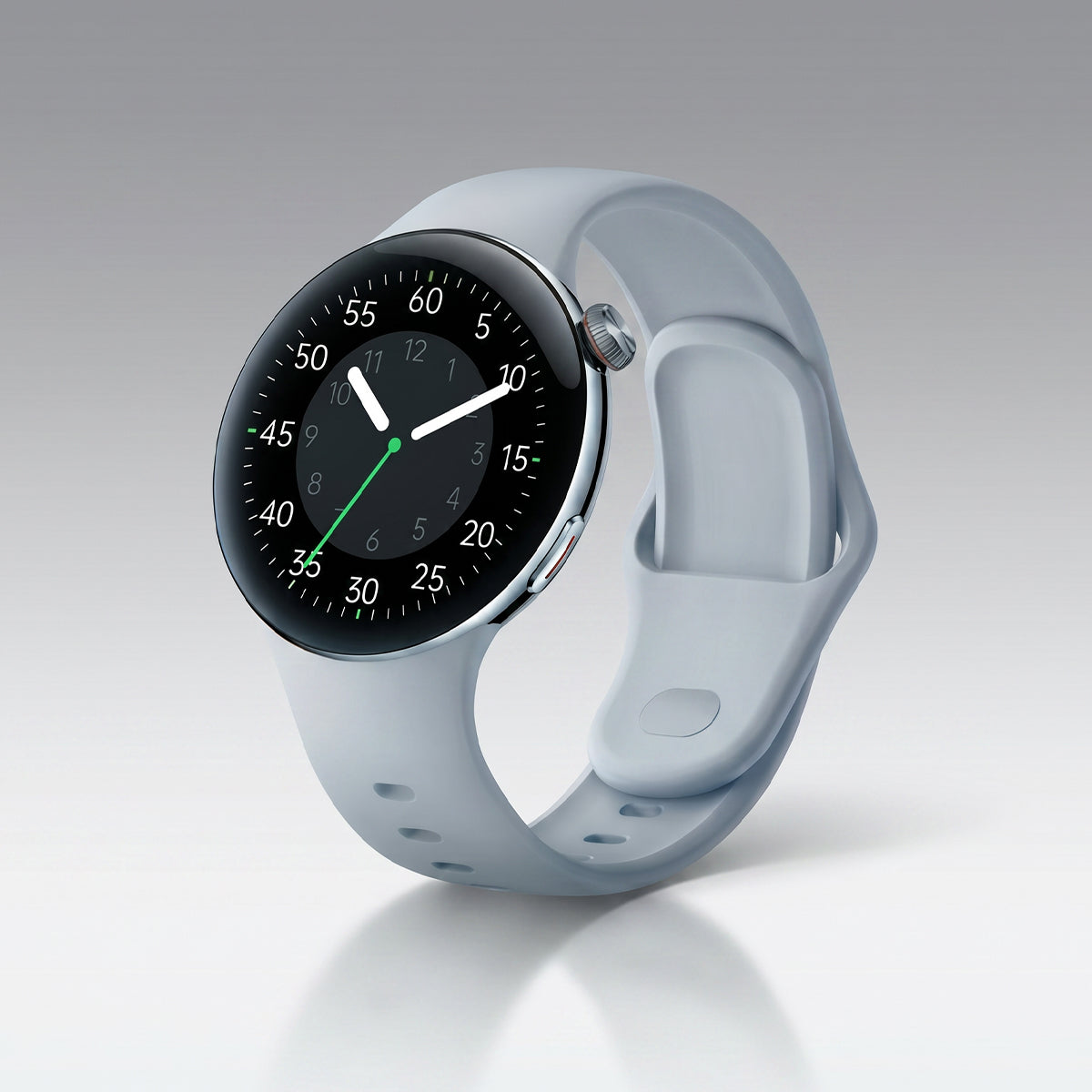





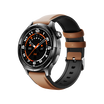


You finish a run, open the map, and… what is that? Your route looks like you stumbled through three backyards and teleported across a river. Total distance says 5.2K. You know it was 4.8.
Or you're hiking, and your watch takes two full minutes to figure out where you are.
Both problems come down to the same thing: which positioning system your watch uses, and how it gets its first fix. Here's the plain‑English version.
The Big Three (Plus One)
GPS (the American system)
The classic. A network of satellites orbiting Earth, constantly broadcasting "I'm here, and it's this o'clock." Your watch listens to at least four of them, does some trigonometry, and figures out where you are. Reliable, global, been around since the 70s.
GLONASS (the Russian system)
Same idea, different satellites. Why does it matter? Because more satellites = faster, more accurate fixes, especially in cities where buildings block the sky. Modern watches often use GPS + GLONASS together. That's called dual‑band or multi‑constellation, and it's the single biggest accuracy upgrade you can get.
Galileo (Europe) and BeiDou (China)
Two more constellations, both now common in newer watches. Galileo is known for high accuracy in Europe; BeiDou covers Asia especially well. Most 2026 watches support three or four systems at once. The more, the merrier.
Independent GPS vs. Connected GPS
This is where people get tripped up.
Connected GPS — your watch has no GPS chip. It borrows your phone's GPS via Bluetooth. Works fine… as long as you're carrying your phone. Leave it at home? No map, no pace, no distance. Just a step counter.
Independent GPS (built‑in) — the watch has its own GPS antenna. You can run phone‑free. This is what you want for outdoor sports, hiking, or just not wanting a brick in your pocket.
It costs more and drains battery faster, but it's the difference between a real training tool and a fancy pedometer.
So What Is A‑GPS?
A‑GPS = Assisted GPS. It's not a different satellite system — it's a shortcut.
Normally, when your watch cold‑starts, it has to download almanac data from satellites: "where will each satellite be in the next few hours?" That can take 30 seconds to a few minutes.
A‑GPS skips the wait by pulling that data from the internet (Wi‑Fi or your phone) instead. Result: your first fix drops from minutes to a few seconds.
Every modern watch uses A‑GPS. You don't need to choose it — you just want it.
Which One Wins Where?
City streets (urban canyon)
Buildings block satellite signals and bounce them around, causing that drunk‑map effect. Winner: multi‑constellation (GPS + GLONASS + Galileo). More satellites, better geometry, fewer reflections.
Deep forest or canyon
Weak signal, no internet for A‑GPS. Winner: independent GPS with multi‑constellation. Patience required — first fix may take a minute.
Open sky, trail running
Everything works. Independent GPS shines because there's no phone needed.
Treadmill or indoor track
Nothing works. Your watch switches to accelerometer‑based estimation — which is why treadmill distance is always a guess.
The Battery Trade‑Off
More satellite systems = more accuracy = more battery drain. That's the deal.
Practical rule:
-
Long hike or ultra → use GPS only, or GPS + one constellation. Save the juice.
-
City run where you want a clean map → multi‑constellation. It's worth the extra percent.
Most watches let you pick in settings. Find it. Use it.
What to Actually Look For When Buying
If outdoor accuracy matters to you, check these boxes:
-
Built‑in GPS (not connected GPS)
-
Multi‑constellation support — GPS + GLONASS, ideally + Galileo
-
A‑GPS enabled for fast first fix
-
Dual‑frequency (L1 + L5) if you want the best accuracy — this is the premium tier, and it's genuinely noticeably better in cities and canyons
-
Battery life with GPS on — measured in hours, not days
Ignore the marketing noise. These five things are what matter.
The Bottom Line
GPS isn't one thing — it's a team of satellites, a shortcut, and a decision about whether your watch carries its own antenna or leans on your phone.
Want clean maps and phone‑free freedom? Go independent, go multi‑constellation. Want to save battery on a long day out? Trim it down to one system.
Get that right, and your route map will finally stop looking like abstract art. 😉


댓글 남기기
이 사이트는 hCaptcha에 의해 보호되며, hCaptcha의 개인 정보 보호 정책 과 서비스 약관 이 적용됩니다.